What Should Christians Make of Death Penalty?

The debate on whether Malawi should abolish death penalty or capital punishment continues to gather momentum. The Evangelical Association of Malawi and other mainline denominations have already come out in the open to support the abolishment proposal. However, other Christians are in favor of keeping the penalty in our laws.  In God’s providence I recently preached from Genesis 8:20-9:17 which I think adequately addresses the place of capital punishment in the human society.

As we come to Genesis 9:20 we meet Noah, who has just come out of the ark after the flood, building an altar to God as an act of worship. The Lord is pleased with Noah’s worship and reinstates the creation mandate which he first gave to Adam and Eve in Genesis 1:28 “To be fruitful and multiply and fill the earth” (Genesis 9:1, 7). Then the Lord also establishes death penalty for murder and decrees, “And for your lifeblood I will require a reckoning: from every beast I will require it and from man. From his fellow man I will require a reckoning for the life of man. ‘Whoever sheds the blood of man, by man shall his blood be shed, for God made man in his own image’” (Genesis 9:5, 6)

If an animal attacks and kills a man, God orders that the animal should be killed. If one man kills another man, God requires that the life of the murderer should be taken away too. The reason for this commandment is that man was made in the image of God. John Calvin comments, “No one can be injurious to his brother without wounding God himself.” One undebatable truth in Genesis 9:5, 6 is that it is God himself who established death penalty.

Further, it is worth noting here that when the first murder in the history of mankind occurred in Genesis 4:8, God reserved the right to take the life of the murderer, Cain, to himself (Genesis 4:15). However, now God gives this right to man. “Man” in this passage should be understood as human government as we read in Romans 13:4 that human government is “the servant of God, an avenger who carries out God’s wrath on the wrongdoer.” After Genesis 9:5, 6 we don’t read anywhere else in the Bible where God reverses death penalty for murder which means that the command still stands today.

Some Christians who are against death penalty appeal to Matthew 5:38-40 as a ground for abolishment of death penalty. In Matthew 5:38-40 Jesus says, “You have heard that it was said, ‘An eye for an eye and a tooth for a tooth.’  But I say to you, ‘Do not resist the one who is evil. But if anyone slaps you on the right cheek, turn to him the other also.’” Does Jesus here abolish death penalty for a murderer? Not at all!

“An eye for an eye” or lex talionis in Latin is a legal principle that punishment should fit the crime. Courts should not give a greater punishment to a smaller crime or a smaller punishment to a greater crime. This principle rightly applies to criminal justice. However, people in Jesus’ time were abusing and seizing it as pretext for taking personal revenge on those who wronged them. So, Jesus is teaching that outside of criminal matters, Christians should not pay evil with evil but instead should overcome evil with good (Romans 12:21). The example of a slap on the cheek is not literal as that would mean Jesus forbids self-defense in the face of an attack.

Christians might differ on their view of death penalty for murder and we should respectfully agree to disagree. But I believe that it is hard to argue that death penalty for murder which was established by God himself in Genesis 9 is no longer required today. I just can’t find any biblical evidence in support of that argument.

What is the New Heaven and the New Earth?

“Then I saw a new heaven and a new earth, for the first heaven and the first earth has passed away, and the sea was no more” (Rev. 21:1)

Apostle John had a privilege to see the new heaven and the new earth in a vision. Now, what is this new heaven and the new earth that Apostle John is talking about here? This is the question that many Bible scholars and theologians have wrestled with, and there are are two main views. One says that this new heaven and new earth will be entirely new and different from the one we have now while the other one holds that the new heaven and the new earth will be a renewed or a transformed heaven and earth but not necessarily an entirely new heaven and new earth.

I am persuaded of the later view because of three main reasons. First, other passages of Scripture show us that the new heaven and the new earth will be a renewed one. Consider Romans 8:20-21 in which Paul writes, For the creation was subjected to futility, not willingly, but because of him who subjected it, in hope that the creation itself will be set free from its bondage to corruption and obtain the freedom of the glory of the children of God.” Notice that Paul says that the current creation as we know it will be set free from the bondage and corruption of sin. God is not going to completely wipe away this creation and make a new one rather he will liberate and renew this current creation.  

Second, when we consider that in the new heaven and new earth believers will be the same believers, we know today but with renewed bodies and not necessary totally different people than the ones we know we should also conclude that the new heaven and the new earth will be a renewed universe rather than a totally new creation. The Dutch theologian, Anthony Hoekema put it well, “The difference between our present bodies and the resurrection bodies, wonderful though they are, do not take away the continuity: it is we who shall be raised, and it is we who shall always be with the Lord. Those raised with Christ will not be a totally new set of human beings but the people of God who have lived on this earth. By way of analogy, we would expect that the new earth will not be totally different from the present earth but will be the present earth wondrously renewed.”

Third, consider that sometimes the Bible uses the word “new” to mean “renewed” or “transformed” and not necessarily an entirely different thing.  For example, 2 Corinthians 5:17 declares, “Therefore, if anyone is in Christ, he is a new creation. The old has passed away; behold, the new has come.” This verse does mean that when we get saved, we become an entirely different new person. We are the same person who has been renewed in Christ. Of course, our lives change; our thinking changes; our likes change but we are still the same person renewed in Christ. Or consider in Ezekiel 36:26 in which the God says “I will give you a new heart” meaning a changed or transformed heart. In the same way new heaven and new earth in Rev. 21:1 does not mean an entirely new heaven and new earth but a renewed or a transformed heaven and earth which is far more glorious than the current heaven and earth.

As believers we should always long for the new heaven and the new earth. It will surely come! However, it will not be entirely another one made from nothing as God did in the beginning (Genesis 1:1). The new heaven and the new earth will be the current heaven and the current earth renewed with much greater glory and goodness beyond human description (1 Cor. 2:7).

The Reformed Pastor Conference

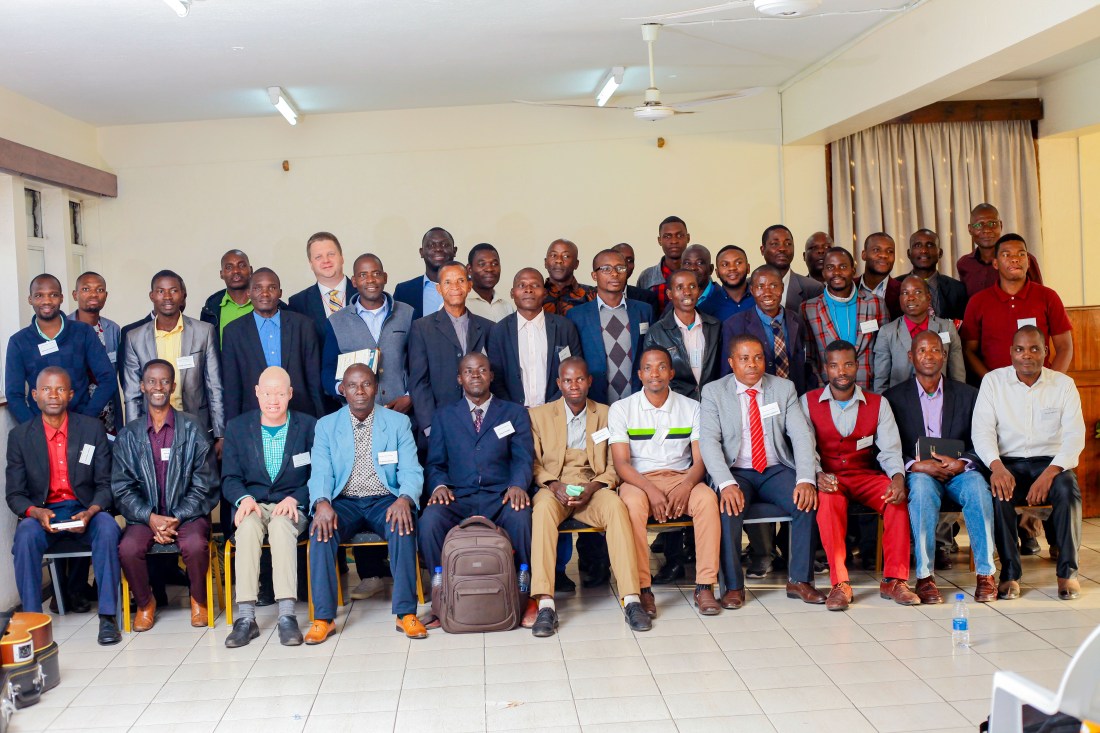
May 29-30, 2024, pastors from different denominations met at Christ Presbyterian Church in Blantyre, Malawi for the 2024 Reformed Pastor Conference. The theme for this year’s conference was, The Sufficiency of Christ. Pastor David Woollin from Grace Immanuel Reformed Baptist Church and Heritage Reformed Books in Grand Rapids, Michigan spoke on the three offices of Christ: prophet, priest, and king. He also spoke on faithfulness in ministry.

The Reformed Pastor Conference was started by Christ Presbyterian Church (CPC) in partnership with the Malawi Reformation Network (MRN).  The name of the conference was inspired by an address taken from Acts 20:28 by a 17th Century Reformed and Puritan pastor, Richard Baxter, which was later turned into a book titled The Reformed Pastor.  The first Reformed Pastor Conference was held on October 27, 2019 at African Bible College campus in Lilongwe, Malawi.

The four major objectives of the Reformed Pastor Conference are:

  1. To encourage pastors to be ordinary means of grace pastors. The Westminster Shorter Catechism question and answer 88 reminds us: “The outward and ordinary means whereby Christ communicates to us the benefits of redemption are, his ordinances, especially, the Word, sacraments, and prayer; all which are made effectual to the elect for salvation.” The conference seeks to encourage ministers to continue believing in the power of God’s word and constantly preach it faithfully. We would like also to encourage pastors to continue cultivating a healthy prayer life as an indispensable part of their ministry.
  • To provide a platform where pastors can get a better understanding of the Reformed faith. The Reformed faith or being Reformed can sometimes be misunderstood or even caricatured. But through the conference we pray that pastors, especially, those that are not familiar with the Reformed faith or are considering to become Reformed in their faith and ministry (Reforming pastors) might get a good grasp of the faith.
  • To share Reformed literature and resources. One of the greatest challenges that the church in Malawi (and this can be said of Africa as a whole) faces is lack of sound biblical literature and resources. Reformed Pastor Conference seeks to bring pastors together once a year and share with them reformed literature and resources that are beneficial to their ministry.
  • To promote fellowship and networking among Reformed pastors in Malawi. Pastoral ministry can sometimes feel very lonely, more especially, when you do not have many like-minded pastors who can encourage you in your work. Since Reformed pastors are a minority in Malawi, the conference seeks to promote fellowship and networking among these ministers. 

May you join us in praying for revival and reformation in our lives, churches, our nation of Malawi, and the whole world at large.

As Your Days, So Shall Your Strength Be

On Thursday, November 9, 2023 the Malawi Government through its central bank, the Reserve Bank of Malawi, devalued the value of the Malawi currency, the Kwacha, against the US Dollar with 44%. One major impact of this move was the immediate increase of the inflation rate of food items from 36.8 as recorded in September 2023 by National Statistical Office . There is fear and panic for many Malawians who most of them live from hand to mouth. Yesterday, November 10, 2023, I sent this brief note of encouragement to the members of my church family, Christ Presbyterian Church, Blantyre.

Dear my beloved church family,

I am sitting in my study after a long day which most part of it included hearing the fears of many for the future as the economic situation in our country continues not to inspire much hope. I thought of writing this quick note to you beloved people of God. It could be that you are also scared of what the future holds for you and your loved ones. Maybe you are despairing of life itself as Paul would say in 2 Corinthians 1:18.

One verse that is lingering in my mind as I finish my day is God’s own promise to us his people in Deuteronomy 33:25. Moses is about to enter the glory of his Lord, so he blesses all the twelve tribes of Israel. When he comes to the tribe of Asher, he blesses it and says, “Your bars shall be iron and bronze, and as your days, so shall your strength be.” My main focus is on the last part of the verse“as your days, so shall your strength be.”

The Lord promises to supply us with strength (grace) for each day he gives us. We can count on this promise for it is coming from the one who neither changes nor lies. The key thing to notice well is that this grace will be available as each day comes. In the midst of difficult economic times like these ones, if you are like me, you want to receive the grace for today and tomorrow and even next week today. But the Lord never supplies tomorrow’s grace today. His mercies are new every morning. He gives grace every day in a fresh way.

So beloved people of God may this promise be your encouragement and comfort if you are getting anxious about tomorrow in these hard economic times. Let us continue to draw close to Christ, work honestly with our hands, and trust our God through Christ to supply us with strength or grace to go through each day. As the great African theologian St. Augustine once observed, “Trust the past to God’s mercy, the present to God’s love, and the future to God’s providence.” May we all do that. Also, to borrow the words of the hymn writer:

“Afflicted saint, to Christ draw near,
Your Savior’s gracious promise hear;
His faithful Word you can believe:
That as your days your strength shall be.

So, sing with joy, afflicted one;
The battle’s fierce, but the victory’s won!
God shall supply all that you need;
Yes, as your days your strength shall be.”

Good night, beloved saints! May the Lord bless and keep you and continue to make his face shine upon you in Christ.

Introducing All Things Reformed Podcast

Last Tuesday, October 31, 2023 as we commemorated the 506 years of the Protestant Reformation my friend, Zee Chunga, and I launched our podcast, All Things Reformed. As I have been pastoring in this beautiful country of Malawi, one question that I have often received is, “What is the Reformed Faith?” This podcast is an endeavor to answer this question. Zee and I believe that as you listen to the episodes of this podcast you will be able to have your question answered.

All Things Reformed Podcast is for those who are Reformed as well as those who are exploring the Reformed faith. For the former we seek to help them get more grounded in their faith and equip them to effectively answer any question about our faith (1 Peter 3:15) while for the later we seek to help them get a better explanation of the Reformed faith. We desire to see more minds renewed by God’s truth and sound Christianity, more especially, the Reformed Christianity grow more in Malawi to the glory of God and the good of Christ’s Church.

I have known my co-host, Zgololake (Zee) Chunga for almost twenty years now. Zee loves the Lord and His Church. He holds a Bachelor of Arts in Biblical Studies and Communications from African Bible College, Malawi. He is currently working as development communication specialist. He is also a member of the church I pastor, Christ Presbyterian Church. I am thankful for Zee’s willingness to use his skills and gifts to produce the podcast. Please pray for him as he works on the weekly episodes.

You may listen or subscribe to the podcast here or wherever you get your podcasts. Let me also ask that after you have listened to the podcast, feel free to email us feedback at here. Let us know how we are doing and how best we can serve you well through the podcast. You may also consider to sponsor the podcast, please let us know. Above all, join us in praying that All Things Reformed Podcast will be used to disciple both young and old with sound doctrine.

Soli Deo Gloria!

Grieving Miscarriage Loss

Recently my pastoral duties called me to walk alongside two dear families as they grieved their respective losses through miscarriage. It was a reminiscent of our own loss some years ago when my wife and I lost our unborn child of three months old. What do you say or do in such moments of pain or even anger? It is impossible to come up with one-size fits all answer. Nevertheless, here are some things we found helpful and brought comfort to my wife and me in our loss.

Remember the hope of resurrection. In 2 Samuel 12:15-23 we read of the child that David had with Bathsheba out of their adulterous affair. The child became sick as soon as he was born. David humbled himself before the Lord and pleaded for the healing of his child. But the Lord decided to take the child away through death. David then rose up from the ground where he lay all night fasting and praying. He washed himself, changed his clothes, and went into the temple to worship God. This puzzled his servants and they asked him, “What is this that you have done? You fasted and wept for the child while he was alive; but when the child died, you arose and ate food?” David responded with the hope of resurrection and said, “I shall go to him (the child), but he will not return to me.” This too should be the hope of every believer grieving miscarriage. One day you will go to your child.

Don’t be afraid to reverently ask God questions. When miscarriage occurs there are many questions on the parents’ mind. Often the parents wonder why did God allow this to happen. Do not hesitate to humbly bring your questions before God while acknowledging that he is the potter and you are the clay. God does not condemn his questioning children. The book of Psalms is full of questions that God’s children humbly asked him. He rendered a listening ear and he still does. He might not always answer every question you ask, but you must be assured that he notices every tear you shed and every pain you feel (Psalm 56:8). That privilege alone to pour your heart to God relieves much pain and sorrow. As one hymn writer wonderfully observed, “Earth has no sorrow that heaven cannot heal.”

Do not be afraid to process and grieve in the way that is unique to you. What is the best way to mourn the loss of miscarriage? Should you blame yourself when you grieve differently from others who went through a similar loss? Is something wrong with you when you are slow in processing the loss? Are you incongruous to prefer keeping the loss to yourself and a limited circle of family and friends? The answer to all these questions should be in the negative. Different couples process and grieve their loss differently. The only commonality in all grieving believers should be the gospel hope of resurrection (1 Thess. 4:13). Further, if in grieving you are descending into despair or depression then for sure there is a need to ask for help from your pastor or a godly counselor.

Husbands, support your wives in grieving miscarriage. This might sound a bit illogical because the husband is also mourning the loss. However, often miscarriage is more hard and painful to the mother than the father. It was the mother who was carrying the baby in her womb. She was closer to the child than the husband. The husband might heal quicker from the loss than the wife so the husband should seek to be more understanding to his wife. Be there for your wife and render a listening ear. Ask what might help to relieve the pain a little. It could be taking a walk together or even getting out of your environment for some days. This is not to say that you should be a superman. You can’t and you were not meant to be. Both you and your wife need to lean on the ever-sustaining arm of Christ. He alone is able to sympathize with your weakness and supply the strength and comfort you desperately need.

Lastly, a word to family and friends of a grieving couple. Sometimes it is said with good and sincere intentions but it often sounds insensitive and less comforting to the one grieving. Please avoid statements like, “I know it hurts but be encouraged the Lord will give you another child.” Praise the Lord if he will give another child, but that will be ANOTHER child. That child will never replace the one that the couple has lost now. Let them with hope in Christ bear the sorrow of their loss. When it will please the Lord to grant a gift of another child, they will certainly celebrate then. As the wise man said there is time for everything  (Ecclesiastes 3:1, 2). So let the time of grieving be the grieving time.

There are a fewer sorrows in the world greater than losing a child through miscarriage. Each one of us being fearfully and wonderfully made by God will grieve the loss differently. Yet the blessed hope of resurrection should be typical to all believers. Death does not have the final say.  The empty grave of Christ is our hope. Where he is, is where we shall be also. On that day Christ will wipe every tear from our eyes. Oh, Lord hasten the day!  

What Are Christians to Make of the Efforts to Legalize Homosexuality in Malawi?

Christians in Malawi are waiting with bated breath for the outcome of the case that is before the Malawi Constitutional Court regarding decriminalization of same sex marriages. Jan Willem Akster, a Dutch national, and Jana Gonani from Mangochi brought the case before the court in April this year.  Christians (both Protestant and Roman Catholic) have spoken against legalization of same sex marriages in Malawi because it is sin (Romans 1:24-27; 1 Corinthians 6:9; Leviticus 18:22). As Christians we would love to see our nation upholding God’s revealed will that sex is his gift to married man and woman.  While we acknowledge that Malawi is not a theocracy we know that there are some blessings we enjoy from God as a nation because we honor him with our constitution (Proverbs 13:34; Psalm 33:12).

Another great concern that should drive Christians to their knees and plead with the Lord that Malawi does not decriminalize same sex relationship should be shaped by what we have seen elsewhere as one country after another has legalized homosexuality.  The gay movement has proved that it always wants more. Legalization won’t be enough. The ultimate goal of gay agenda everywhere is moral approval. When Christians and others refuse to approve their lifestyle, the gay movement fights back and pushes for legislation that inflicts greater penalties as we have seen in the countries that have already legalized same sex relationships. Cases in point are that of bakers and photographers who refused to render services to gay wedding ceremonies in the UK and USA.

We cannot afford to be naïve in this matter. The gay movement is a well-coordinated and strategic undertaking. In her book, Victory: The Triumphant of Gay Revolution, Linda Hirshman details the strategy of gay agenda in America. One interesting area for Christians to note is where she discusses the four obstacles that the gay revolution identified: Churches for preaching that homosexuality is sin, the state for criminalizing homosexuality, doctors – mainly psychologists – who argued that it was an abnormal behavior, and the US military that feared gays would be traitors to their nation. The gay movement in America managed to clear all these obstacles. It could be the same blue print that would be used in Malawi. What is playing before us might just the beginning. The ultimate goal could be to make or even force every sector of our society including the church to say “gay is good” as Hirshman proudly explains in her book. 

Now in the case that the constitutional court rules in favor of Akster and Gonani, what should Christians do? We should acknowledge that even that outcome is under God’s sovereign will. Therefore, rather than getting dejected we should press on to preach the gospel and love our neighbors. The promise of Christ remains true: he will build his church and the gates of hell will never prevail against it (Matthew 16:18). As we sing in that famous hymn, “This is my Father’s World,” Christ is still the king of heaven and earth no matter how evil seems to prevail:

“This is my Father’s world. O let me ne’er forget
That though the wrong seems oft so strong,
God is the ruler yet.
This is my Father’s world: The battle is not done;
Jesus who died shall be satisfied,
And earth and heav’n be one.”

We should also continue to respect lesbians, gays, bisexuals, transgenders, and queers (LGBTQ) knowing that they are still God’s image bearers. We should avoid messages or tones that might fuel hatred. Respect in this case does not mean endorsing their lifestyle. In the wisdom of Jude we should, “show mercy with fear, hating even the garment stained by the flesh,” (Jude 23).  Christians should graciously continue to preach the gospel and challenge LGBTQ people to repent of their sin and find freedom in Christ. To LGBTQ people reading this post, I would like you to know that while I believe that same sex relationship is sin because the Bible clearly says so, I also believe that you are not beyond the redeeming power of Christ’s cross. He is the righteous one who died for us the unrighteous ones. If you come to him in repentance he promises never to cast you out (John 6:37). There is power and hope in the cross of Christ. So come to the cross, come to the Savior!

How Should We Treat False Teachers?

Emmanuel Okpor from Nigeria writes:

Hello Pastor Confex,

In 2 John 10-11 we read, “If anyone comes to you and does not bring this teaching, do not receive him into your house or give him any greeting, for whoever greets him takes part in his wicked works.”

John’s mood in these two verses always leaves me figuring out how I can apply this stern warning with regards to Jehovah’s Witnesses and other cults, especially the commands, “Don’t receive him into your house or give him any greeting.” What is it that I am not getting here?

Dear Emmanuel,

Thank you for this good question.

If I am getting you right, you are wrestling with what seems as harsh commands. As Africans we generally love to show hospitality by greeting and opening our home to strangers whether they are fellow Christians or not. This culture should always be encouraged because the Bible encourages it too (Heb. 13:2). But there are times when we need to be cautious lest our hospitality and kindness might be interpreted as an approval or endorsement of evil. This is what John has in mind here.

If a false teacher comes to your house and you greet him (a sign of warming up to him) and let him into your house, he and others watching might view it as your acceptance of his falsehood. The false teacher might also take advantage of any hospitality shown to him to pounce on the unsuspecting and vulnerable people with his heresies. This why I believe Apostle John commands us not to greet or receive any false teacher into our home. We should always remember that false teachers are not misguided brothers but enemies of the cross of (Phil. 3:18). Certainly, we should pray for their repentance and graciously challenge them to do so, but we must never smile at their evil words and deeds.

**********

If you have any question for me, please email it to confex@refomationmalawi.org. With your consent it might be featured in “That’s a Good Question Series.”

Peace of Mind is Not an Infallible Assurance of Being in God’s Will

One popular counsel I heard in my early days of walking with the Lord was that the best way to know whether I am doing the will of God is when I have peace of mind. In other ways, if I am walking in the will of God, I will always have peace in my heart. If I am not, my heart will always be restless. 

But this counsel was challenged recently when I was preparing to preach from Jonah chapter one. Jonah received clear instructions from God to go to Nineveh and preach. However, he blatantly disobeyed God and boarded a ship to flee to Tarshish. Evidently, Jonah was not walking in the will of God. Because of his defiance, the Lord hurled a huge storm on the sea. The mariners were extremely afraid and tried every tool in their box to weather the storm. But it was all in vain.

While everyone in the ship was on the edge, Jonah was fast asleep. In Jonah 1:5b we read, “But Jonah had gone down into the inner part of the ship and had lain down and was fast asleep.” One can’t help but compare this with Jesus sleeping in the midst of a storm (Mark 4:35-42). The major difference being that Jesus was doing his Father’s will while Jonah wasn’t. Then the captain of the sheep came to Jonah and said, “What do you mean, you sleeper? Arise, call out to your god! Perhaps the god will give a thought to us, that we may not perish” (Jonah 1:6). Jonah could afford a peaceful sleep while on the run from God’s will. If peace of mind is the barometer for determining God’s will in our lives then Jonah would get a very high score.  

However, peace of mind is not an infallible assurance of God’s will in our lives because sin can also sear our conscience to the extent that it doesn’t bother us even when we are walking in disobedience to God (1 Tim. 4:2). Feelings and emotions can deceive. However, the only infallible assurance is God’s own word, the Bible. We need to constantly examine our motives and actions in the light of God’s word. The Westminister Confesssion of Faith is right when it asserts, “The whole counsel of God, concerning all things necessary for His own glory, man’s salvation, faith, and life, is either expressly set down in Scripture, or by good and necessary consequence may be deduced from Scripture” (chapter 1, paragraph 6). So, if one wants to know whether they are doing God’s will they don’t have to look at their inner sense of peace but to the word of God.

Christian Contentment

“I rejoiced in the Lord greatly that now at length you have revived your concern for me. You were indeed concerned for me, but you had no opportunity.  Not that I am speaking of being in need, for I have learned in whatever situation I am to be content.  I know how to be brought low, and I know how to abound. In any and every circumstance, I have learned the secret of facing plenty and hunger, abundance and need.  I can do all things through him who strengthens me”Philippians 3:10-13

In this passage, Apostle Paul writes to the church which he planted in Philippi and thanks them for their support.  He then lets them in on his secret for contentment whether he has little or more. He says, “I have learned in whatever situation I am to be content.” Here we notice that contentment is a quality that we learn. None of us is naturally born a contented person. Sin has caused our hearts to be dissatisfied all the time. However, the more we grow in our knowledge Christ the more we become contented. Second, notice also that contentment does not always corelate with how much we have. When we have less, we should guard against the discontented spirit which tells us that we will be happy only when we have more. When we have more, we should guard against discontentment which never says “enough” but “more is better.”

Paul further brings us to the secret of contentment in verse 13, “I can do all things through him (Christ) who strengthens me.” Sadly, this is one of the most abused or misunderstood verses in the Bible. I have seen athletes using this verse to mean that they can excel in sports through Christ. I have heard students who are about to write exams quoting this verse and assuring themselves that they will do well in the exams through Christ. Now it is true that without Christ we are nothing (John 15:5). It is also true that athletes and students can do well only if the Lord grants them success. However, the context of this verse has to do with facing plenty or hunger; having things in abundance or lacking things. Paul says he can thrive in any of these situations through Christ who strengthens him. The secret of contentment is Jesus Christ. 

All of us will pass through seasons in which we have more and other seasons in which we have less. How do we remain contented? It is through Christ alone. When we have little, we can be contented by reminding ourselves that even though we might not have some things we want we have the greatest treasure in Jesus Christ. And when we have more, we can also be contented by reminding ourselves that whatever we have in this life cannot be compared to our greatest treasure, Jesus Christ.  Christ reminds us in Luke 12:15 “Take care, and be on your guard against all covetousness, for one’s life does not consist in the abundance of his possessions.” Life consists in Christ and not in possessions of this life.

In addition to knowing that Christ is our greatest treasure, we can also be contented in every situation by learning to differentiate between needs and wants. Sadly, many of us confuse the two. We often tend to view our wants as needs.  But needs are those you cannot live without while wants are those you can live without. Food is a need because we cannot live without it. But dining at that fancy restaurant in town is a want.  We can live without ever eating at the fancy restaurant. Charles Spurgeon put it well, “True contentment consists not in the largeness of our possessions, but in the fewness of our wants” The fewer wants we have the more likely we are to be contented in Christ.