The Christian Ethical Dilemma: To Celebrate or Not Celebrate Rev. John Chilembwe’s 1915 Uprising

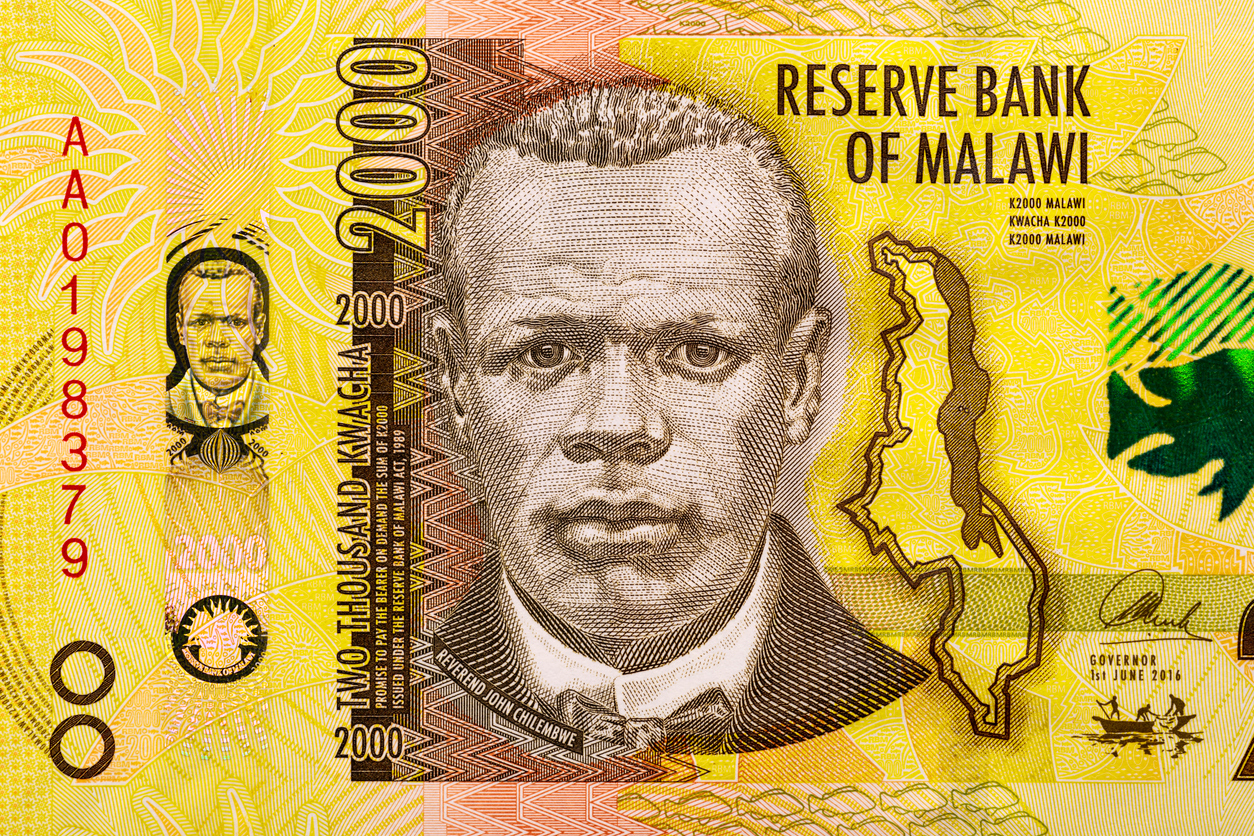
Reverend John Chilembwe on Malawi bank note, 2000 Kwacha of 2016

January 15 is John Chilembwe’s Day and a public holiday in Malawi. On this day Malawians remember and celebrate Reverend (Rev.) John Chilembwe’s uprising against the British colonial rule on January 23-26, 1915. Rev. Chilembwe, a Baptist minister, was born around 1871 in Chiradzulu District in Malawi (then a British colony called Nyasaland). He was first educated by Scottish missionaries. Later he met an English missionary, Joseph Booth, who had a huge influence on him both theologically and politically.  Through his contacts in the United States of America (USA), Booth facilitated John Chilembwe’s move to USA in 1897 where he studied at Virginia Theological Seminary and College (now Virginia University of Lynchburg) in Lynchburg, Virginia. In 1900, Rev. Chilembwe returned to Malawi and established Providence Industrial Mission (PIM) which comprised of a church and a center where Chilembwe taught and emphasized on self-reliance, education, and improved agriculture.

When Rev. Chilembwe returned to Malawi in 1900, he was appalled by the suffering and ill treatment that his fellow countrymen were experiencing under the British colonial government and at the hands of the white European settlers. Two things that bothered Rev. Chilembwe most and led to his 1915 uprising were, first, forced labor of Malawians working on European owned farms and estates, particularly, at Alexander Low (A.L.) Bruce Estates in Magomero, Chiradzulu. This forced labor also called Thangata in vernacular required Malawians living on lands that the Europeans claimed to be theirs to work on the Europeans’ farms and estates under very harsh conditions and for free as rent or tenancy payment. In relation to Thangata, Rev. Chilembwe was also bothered by the racial discrimination and the treatment of Malawians as “the underdog.” In his letter of 1914 to Nyasaland Times, Rev. Chilembwe wrote,“In time of peace the Government failed to help the underdog. In time of peace everything for Europeans only. And instead of honor we suffer humiliation with names contemptible.”[1]

Second, Rev. Chilembwe strongly opposed the recruitment of Malawian men to fight in the First World War in Tanganyika (present day Tanzania). As the Allied Forces (Britain, Russia, Italy, Japan and the USA) fought against the Central Powers (Germany, Austria, Hungry, and Turkey), they took the war to their colonies in Africa. Among other places in East and Southern Africa, the war was fought in Tanzania which was a colony of Germany. The colonial British government recruited Malawian men to fight against German forces in Tanzania and other places in East Africa. Rev. Chilembwe was not amused because he believed that this was not an African war but a European war. In his strongly worded letter to Nyasaland Times in 1914, he wrote:

On the commencement of the war, we understood that it was said indirectly that Africa had nothing to do with the civilized war. But now we find that the poor African has already been plunged into the great war. A number of our people have already shed their blood, while some are crippled for life…The masses of our people are ready to put on uniforms ignorant of what they have to face or why they have to face it… Let the rich men, bankers, titled men, storekeepers, farmers and landlords go to war and get shot. Instead, the poor Africans who have nothing to own in this present world, who in death, leave only a long line of widows and orphans in utter want and dire distress are invited to die for a cause which is not theirs.[2] 
After writing many letters of protest to the colonial government, having preached a number of sermons denouncing the racial discrimination and inhumane treatment of Malawians by the colonial rule and white settlers, and having seen no change to the status quo, Rev. John Chilembwe orchestrated an uprising that started on the evening of January 23 and ended on January 26, 1915. Under the orders of Rev. Chilembwe, his men attacked A.L. Bruce Estates and beheaded its manager, William Jarvis Livinstone, in the presence of his wife, Katherine, and his young daughter, Nyasa.[3] Livingstone’s head was brought to Rev. Chilembwe who on the following day, January 24, 1915 which also happened to be a Sunday, put it on display during the worship service at PIM.[4]  Rev. Chilembwe’s men  also killed other two white settlers and three  Malawians who were working on the estates. It should be highlighted here that Rev. Chilembwe insisted that wives and children of the white settlers should be spared at all cost. Another group of Rev. Chilembwe’s men went to break into African Lakes Company’s armory in Blantyre to steal guns and ammunition to assist them in the uprising.  This mission was partially successful and they managed to get away with a few guns and boxes of ammunition after the break-in was thwarted by the guards at the armory.

The colonial government’s response was swift and brutal. They arrested, tried, and either imprisoned or executed many of Rev. John Chilembwe’s men. Those who resisted arrests or fled were shot by the police or the army which was also Rev. Chilembwe’s fate on February 3, 1915. He was shot dead by the police as he attempted to escape to Mozambique. The government also demolished the church building that Rev. Chilembwe built and banned Providence Industrial Mission for slightly over a decade. It was later allowed to reopen in 1926 under new leadership of Rev. Dr. Daniel Sharpe Malikebu the first known Malawian qualified medical doctor who was also an ordained Baptist minister.

Two main motives have been suggested for Rev. Chilembwe’s uprising. Some have claimed that he wanted to eliminate all Europeans in Nyasaland and to make himself the ruler of the nation. Others have argued that Rev. Chilembwe wanted to die as a martyr, “making a symbolic gesture of protest to demonstrate that the conditions then prevailing in Nyasaland were intolerable to the African community.”[5] A renowned Malawian historian, Desmond Dudwa Phiri, writes that on the day before the uprising, Rev. Chilembwe addressed his followers and said, “I am not saying that we are going to win the war [against the colonial rule] …some of us will die on the battlefield and leave behind widows and orphans, but they will be free people. Our blood will mean something at last.”[6] Whether it was to gain self-rule or to die as martyr, the majority of Malawians regard Rev. John Chilembwe as a national hero. His face appears on Malawi banknotes.  Places and roads are named after him in addition to having a special day every year to remember and celebrate his life and uprising.

However, Rev. Chilembwe’s uprising also poses a very serious Christian ethical dilemma, especially, when we consider the violent taking away of three lives of white settlers and the three lives of fellow Malawians in the confines of their own homes and in the presence of his spouse and daughter in the case of William Jarvis Livingstone. The beheading and later displaying of Livingstone’s head in a worship service also casts a Christian in a moral quagmire. The sixth commandment is very clear, “You shall not murder” (Exodus 20:13; Deut. 5:17). The Westminster Larger Catechism expounding on this commandment notes “The sins forbidden in the sixth commandment are, all taking away the life of ourselves, or of others, except in case of public justice, lawful war, or necessary defense (Genesis 9:6; Numbers 35:31, 33; Romans 13:4; Exodus 22:2-3)” (Q. & A. 136).[7]

The catechism clarifies that murder is prohibited by God but also highlights that there are three exceptions.  First, as public justice, governments may take away human life in a form of capital punishment after the legitimate courts have sentenced one to death often in cases of murder. Second, taking of human life is not murder in the case of lawful war which is also called just war. The great medieval African theologian St. Augustine of Hippo helps us understand what a just war is in books 19 and 22 of his famous work, The City of God.[8]  St. Augustine observes that a just war is necessary to prevent a greater evil and should be carried out after exhausting diplomacy and other peaceful options. The cause of just war should be to respond to an enemy’s injustice or aggression (defensive rather than offensive) and the government and not private citizens should declare the war. Furthermore, just war should be carried with the right intention of securing lasting peace and justice and not out of revenge, greed, or mere desire for conquest. The third exception according to the larger catechism is “necessary defense.” When one person attacks another with the intention of killing him, the attacked person has the right to defend himself even if it means taking the life of the attacker (Exodus 22:2).

Considering Rev. Chilembwe’s killings, none of them fall in any of these three exceptions. The killings were not carried out by the state as “public justice.” The taking of the six human lives also does not fit the description of “lawful war” in that it was not in response to murder that had already occurred and Rev. Chilembwe was reacting to that injustice. Furthermore, the killings were not sanctioned by the state. Lastly, Rev. Chilembwe’s killings were also not a “necessary defense.” This is why some Christians who celebrate other aspects of Rev. Chilembwe’s life and work found themselves in the ethical dilemma when it comes to celebrating Rev. Chilembwe’s uprising because of the murders that took place on the evening of January 23, 1915 at A.L. Bruce Estates in Magomero, Chiladzulu.

It is also interesting to note that some of Rev. Chilembwe’s contemporaries opposed his violent approach to attaining independence. The first ordained Malawian Presbyterian minister, Rev. Harry Kambwiri Matecheta, who was also a friend of Rev. Chilembwe discouraged him from proceeding with the uprising. In his memoir, Rev. Matecheta writes that Rev. Chilembwe would visit him and other Malawian Christian leaders trying to persuade them to join the rebellion. He also recalls spending one sleepless night with Rev. Chilembwe and his elders at Rev. Chilembwe’s house plotting the uprising. Rev. Matecheta declined to be part of the revolt and told Rev. Chilembwe that “his way was that of love” and he was hopeful that one day there would be a peaceful handover of power from the colonizers to Malawians.[9]

I believe it is important to clarify here that this is in no away an attempt to diminish or discredit the good work and ministry of Rev. Chilembwe. This is also not even an effort to question his Christianity. But it is to admit as the 19th century Anglican Bishop J.C. Ryle once observed that the best of men are men at best. Even the most admirable Christians among us are still imperfect humans, prone to sin and constantly needing the saving grace of Christ. We see this truth constantly in the Bible. The great servant of the Lord, Moses, despite the glorious encounters with God and being entrusted with the huge responsibility of leading God’s people into the promised land failed to enter the land apparently because of sinful anger (Numbers 20:10-12).  King David the man after God’s own heart committed adultery with Bethsheba and orchestrated the murder of her husband, Uriah (2 Samuel 11:1-27). Apostle Peter despite being the rock on which Christ will build his church, out of sinful fear denied the Lord Jesus Christ three times (Matthew 16:16-19; Luke 22:54-62). Rev. Chilembwe was not an exception. His great work and ministry was stained by the murders of January 23, 1915.

January 15 in Malawi will always pose an ethical dilemma for some Christians on whether to celebrate or not celebrate Rev. John Chilembwe’s uprising of 1915. Yet not commemorating the revolt because it involved unlawful taking away of human lives should never be equated with total rejection of the good that Rev. Chilembwe accomplished for his fellow Malawians. Rather it should be a stark reminder that even our Christian heroes have feet of clay. The only hero who does all things well is Jesus Christ.


[1] History for the 21st Century, https://www.history21.com/wp-content/uploads/2024/03/World-War-I-3.2-Primary-Source-Chilembwe.pdf, accessed on December 30, 2025 at 2:34pm.

[2] History for the 21st Century, https://www.history21.com/wp-content/uploads/2024/03/World-War-I-3.2-Primary-Source-Chilembwe.pdf, accessed on December 30, 2025 at 2:34pm.

[3] Landeg White, Magomero: Potrait of an African Village, Cambridge University Press, 1989, pp. 137-138

[4] Power, Joey (2010). Political Culture and Nationalism in Malawi: Building Kwacha. Rochester Studies in African History and the Diaspora. New York: University of Rochester Press, 19.

[5] Kenneth R. Ross and Klaus Fiedler, A Malawi Church History 1860-2020, Mzuni Press, Mzuzu © 2020, p.138-139.

[6] John Chilembwe, cit. D.D. Phiri, Let us Die for Africa: An African Perspective on the Life and Death of John Chilembwe of Nyasaland/Malawi, Blantyre: Central Africana, 1999, 64.

[7] The Westminster Confession of Faith and Catechisms, Christian Education and Publications, 2007, p. 276-277

[8] St. Augustine of Hippo trans. by Marcus Dods, The City of God, Hendrickson Publishers, 2009 pp. 605-639, 731-782.

[9] Harry Kambwiri Matecheta, Blantyre Mission: Stories of its Beginning, Luviri Press, Mzuzu, 2020, p. 86.

What Should Christians Make of Death Penalty?

The debate on whether Malawi should abolish death penalty or capital punishment continues to gather momentum. The Evangelical Association of Malawi and other mainline denominations have already come out in the open to support the abolishment proposal. However, other Christians are in favor of keeping the penalty in our laws.  In God’s providence I recently preached from Genesis 8:20-9:17 which I think adequately addresses the place of capital punishment in the human society.

As we come to Genesis 9:20 we meet Noah, who has just come out of the ark after the flood, building an altar to God as an act of worship. The Lord is pleased with Noah’s worship and reinstates the creation mandate which he first gave to Adam and Eve in Genesis 1:28 “To be fruitful and multiply and fill the earth” (Genesis 9:1, 7). Then the Lord also establishes death penalty for murder and decrees, “And for your lifeblood I will require a reckoning: from every beast I will require it and from man. From his fellow man I will require a reckoning for the life of man. ‘Whoever sheds the blood of man, by man shall his blood be shed, for God made man in his own image’” (Genesis 9:5, 6)

If an animal attacks and kills a man, God orders that the animal should be killed. If one man kills another man, God requires that the life of the murderer should be taken away too. The reason for this commandment is that man was made in the image of God. John Calvin comments, “No one can be injurious to his brother without wounding God himself.” One undebatable truth in Genesis 9:5, 6 is that it is God himself who established death penalty.

Further, it is worth noting here that when the first murder in the history of mankind occurred in Genesis 4:8, God reserved the right to take the life of the murderer, Cain, to himself (Genesis 4:15). However, now God gives this right to man. “Man” in this passage should be understood as human government as we read in Romans 13:4 that human government is “the servant of God, an avenger who carries out God’s wrath on the wrongdoer.” After Genesis 9:5, 6 we don’t read anywhere else in the Bible where God reverses death penalty for murder which means that the command still stands today.

Some Christians who are against death penalty appeal to Matthew 5:38-40 as a ground for abolishment of death penalty. In Matthew 5:38-40 Jesus says, “You have heard that it was said, ‘An eye for an eye and a tooth for a tooth.’  But I say to you, ‘Do not resist the one who is evil. But if anyone slaps you on the right cheek, turn to him the other also.’” Does Jesus here abolish death penalty for a murderer? Not at all!

“An eye for an eye” or lex talionis in Latin is a legal principle that punishment should fit the crime. Courts should not give a greater punishment to a smaller crime or a smaller punishment to a greater crime. This principle rightly applies to criminal justice. However, people in Jesus’ time were abusing and seizing it as pretext for taking personal revenge on those who wronged them. So, Jesus is teaching that outside of criminal matters, Christians should not pay evil with evil but instead should overcome evil with good (Romans 12:21). The example of a slap on the cheek is not literal as that would mean Jesus forbids self-defense in the face of an attack.

Christians might differ on their view of death penalty for murder and we should respectfully agree to disagree. But I believe that it is hard to argue that death penalty for murder which was established by God himself in Genesis 9 is no longer required today. I just can’t find any biblical evidence in support of that argument.

The Reformed Pastor Conference

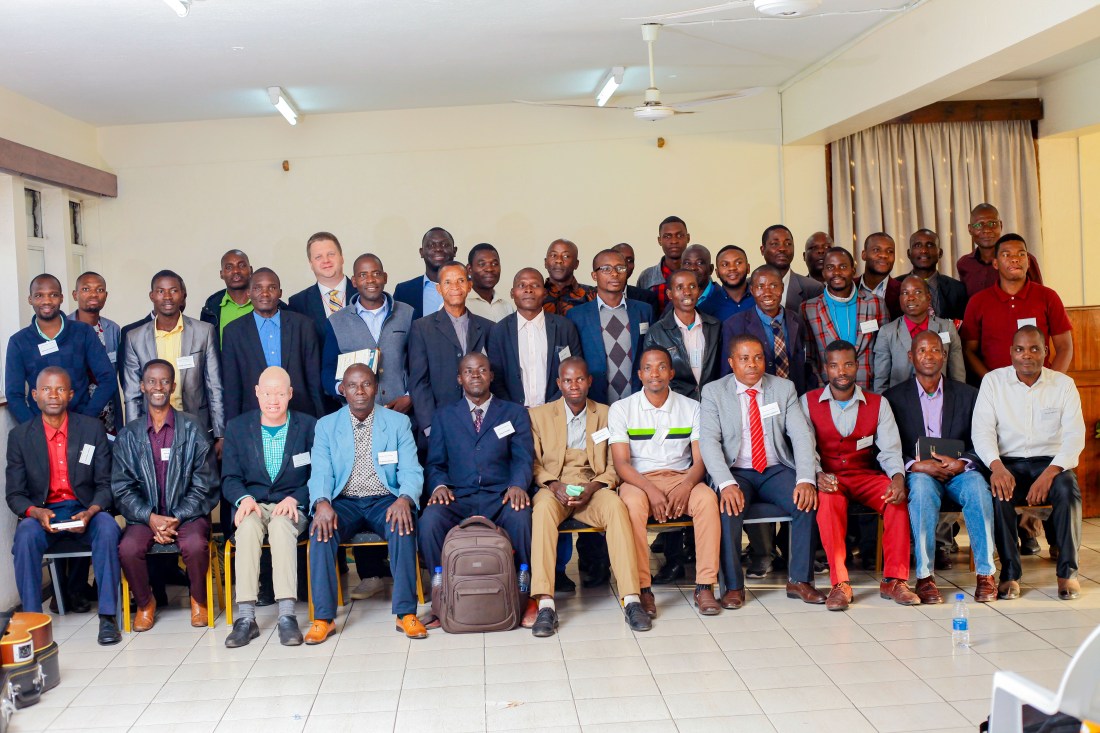
May 29-30, 2024, pastors from different denominations met at Christ Presbyterian Church in Blantyre, Malawi for the 2024 Reformed Pastor Conference. The theme for this year’s conference was, The Sufficiency of Christ. Pastor David Woollin from Grace Immanuel Reformed Baptist Church and Heritage Reformed Books in Grand Rapids, Michigan spoke on the three offices of Christ: prophet, priest, and king. He also spoke on faithfulness in ministry.

The Reformed Pastor Conference was started by Christ Presbyterian Church (CPC) in partnership with the Malawi Reformation Network (MRN).  The name of the conference was inspired by an address taken from Acts 20:28 by a 17th Century Reformed and Puritan pastor, Richard Baxter, which was later turned into a book titled The Reformed Pastor.  The first Reformed Pastor Conference was held on October 27, 2019 at African Bible College campus in Lilongwe, Malawi.

The four major objectives of the Reformed Pastor Conference are:

  1. To encourage pastors to be ordinary means of grace pastors. The Westminster Shorter Catechism question and answer 88 reminds us: “The outward and ordinary means whereby Christ communicates to us the benefits of redemption are, his ordinances, especially, the Word, sacraments, and prayer; all which are made effectual to the elect for salvation.” The conference seeks to encourage ministers to continue believing in the power of God’s word and constantly preach it faithfully. We would like also to encourage pastors to continue cultivating a healthy prayer life as an indispensable part of their ministry.
  • To provide a platform where pastors can get a better understanding of the Reformed faith. The Reformed faith or being Reformed can sometimes be misunderstood or even caricatured. But through the conference we pray that pastors, especially, those that are not familiar with the Reformed faith or are considering to become Reformed in their faith and ministry (Reforming pastors) might get a good grasp of the faith.
  • To share Reformed literature and resources. One of the greatest challenges that the church in Malawi (and this can be said of Africa as a whole) faces is lack of sound biblical literature and resources. Reformed Pastor Conference seeks to bring pastors together once a year and share with them reformed literature and resources that are beneficial to their ministry.
  • To promote fellowship and networking among Reformed pastors in Malawi. Pastoral ministry can sometimes feel very lonely, more especially, when you do not have many like-minded pastors who can encourage you in your work. Since Reformed pastors are a minority in Malawi, the conference seeks to promote fellowship and networking among these ministers. 

May you join us in praying for revival and reformation in our lives, churches, our nation of Malawi, and the whole world at large.

As Your Days, So Shall Your Strength Be

On Thursday, November 9, 2023 the Malawi Government through its central bank, the Reserve Bank of Malawi, devalued the value of the Malawi currency, the Kwacha, against the US Dollar with 44%. One major impact of this move was the immediate increase of the inflation rate of food items from 36.8 as recorded in September 2023 by National Statistical Office . There is fear and panic for many Malawians who most of them live from hand to mouth. Yesterday, November 10, 2023, I sent this brief note of encouragement to the members of my church family, Christ Presbyterian Church, Blantyre.

Dear my beloved church family,

I am sitting in my study after a long day which most part of it included hearing the fears of many for the future as the economic situation in our country continues not to inspire much hope. I thought of writing this quick note to you beloved people of God. It could be that you are also scared of what the future holds for you and your loved ones. Maybe you are despairing of life itself as Paul would say in 2 Corinthians 1:18.

One verse that is lingering in my mind as I finish my day is God’s own promise to us his people in Deuteronomy 33:25. Moses is about to enter the glory of his Lord, so he blesses all the twelve tribes of Israel. When he comes to the tribe of Asher, he blesses it and says, “Your bars shall be iron and bronze, and as your days, so shall your strength be.” My main focus is on the last part of the verse“as your days, so shall your strength be.”

The Lord promises to supply us with strength (grace) for each day he gives us. We can count on this promise for it is coming from the one who neither changes nor lies. The key thing to notice well is that this grace will be available as each day comes. In the midst of difficult economic times like these ones, if you are like me, you want to receive the grace for today and tomorrow and even next week today. But the Lord never supplies tomorrow’s grace today. His mercies are new every morning. He gives grace every day in a fresh way.

So beloved people of God may this promise be your encouragement and comfort if you are getting anxious about tomorrow in these hard economic times. Let us continue to draw close to Christ, work honestly with our hands, and trust our God through Christ to supply us with strength or grace to go through each day. As the great African theologian St. Augustine once observed, “Trust the past to God’s mercy, the present to God’s love, and the future to God’s providence.” May we all do that. Also, to borrow the words of the hymn writer:

“Afflicted saint, to Christ draw near,
Your Savior’s gracious promise hear;
His faithful Word you can believe:
That as your days your strength shall be.

So, sing with joy, afflicted one;
The battle’s fierce, but the victory’s won!
God shall supply all that you need;
Yes, as your days your strength shall be.”

Good night, beloved saints! May the Lord bless and keep you and continue to make his face shine upon you in Christ.

What Are Christians to Make of the Efforts to Legalize Homosexuality in Malawi?

Christians in Malawi are waiting with bated breath for the outcome of the case that is before the Malawi Constitutional Court regarding decriminalization of same sex marriages. Jan Willem Akster, a Dutch national, and Jana Gonani from Mangochi brought the case before the court in April this year.  Christians (both Protestant and Roman Catholic) have spoken against legalization of same sex marriages in Malawi because it is sin (Romans 1:24-27; 1 Corinthians 6:9; Leviticus 18:22). As Christians we would love to see our nation upholding God’s revealed will that sex is his gift to married man and woman.  While we acknowledge that Malawi is not a theocracy we know that there are some blessings we enjoy from God as a nation because we honor him with our constitution (Proverbs 13:34; Psalm 33:12).

Another great concern that should drive Christians to their knees and plead with the Lord that Malawi does not decriminalize same sex relationship should be shaped by what we have seen elsewhere as one country after another has legalized homosexuality.  The gay movement has proved that it always wants more. Legalization won’t be enough. The ultimate goal of gay agenda everywhere is moral approval. When Christians and others refuse to approve their lifestyle, the gay movement fights back and pushes for legislation that inflicts greater penalties as we have seen in the countries that have already legalized same sex relationships. Cases in point are that of bakers and photographers who refused to render services to gay wedding ceremonies in the UK and USA.

We cannot afford to be naïve in this matter. The gay movement is a well-coordinated and strategic undertaking. In her book, Victory: The Triumphant of Gay Revolution, Linda Hirshman details the strategy of gay agenda in America. One interesting area for Christians to note is where she discusses the four obstacles that the gay revolution identified: Churches for preaching that homosexuality is sin, the state for criminalizing homosexuality, doctors – mainly psychologists – who argued that it was an abnormal behavior, and the US military that feared gays would be traitors to their nation. The gay movement in America managed to clear all these obstacles. It could be the same blue print that would be used in Malawi. What is playing before us might just the beginning. The ultimate goal could be to make or even force every sector of our society including the church to say “gay is good” as Hirshman proudly explains in her book. 

Now in the case that the constitutional court rules in favor of Akster and Gonani, what should Christians do? We should acknowledge that even that outcome is under God’s sovereign will. Therefore, rather than getting dejected we should press on to preach the gospel and love our neighbors. The promise of Christ remains true: he will build his church and the gates of hell will never prevail against it (Matthew 16:18). As we sing in that famous hymn, “This is my Father’s World,” Christ is still the king of heaven and earth no matter how evil seems to prevail:

“This is my Father’s world. O let me ne’er forget
That though the wrong seems oft so strong,
God is the ruler yet.
This is my Father’s world: The battle is not done;
Jesus who died shall be satisfied,
And earth and heav’n be one.”

We should also continue to respect lesbians, gays, bisexuals, transgenders, and queers (LGBTQ) knowing that they are still God’s image bearers. We should avoid messages or tones that might fuel hatred. Respect in this case does not mean endorsing their lifestyle. In the wisdom of Jude we should, “show mercy with fear, hating even the garment stained by the flesh,” (Jude 23).  Christians should graciously continue to preach the gospel and challenge LGBTQ people to repent of their sin and find freedom in Christ. To LGBTQ people reading this post, I would like you to know that while I believe that same sex relationship is sin because the Bible clearly says so, I also believe that you are not beyond the redeeming power of Christ’s cross. He is the righteous one who died for us the unrighteous ones. If you come to him in repentance he promises never to cast you out (John 6:37). There is power and hope in the cross of Christ. So come to the cross, come to the Savior!

Christ Presbyterian Church coming soon to Blantyre, Malawi


logo_hozirontal

“Neither he who plants nor he who waters is anything, but only God who gives the growth…For we are God’s fellow workers. You are God’s field, God’s building” (1 Corinthians 3:7, 9).

I am excited to begin the work of planting Christ Presbyterian Church (CPC) soon, Lord willing. My family, friends, and I have been praying for this work for so many years and we praise the Lord that he is now establishing it. We will  start with a Bible study in September 2019. We have a few families that will form the core group of our study. We are praying for more to be added.

We also have three pastoral interns that will be joining us. We desire to invest in these young men and prepare them for pastoral ministry in the coming years. One of CPC’s major goals will be  to see more confessional churches planted across Malawi. We trust that the Lord will use these interns to help us accomplish our goal.

Looking ahead the following are major events coming up:

  • June 2019: My family and I attend a church-planting training in Europe.
  • July 2019: We arrive in Malawi.
  • September 2019: Our interns begin their pastoral internship.
  • September 2019: We begin to meet and study the book of Ephesians in our home.

So may we ask you to pray for us. Also if you have friends in Blantyre let them  know that CPC is starting soon. If you would like to know more or attend our Bible study do not hesitate to contact me or visit our website http://www.christchurchmalawi.org


Pray for Malawi

Dear friends,

I would like to request you to urgently pray for Malawi. In the last couple of years, people living with albinism in Malawi have been attacked, murdered, and their body parts removed. It is believed that those perpetrating this despicable crimes believe that the body parts of people with albinism when used with other charms can bring fortune or make one rich (And we know that this is a dangerous superstition from the pit of hell). As I am writing now, this evil has worsened and many people living with albinism are scared for their lives. Just last week, a boy aged 14 was abducted.  A body close to where he was abducted was found with some parts removed.  The police are yet to identify the body.

While government, politicians,  and other stakeholders are working to address this evil, I believe, the greatest need of Malawi is the gospel. Please pray that the gospel of Christ will be preached in power of the Holy Spirit and souls will be converted. It is very disheartening that a nation that claims to be Christian can be marked by this cruelty. But in the midst of this darkness, I hope for the light that will shine and open the eyes of those blinded by the god of this world (2 Cor. 4:3-6).  As the Lord promised Solomon, I believe, we can stand also on the same promise, and as his people pray that God will heal Malawi, protect people with albinism, and more importantly, destroy this evil, and  revive his Church (2 Chron. 7:14). Thank you for praying. 


Lessons and Highlights from Twin Lakes Fellowship 2018

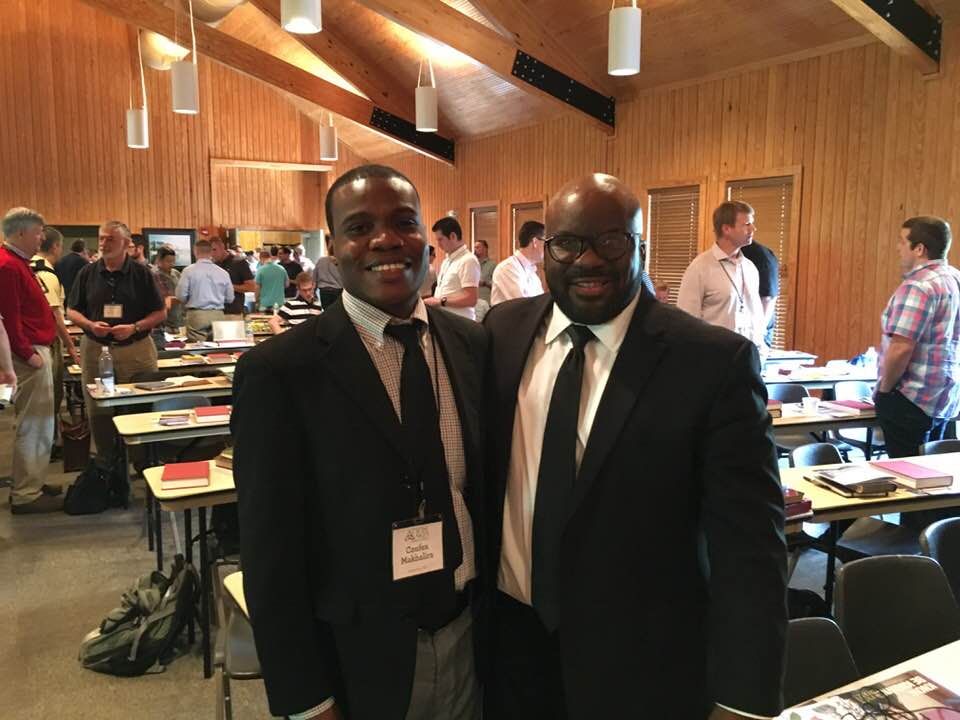
With one of the keynote speakers, Rev. H.B. Charles of Shiloh Metropolitan Baptist Church, Jacksonville, Florida.

From Monday to Thursday last week I had an opportunity to attend a gathering of ministers, elders, seminary professors, and seminarians called Twin Lakes Fellowship (TLF). The First Presbyterian Church of Jackson, Mississippi (PCA) organizes the fellowship with this vision in mind: “We seek (by brotherly persuasion, helpful publication, friendly discussion, and compelling example) to build a church that will be faithful to the following commitments: expository preaching, biblical worship, biblical and confessional theology, a biblical understanding of the Gospel, a biblical understanding of conversion, a biblical understanding of evangelism, a biblical understanding of church membership, a biblical understanding of mutual accountability in the church, a biblical understanding of church government, and a biblical view of Christian discipleship – and thus a church with a shared vision of ministry.”

As always, this year’s gathering was rich and full of sound and God-glorifying teachings, exhortations plus fellowship. This year’s TLF granted me an opportunity to fellowship with brothers from the Presbyterian Church in America (PCA), Orthodox Presbyterian Church (OPC), Evangelical Presbyterian Church (EPC), Presbyterian Church in Ireland (PCI), Free Church of Scotland, Southern Baptist, and other denominations. I was significantly edified and encouraged by various sessions and interactions with my brothers. While I cannot exhaust everything in this post, here are some of the highlights and lessons from TLF 2018:

We cannot do ministry without the Holy Spirit. The keynote speakers, H.B. Charles and Geoff Thomas, emphasized on our need for the Holy Spirit to empower us not only for ministry but also for our personal walk with Christ. Without the Holy Spirit our preaching and shepherding is in vain. I know that many of us know this truth very well but how often do we live as if we don’t know it. So, it was a blessing to be reminded again of our need and dependence upon the Holy Spirit who not only empowers us but also continually intercedes for us. As H.B. put it, the Holy Spirit is our ultimate prayer partner.

The best of men are men at best. Jon D. Payne gave a lecture on the life and ministry of Dr. David Martin Lloyd Jones fondly known by many as the doctor. We praise the Lord for the life and faithful ministry of Dr. Jones who as Payne put it is probably the greatest preacher of the 20th Century. Yet despite being used greatly by Christ, the doctor just like all of us was also a man of weaknesses both personal and theological. Payne focused more on the latter and highlighted some of the doctor’s shortcomings in the area of pneumatology (doctrine of the Holy Spirit). D. Martin Lloyd Jones like many of the Pentecostal and Charismatic Christians today believed in the baptism of the Holy Spirit subsequent to conversion. He even supported the charismatic movement of his day in private but never in public. As I sat and listened to the lecture, I recalled one of my professors in seminary who often reminded us: the best of men are men at best. The best among us are made of feet of clay. This truth calls for humility and teachable spirit when fellow brothers point us to our own shortcomings, which we might be unaware of.

Never neglect the courts of the church. I was encouraged to hear of what the Lord is doing in the Presbyterian Church of Ireland. The denomination is slowly recovering from the liberal direction it had taken over the past four decades or so. One of the factors that has contributed to this good development is conservative men taking initiative and being fully involved in the courts of the church, especially, at presbytery and synod levels. These brothers have with patience and endurance fought the good fight without despair. The Lord is now rewarding their faithfulness. One lesson I gathered as I heard this uplifting news was to never forget that the Lord is still at work even in our church courts although they might be imperfect and often heavily tainted with our sin.

The power is in the word itself. Using the parable of the growing seed in Mark 4:26-29, David Strain encouraged us to continue steadfastly with the means of grace ministry. He focused more on the power of God’s word. As preachers, we have been called to do two things: sow the seed and harvest when the fruit is ready. What happens between the time of sowing and harvesting is none of our business. “Growth is God’s business, faithfulness is ours.” The power of the gospel is not in our gifts, skills, academic abilities, or anything in us. So we should never be tempted to think that we could improve the gospel in any way. What a comforting truth! I praise the Lord that I was at TLF this year because this is exactly what I need to hear.

All is not lost in Scotland. I should confess that I have a special place for Scotland in my heart. As a Presbyterian from Malawi, Scotland is my “holy” land so to speak since it was the Scottish missionaries who first brought Presbyterianism to Malawi in the late 1800s. Over the years I have been hearing depressing stories of Presbyterianism dying in Scotland. But I was encouraged last week to hear stories of God’s powerful work there. I met some brothers who are involved in planting churches in the toughest and poorest neighborhoods of Scotland through 20 Schemes Project. My heart rejoiced and I praised the Lord for the great things he is doing in the once called ‘land of the Book.’ I will continue to pray for revival in the land of the Scots as I also continue to pray for revival in Malawi and North America.

“Brother, we are praying for you and we will get behind God’s work in Malawi.” During the fellowship I had a couple of opportunities to share my desire of returning to the land of my birth to plant confessional Presbyterian churches as well as train young men for ministry. Confessional Presbyterianism has been on its deathbed for a long time in Malawi. There is a need to revive it, the Lord willing, as one way of combating false teachers and prophets that have gone out deceiving people and hewing cisterns that will not satisfy. The work is huge and who is sufficient for these things? For sure, not me! But praise God that Christ is sufficient and has promised, “I will build my church and the gates of hell will never prevail against it.” Oh, what a promise! So I was greatly encouraged to see the brothers getting excited with the work and praying for it.

As the week came to an end, I packed up to fly out of the warm and beautiful spring of Jackson, Mississippi into the snowy and gloomy spring of Lansing, Michigan (not complaining at all for I have learnt to give thanks in all things). Throughout the way I praised the Lord for a rich fellowship of like-minded brothers. “Behold, how good and pleasant it is when brothers dwell in unity…It is like the dew of Hermon, which falls on the mountains of Zion! For there the LORD has commanded the blessing, life forevermore” (Psalm 133:1, 3).


Malawi, Legalization of Abortion is Really a Bad Idea

As I am writing this post, my heart is filled with fear. I can literary feel it as if it is sinking down into a bottomless pit. Why am I afraid? I hear that the movement pushing for legalization of abortion in Malawi is gaining momentum. They are courting religious leaders, chiefs, law makers and other people of influence and power in our land to sway them towards supporting legalization of abortion.

I cannot help but fear for my country. Friends, legalization of abortion not matter on what grounds is ugly and should not even be the last thought for Malawians. Please let’s learn from the countries who have taken this path before and we will discover what a dangerous beast legalization of abortion is to any society. It will devour our nation.

Right now, I am living in a part of the world that has taken this path. It is sad and heartbreaking to hear that every day women are killing so many unborn children even for lame reasons like “I just don’t want this baby.” Just open your browser and google the numbers of children being killed in their mothers’ womb in the countries that have legalized abortion and you will be shocked. Malawi should not cheat herself that she can legalize abortion and never reach that point because she will sure do.

It is a very dangerous trajectory but it all starts with that one step of legalization. The advocates of legalization of abortion are making it to sound as if it is a very good and harmless idea as they fly their statistics in our face of how many women are dying due to the so called unsafe abortion and how much money our government is spending in post abortion care, but believe you me the consequence of legalizing abortion will overwhelm us. Once Malawi opens this door, there will be no any other way of closing it. Any woman even without any reason would choose to murder their unborn baby. Who would stop them if the law would leave the door wide open?

Those advocating for legalization of abortion argue that they are many women who are dying due to unsafe abortion. But what is causing abortion? Is it the law that prohibits it? Definitely not! No one would abort just because the law states that abortion is illegal. There should be factors that are causing this murdering of unborn children. Why not then address the causes instead of spending more energy on effects.

Life is very sacred and priceless. God the creator and giver and sustainer of life has not entrusted the right of taking it to a mother who thinks that she does not need the child in her womb for various reasons . “You shall not murder,” he commands us in Exodus 20:13. He also tells us in his word, the Bible, that life begins at conception (Psalm 51:5) hence abortion is murder and sinful.

Malawi, seriously ponder on this: according to God’s Word, God’s wrath shall rest heavily on a nation that perseveres in such murderous tragedies as abortion. Dr. Joel Beeke and Jim Beeke have explained this point very well in their essay, “Is Abortion Really So Bad?” and I will borrow some of their thoughts to expound it.

In Exodus 21:22-23 we read: “When men strive together and hit a woman, so that her children come out, but there is no harm, the one who hit her shall surely be fined, as the woman’s husband shall impose on him, and he shall pay as the judge determines. But if there is harm, then you shall pay life for life.”

If God commands such a heavy and great penalty for an accident like this one, will he stand aside and idly look at a deliberate and planned abortion? Legalizing abortion is tantamount to calculated and legalized murder of nameless, voiceless, helpless human beings created by God. Like those ungodly nations we read in the Bible who sacrificed their infants to their gods (Deuteronomy 12:31), I am afraid that if we legalize abortion in Malawi, it will also one day be said of us that Malawians sacrificed their unborn sons and daughters to the god called Selfishness on the altar of abortion. I pray that we will not reach that extent. May God bless Malawi and keep it a land of peace where we continue to value, respect and appreciate the lives of unborn children just as we value, respect and appreciate any other human life.

Malawian Presbyterianism: Are We Standing or Falling like PCUSA?

My fellow Presbyterians in Malawi,

Last Thursday, (June 19, 2014), the Presbyterian Church of United States of America (PCUSA) passed a resolution to allow gays or lesbians to marry in church. Now, this has shocked some but I am not really shocked. Why? Because this is just one of the fruits of steps that were taken many years ago beginning from 1920s.

PCUSA through the Auburn Affirmation in 1920s rejected that the Bible is without error (inerrancy of Scripture), the virgin birth of Jesus and his deity, that Christ died on behalf of sinners (substitutionary atonement), bodily resurrection of Christ and authenticity of Christ’s miracles. Jesus’ miracles were said to be myths. The Auburn Confession also declared that Presbyterians in PCUSA must:

• “safeguard liberty of thought and teaching of its ministers”;
• prohibit the restricting of church teaching to rigid interpretations of Scripture and doctrine; and
• refuse to rank ecclesiastical authority or the authority of the Bible above that of the individual Spirit-led conscience. (In other words, man can decide what or what not to believe in the Bible). (http://www.layman.org/Files/how-we-got-here-updated.pdfhttp://www.layman.org/Files/how-we-got-here-updated.pdf).

This declaration led to many things like increased focus on social justice to the extent that salvation, in some cases, is viewed as a mere liberation from poverty and social injustice. This focus on social justice and human rights also led to less emphasis in following the Bible when it comes to the ordination of who is to be a deacon, an elder or a pastor in the church as outlined in 1 Timothy 3:1-13 and Titus 1:5-9.

From 1990s to date, PCUSA among other things has accepted that gays or lesbians can be members of the church, pastors and elders or deacons and a few days ago it has accepted that gays or lesbians can officially marry in church. Marriage is now no longer between a man and a woman but between “two people.”

Now, we might look at PCUSA and think, “That’s America, it will never happen to the Presbyterianism in Malawi. But “Let anyone who thinks that he stands take heed lest he fall,” (1 Cor. 10:12). The Presbyterian Church in Malawi partners with PCUSA in a number of areas. A good number of PCUSA congregations also have exchange visits with Presbyterian congregations in Malawi.

I wonder and fear if PCUSA will not influence our Presbyterian church or if it has not already influenced it somehow  knowing that bad company corrupts good character (1 Cor. 15:33). These are my concerns and fears. I believe that all of us including our leaders should ponder on these things lest some years from now, we will also find ourselves in the same place where PCUSA is now.

Thanks for reading. May the Good Lord bless you as you reflect on this post and search the Scriptures to ascertain if these things are so (Acts 17:11).