
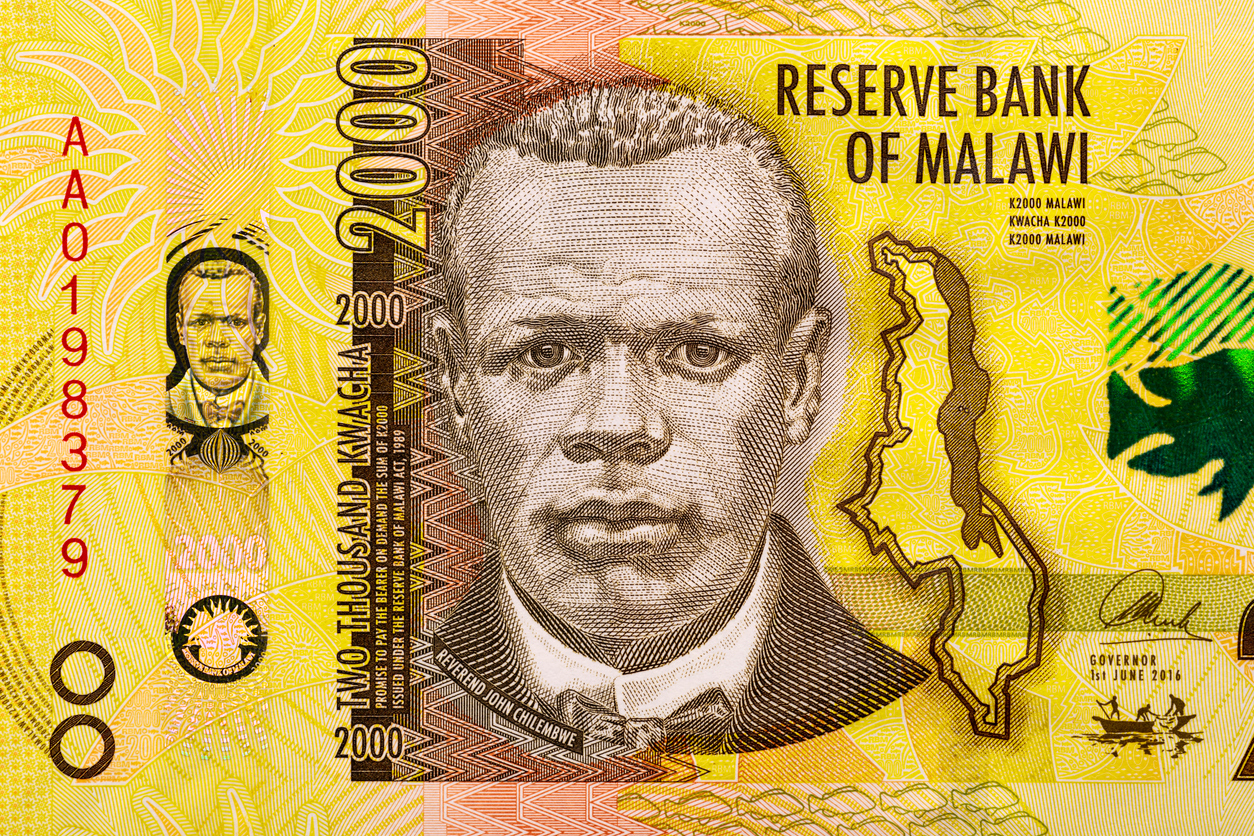
January 15 is John Chilembwe’s Day and a public holiday in Malawi. On this day Malawians remember and celebrate Reverend (Rev.) John Chilembwe’s uprising against the British colonial rule on January 23-26, 1915. Rev. Chilembwe, a Baptist minister, was born around 1871 in Chiradzulu District in Malawi (then a British colony called Nyasaland). He was first educated by Scottish missionaries. Later he met an English missionary, Joseph Booth, who had a huge influence on him both theologically and politically. Through his contacts in the United States of America (USA), Booth facilitated John Chilembwe’s move to USA in 1897 where he studied at Virginia Theological Seminary and College (now Virginia University of Lynchburg) in Lynchburg, Virginia. In 1900, Rev. Chilembwe returned to Malawi and established Providence Industrial Mission (PIM) which comprised of a church and a center where Chilembwe taught and emphasized on self-reliance, education, and improved agriculture.
When Rev. Chilembwe returned to Malawi in 1900, he was appalled by the suffering and ill treatment that his fellow countrymen were experiencing under the British colonial government and at the hands of the white European settlers. Two things that bothered Rev. Chilembwe most and led to his 1915 uprising were, first, forced labor of Malawians working on European owned farms and estates, particularly, at Alexander Low (A.L.) Bruce Estates in Magomero, Chiradzulu. This forced labor also called Thangata in vernacular required Malawians living on lands that the Europeans claimed to be theirs to work on the Europeans’ farms and estates under very harsh conditions and for free as rent or tenancy payment. In relation to Thangata, Rev. Chilembwe was also bothered by the racial discrimination and the treatment of Malawians as “the underdog.” In his letter of 1914 to Nyasaland Times, Rev. Chilembwe wrote,“In time of peace the Government failed to help the underdog. In time of peace everything for Europeans only. And instead of honor we suffer humiliation with names contemptible.”[1]
Second, Rev. Chilembwe strongly opposed the recruitment of Malawian men to fight in the First World War in Tanganyika (present day Tanzania). As the Allied Forces (Britain, Russia, Italy, Japan and the USA) fought against the Central Powers (Germany, Austria, Hungry, and Turkey), they took the war to their colonies in Africa. Among other places in East and Southern Africa, the war was fought in Tanzania which was a colony of Germany. The colonial British government recruited Malawian men to fight against German forces in Tanzania and other places in East Africa. Rev. Chilembwe was not amused because he believed that this was not an African war but a European war. In his strongly worded letter to Nyasaland Times in 1914, he wrote:
On the commencement of the war, we understood that it was said indirectly that Africa had nothing to do with the civilized war. But now we find that the poor African has already been plunged into the great war. A number of our people have already shed their blood, while some are crippled for life…The masses of our people are ready to put on uniforms ignorant of what they have to face or why they have to face it… Let the rich men, bankers, titled men, storekeepers, farmers and landlords go to war and get shot. Instead, the poor Africans who have nothing to own in this present world, who in death, leave only a long line of widows and orphans in utter want and dire distress are invited to die for a cause which is not theirs.[2]
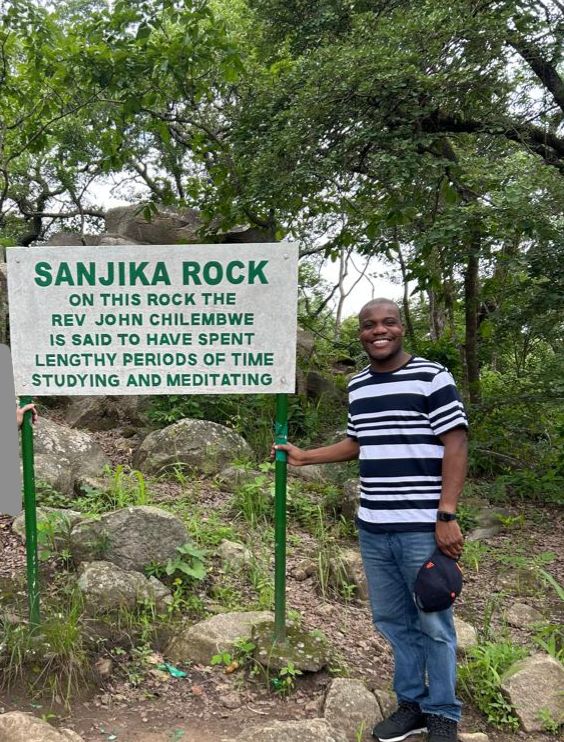
After writing many letters of protest to the colonial government, having preached a number of sermons denouncing the racial discrimination and inhumane treatment of Malawians by the colonial rule and white settlers, and having seen no change to the status quo, Rev. John Chilembwe orchestrated an uprising that started on the evening of January 23 and ended on January 26, 1915. Under the orders of Rev. Chilembwe, his men attacked A.L. Bruce Estates and beheaded its manager, William Jarvis Livinstone, in the presence of his wife, Katherine, and his young daughter, Nyasa.[3] Livingstone’s head was brought to Rev. Chilembwe who on the following day, January 24, 1915 which also happened to be a Sunday, put it on display during the worship service at PIM.[4] Rev. Chilembwe’s men also killed other two white settlers and three Malawians who were working on the estates. It should be highlighted here that Rev. Chilembwe insisted that wives and children of the white settlers should be spared at all cost. Another group of Rev. Chilembwe’s men went to break into African Lakes Company’s armory in Blantyre to steal guns and ammunition to assist them in the uprising. This mission was partially successful and they managed to get away with a few guns and boxes of ammunition after the break-in was thwarted by the guards at the armory.
The colonial government’s response was swift and brutal. They arrested, tried, and either imprisoned or executed many of Rev. John Chilembwe’s men. Those who resisted arrests or fled were shot by the police or the army which was also Rev. Chilembwe’s fate on February 3, 1915. He was shot dead by the police as he attempted to escape to Mozambique. The government also demolished the church building that Rev. Chilembwe built and banned Providence Industrial Mission for slightly over a decade. It was later allowed to reopen in 1926 under new leadership of Rev. Dr. Daniel Sharpe Malikebu the first known Malawian qualified medical doctor who was also an ordained Baptist minister.
Two main motives have been suggested for Rev. Chilembwe’s uprising. Some have claimed that he wanted to eliminate all Europeans in Nyasaland and to make himself the ruler of the nation. Others have argued that Rev. Chilembwe wanted to die as a martyr, “making a symbolic gesture of protest to demonstrate that the conditions then prevailing in Nyasaland were intolerable to the African community.”[5] A renowned Malawian historian, Desmond Dudwa Phiri, writes that on the day before the uprising, Rev. Chilembwe addressed his followers and said, “I am not saying that we are going to win the war [against the colonial rule] …some of us will die on the battlefield and leave behind widows and orphans, but they will be free people. Our blood will mean something at last.”[6] Whether it was to gain self-rule or to die as martyr, the majority of Malawians regard Rev. John Chilembwe as a national hero. His face appears on Malawi banknotes. Places and roads are named after him in addition to having a special day every year to remember and celebrate his life and uprising.
However, Rev. Chilembwe’s uprising also poses a very serious Christian ethical dilemma, especially, when we consider the violent taking away of three lives of white settlers and the three lives of fellow Malawians in the confines of their own homes and in the presence of his spouse and daughter in the case of William Jarvis Livingstone. The beheading and later displaying of Livingstone’s head in a worship service also casts a Christian in a moral quagmire. The sixth commandment is very clear, “You shall not murder” (Exodus 20:13; Deut. 5:17). The Westminster Larger Catechism expounding on this commandment notes “The sins forbidden in the sixth commandment are, all taking away the life of ourselves, or of others, except in case of public justice, lawful war, or necessary defense (Genesis 9:6; Numbers 35:31, 33; Romans 13:4; Exodus 22:2-3)” (Q. & A. 136).[7]
The catechism clarifies that murder is prohibited by God but also highlights that there are three exceptions. First, as public justice, governments may take away human life in a form of capital punishment after the legitimate courts have sentenced one to death often in cases of murder. Second, taking of human life is not murder in the case of lawful war which is also called just war. The great medieval African theologian St. Augustine of Hippo helps us understand what a just war is in books 19 and 22 of his famous work, The City of God.[8] St. Augustine observes that a just war is necessary to prevent a greater evil and should be carried out after exhausting diplomacy and other peaceful options. The cause of just war should be to respond to an enemy’s injustice or aggression (defensive rather than offensive) and the government and not private citizens should declare the war. Furthermore, just war should be carried with the right intention of securing lasting peace and justice and not out of revenge, greed, or mere desire for conquest. The third exception according to the larger catechism is “necessary defense.” When one person attacks another with the intention of killing him, the attacked person has the right to defend himself even if it means taking the life of the attacker (Exodus 22:2).
Considering Rev. Chilembwe’s killings, none of them fall in any of these three exceptions. The killings were not carried out by the state as “public justice.” The taking of the six human lives also does not fit the description of “lawful war” in that it was not in response to murder that had already occurred and Rev. Chilembwe was reacting to that injustice. Furthermore, the killings were not sanctioned by the state. Lastly, Rev. Chilembwe’s killings were also not a “necessary defense.” This is why some Christians who celebrate other aspects of Rev. Chilembwe’s life and work found themselves in the ethical dilemma when it comes to celebrating Rev. Chilembwe’s uprising because of the murders that took place on the evening of January 23, 1915 at A.L. Bruce Estates in Magomero, Chiladzulu.
It is also interesting to note that some of Rev. Chilembwe’s contemporaries opposed his violent approach to attaining independence. The first ordained Malawian Presbyterian minister, Rev. Harry Kambwiri Matecheta, who was also a friend of Rev. Chilembwe discouraged him from proceeding with the uprising. In his memoir, Rev. Matecheta writes that Rev. Chilembwe would visit him and other Malawian Christian leaders trying to persuade them to join the rebellion. He also recalls spending one sleepless night with Rev. Chilembwe and his elders at Rev. Chilembwe’s house plotting the uprising. Rev. Matecheta declined to be part of the revolt and told Rev. Chilembwe that “his way was that of love” and he was hopeful that one day there would be a peaceful handover of power from the colonizers to Malawians.[9]
I believe it is important to clarify here that this is in no away an attempt to diminish or discredit the good work and ministry of Rev. Chilembwe. This is also not even an effort to question his Christianity. But it is to admit as the 19th century Anglican Bishop J.C. Ryle once observed that the best of men are men at best. Even the most admirable Christians among us are still imperfect humans, prone to sin and constantly needing the saving grace of Christ. We see this truth constantly in the Bible. The great servant of the Lord, Moses, despite the glorious encounters with God and being entrusted with the huge responsibility of leading God’s people into the promised land failed to enter the land apparently because of sinful anger (Numbers 20:10-12). King David the man after God’s own heart committed adultery with Bethsheba and orchestrated the murder of her husband, Uriah (2 Samuel 11:1-27). Apostle Peter despite being the rock on which Christ will build his church, out of sinful fear denied the Lord Jesus Christ three times (Matthew 16:16-19; Luke 22:54-62). Rev. Chilembwe was not an exception. His great work and ministry was stained by the murders of January 23, 1915.
January 15 in Malawi will always pose an ethical dilemma for some Christians on whether to celebrate or not celebrate Rev. John Chilembwe’s uprising of 1915. Yet not commemorating the revolt because it involved unlawful taking away of human lives should never be equated with total rejection of the good that Rev. Chilembwe accomplished for his fellow Malawians. Rather it should be a stark reminder that even our Christian heroes have feet of clay. The only hero who does all things well is Jesus Christ.
[1] History for the 21st Century, https://www.history21.com/wp-content/uploads/2024/03/World-War-I-3.2-Primary-Source-Chilembwe.pdf, accessed on December 30, 2025 at 2:34pm.
[2] History for the 21st Century, https://www.history21.com/wp-content/uploads/2024/03/World-War-I-3.2-Primary-Source-Chilembwe.pdf, accessed on December 30, 2025 at 2:34pm.
[3] Landeg White, Magomero: Potrait of an African Village, Cambridge University Press, 1989, pp. 137-138
[4] Power, Joey (2010). Political Culture and Nationalism in Malawi: Building Kwacha. Rochester Studies in African History and the Diaspora. New York: University of Rochester Press, 19.
[5] Kenneth R. Ross and Klaus Fiedler, A Malawi Church History 1860-2020, Mzuni Press, Mzuzu © 2020, p.138-139.
[6] John Chilembwe, cit. D.D. Phiri, Let us Die for Africa: An African Perspective on the Life and Death of John Chilembwe of Nyasaland/Malawi, Blantyre: Central Africana, 1999, 64.
[7] The Westminster Confession of Faith and Catechisms, Christian Education and Publications, 2007, p. 276-277
[8] St. Augustine of Hippo trans. by Marcus Dods, The City of God, Hendrickson Publishers, 2009 pp. 605-639, 731-782.
[9] Harry Kambwiri Matecheta, Blantyre Mission: Stories of its Beginning, Luviri Press, Mzuzu, 2020, p. 86.
 Confex Makhalira