
The Christian Ethical Dilemma: To Celebrate or Not Celebrate Rev. John Chilembwe’s 1915 Uprising

Reverend John Chilembwe on Malawi bank note, 2000 Kwacha of 2016

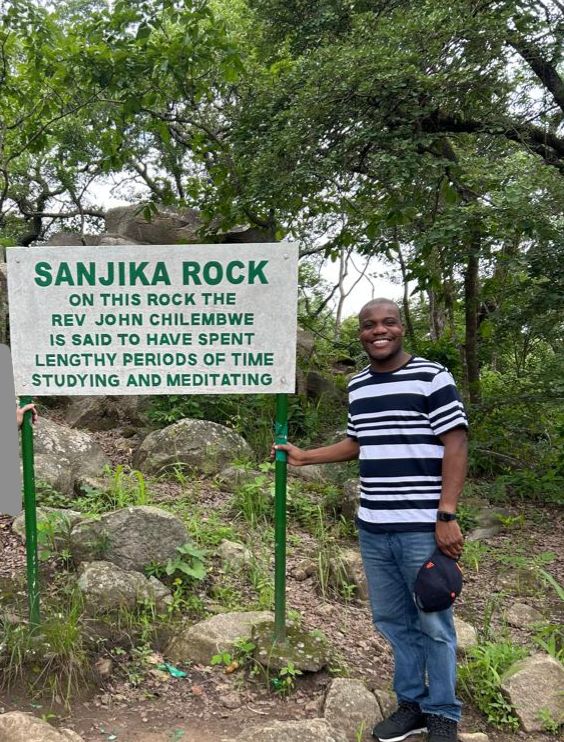
January 15 is John Chilembwe’s Day and a public holiday in Malawi. On this day Malawians remember and celebrate Reverend (Rev.) John Chilembwe’s uprising against the British colonial rule on January 23-26, 1915. Rev. Chilembwe, a Baptist minister, was born around 1871 in Chiradzulu District in Malawi (then a British colony called Nyasaland). He was first educated by Scottish missionaries. Later he met an English missionary, Joseph Booth, who had a huge influence on him both theologically and politically.  Through his contacts in the United States of America (USA), Booth facilitated John Chilembwe’s move to USA in 1897 where he studied at Virginia Theological Seminary and College (now Virginia University of Lynchburg) in Lynchburg, Virginia. In 1900, Rev. Chilembwe returned to Malawi and established Providence Industrial Mission (PIM) which comprised of a church and a center where Chilembwe taught and emphasized on self-reliance, education, and improved agriculture.

When Rev. Chilembwe returned to Malawi in 1900, he was appalled by the suffering and ill treatment that his fellow countrymen were experiencing under the British colonial government and at the hands of the white European settlers. Two things that bothered Rev. Chilembwe most and led to his 1915 uprising were, first, forced labor of Malawians working on European owned farms and estates, particularly, at Alexander Low (A.L.) Bruce Estates in Magomero, Chiradzulu. This forced labor also called Thangata in vernacular required Malawians living on lands that the Europeans claimed to be theirs to work on the Europeans’ farms and estates under very harsh conditions and for free as rent or tenancy payment. In relation to Thangata, Rev. Chilembwe was also bothered by the racial discrimination and the treatment of Malawians as “the underdog.” In his letter of 1914 to Nyasaland Times, Rev. Chilembwe wrote,“In time of peace the Government failed to help the underdog. In time of peace everything for Europeans only. And instead of honor we suffer humiliation with names contemptible.”[1]

Second, Rev. Chilembwe strongly opposed the recruitment of Malawian men to fight in the First World War in Tanganyika (present day Tanzania). As the Allied Forces (Britain, Russia, Italy, Japan and the USA) fought against the Central Powers (Germany, Austria, Hungry, and Turkey), they took the war to their colonies in Africa. Among other places in East and Southern Africa, the war was fought in Tanzania which was a colony of Germany. The colonial British government recruited Malawian men to fight against German forces in Tanzania and other places in East Africa. Rev. Chilembwe was not amused because he believed that this was not an African war but a European war. In his strongly worded letter to Nyasaland Times in 1914, he wrote:

On the commencement of the war, we understood that it was said indirectly that Africa had nothing to do with the civilized war. But now we find that the poor African has already been plunged into the great war. A number of our people have already shed their blood, while some are crippled for life…The masses of our people are ready to put on uniforms ignorant of what they have to face or why they have to face it… Let the rich men, bankers, titled men, storekeepers, farmers and landlords go to war and get shot. Instead, the poor Africans who have nothing to own in this present world, who in death, leave only a long line of widows and orphans in utter want and dire distress are invited to die for a cause which is not theirs.[2] 
After writing many letters of protest to the colonial government, having preached a number of sermons denouncing the racial discrimination and inhumane treatment of Malawians by the colonial rule and white settlers, and having seen no change to the status quo, Rev. John Chilembwe orchestrated an uprising that started on the evening of January 23 and ended on January 26, 1915. Under the orders of Rev. Chilembwe, his men attacked A.L. Bruce Estates and beheaded its manager, William Jarvis Livinstone, in the presence of his wife, Katherine, and his young daughter, Nyasa.[3] Livingstone’s head was brought to Rev. Chilembwe who on the following day, January 24, 1915 which also happened to be a Sunday, put it on display during the worship service at PIM.[4]  Rev. Chilembwe’s men  also killed other two white settlers and three  Malawians who were working on the estates. It should be highlighted here that Rev. Chilembwe insisted that wives and children of the white settlers should be spared at all cost. Another group of Rev. Chilembwe’s men went to break into African Lakes Company’s armory in Blantyre to steal guns and ammunition to assist them in the uprising.  This mission was partially successful and they managed to get away with a few guns and boxes of ammunition after the break-in was thwarted by the guards at the armory.

The colonial government’s response was swift and brutal. They arrested, tried, and either imprisoned or executed many of Rev. John Chilembwe’s men. Those who resisted arrests or fled were shot by the police or the army which was also Rev. Chilembwe’s fate on February 3, 1915. He was shot dead by the police as he attempted to escape to Mozambique. The government also demolished the church building that Rev. Chilembwe built and banned Providence Industrial Mission for slightly over a decade. It was later allowed to reopen in 1926 under new leadership of Rev. Dr. Daniel Sharpe Malikebu the first known Malawian qualified medical doctor who was also an ordained Baptist minister.

Two main motives have been suggested for Rev. Chilembwe’s uprising. Some have claimed that he wanted to eliminate all Europeans in Nyasaland and to make himself the ruler of the nation. Others have argued that Rev. Chilembwe wanted to die as a martyr, “making a symbolic gesture of protest to demonstrate that the conditions then prevailing in Nyasaland were intolerable to the African community.”[5] A renowned Malawian historian, Desmond Dudwa Phiri, writes that on the day before the uprising, Rev. Chilembwe addressed his followers and said, “I am not saying that we are going to win the war [against the colonial rule] …some of us will die on the battlefield and leave behind widows and orphans, but they will be free people. Our blood will mean something at last.”[6] Whether it was to gain self-rule or to die as martyr, the majority of Malawians regard Rev. John Chilembwe as a national hero. His face appears on Malawi banknotes.  Places and roads are named after him in addition to having a special day every year to remember and celebrate his life and uprising.

However, Rev. Chilembwe’s uprising also poses a very serious Christian ethical dilemma, especially, when we consider the violent taking away of three lives of white settlers and the three lives of fellow Malawians in the confines of their own homes and in the presence of his spouse and daughter in the case of William Jarvis Livingstone. The beheading and later displaying of Livingstone’s head in a worship service also casts a Christian in a moral quagmire. The sixth commandment is very clear, “You shall not murder” (Exodus 20:13; Deut. 5:17). The Westminster Larger Catechism expounding on this commandment notes “The sins forbidden in the sixth commandment are, all taking away the life of ourselves, or of others, except in case of public justice, lawful war, or necessary defense (Genesis 9:6; Numbers 35:31, 33; Romans 13:4; Exodus 22:2-3)” (Q. & A. 136).[7]

The catechism clarifies that murder is prohibited by God but also highlights that there are three exceptions.  First, as public justice, governments may take away human life in a form of capital punishment after the legitimate courts have sentenced one to death often in cases of murder. Second, taking of human life is not murder in the case of lawful war which is also called just war. The great medieval African theologian St. Augustine of Hippo helps us understand what a just war is in books 19 and 22 of his famous work, The City of God.[8]  St. Augustine observes that a just war is necessary to prevent a greater evil and should be carried out after exhausting diplomacy and other peaceful options. The cause of just war should be to respond to an enemy’s injustice or aggression (defensive rather than offensive) and the government and not private citizens should declare the war. Furthermore, just war should be carried with the right intention of securing lasting peace and justice and not out of revenge, greed, or mere desire for conquest. The third exception according to the larger catechism is “necessary defense.” When one person attacks another with the intention of killing him, the attacked person has the right to defend himself even if it means taking the life of the attacker (Exodus 22:2).

Considering Rev. Chilembwe’s killings, none of them fall in any of these three exceptions. The killings were not carried out by the state as “public justice.” The taking of the six human lives also does not fit the description of “lawful war” in that it was not in response to murder that had already occurred and Rev. Chilembwe was reacting to that injustice. Furthermore, the killings were not sanctioned by the state. Lastly, Rev. Chilembwe’s killings were also not a “necessary defense.” This is why some Christians who celebrate other aspects of Rev. Chilembwe’s life and work found themselves in the ethical dilemma when it comes to celebrating Rev. Chilembwe’s uprising because of the murders that took place on the evening of January 23, 1915 at A.L. Bruce Estates in Magomero, Chiladzulu.

It is also interesting to note that some of Rev. Chilembwe’s contemporaries opposed his violent approach to attaining independence. The first ordained Malawian Presbyterian minister, Rev. Harry Kambwiri Matecheta, who was also a friend of Rev. Chilembwe discouraged him from proceeding with the uprising. In his memoir, Rev. Matecheta writes that Rev. Chilembwe would visit him and other Malawian Christian leaders trying to persuade them to join the rebellion. He also recalls spending one sleepless night with Rev. Chilembwe and his elders at Rev. Chilembwe’s house plotting the uprising. Rev. Matecheta declined to be part of the revolt and told Rev. Chilembwe that “his way was that of love” and he was hopeful that one day there would be a peaceful handover of power from the colonizers to Malawians.[9]

I believe it is important to clarify here that this is in no away an attempt to diminish or discredit the good work and ministry of Rev. Chilembwe. This is also not even an effort to question his Christianity. But it is to admit as the 19th century Anglican Bishop J.C. Ryle once observed that the best of men are men at best. Even the most admirable Christians among us are still imperfect humans, prone to sin and constantly needing the saving grace of Christ. We see this truth constantly in the Bible. The great servant of the Lord, Moses, despite the glorious encounters with God and being entrusted with the huge responsibility of leading God’s people into the promised land failed to enter the land apparently because of sinful anger (Numbers 20:10-12).  King David the man after God’s own heart committed adultery with Bethsheba and orchestrated the murder of her husband, Uriah (2 Samuel 11:1-27). Apostle Peter despite being the rock on which Christ will build his church, out of sinful fear denied the Lord Jesus Christ three times (Matthew 16:16-19; Luke 22:54-62). Rev. Chilembwe was not an exception. His great work and ministry was stained by the murders of January 23, 1915.

January 15 in Malawi will always pose an ethical dilemma for some Christians on whether to celebrate or not celebrate Rev. John Chilembwe’s uprising of 1915. Yet not commemorating the revolt because it involved unlawful taking away of human lives should never be equated with total rejection of the good that Rev. Chilembwe accomplished for his fellow Malawians. Rather it should be a stark reminder that even our Christian heroes have feet of clay. The only hero who does all things well is Jesus Christ.


[1] History for the 21st Century, https://www.history21.com/wp-content/uploads/2024/03/World-War-I-3.2-Primary-Source-Chilembwe.pdf, accessed on December 30, 2025 at 2:34pm.

[2] History for the 21st Century, https://www.history21.com/wp-content/uploads/2024/03/World-War-I-3.2-Primary-Source-Chilembwe.pdf, accessed on December 30, 2025 at 2:34pm.

[3] Landeg White, Magomero: Potrait of an African Village, Cambridge University Press, 1989, pp. 137-138

[4] Power, Joey (2010). Political Culture and Nationalism in Malawi: Building Kwacha. Rochester Studies in African History and the Diaspora. New York: University of Rochester Press, 19.

[5] Kenneth R. Ross and Klaus Fiedler, A Malawi Church History 1860-2020, Mzuni Press, Mzuzu © 2020, p.138-139.

[6] John Chilembwe, cit. D.D. Phiri, Let us Die for Africa: An African Perspective on the Life and Death of John Chilembwe of Nyasaland/Malawi, Blantyre: Central Africana, 1999, 64.

[7] The Westminster Confession of Faith and Catechisms, Christian Education and Publications, 2007, p. 276-277

[8] St. Augustine of Hippo trans. by Marcus Dods, The City of God, Hendrickson Publishers, 2009 pp. 605-639, 731-782.

[9] Harry Kambwiri Matecheta, Blantyre Mission: Stories of its Beginning, Luviri Press, Mzuzu, 2020, p. 86.

Is it Unchristian to Withhold Forgiveness to Unrepentant Offender?

(c) shutterstock

The men of our church, Christ Presbyterian Church, meet every other Saturday morning to discuss various biblical and theological topics. A couple of weeks ago we were discussing the biblical topic of forgiveness with guidance from a lecture by the late Dr. R.C Sproul, Dealing with Difficult Problems: Forgiveness. As always it was a wonderful time of studying what God’s word says on the topic as well as the fellowship thereafter.

Most of our discussion centered on whether a Christian should always forgive even when the offender has not repented or apologized for his or her sin. In other words, is it unchristian to not forgive an unrepentant offender? As you might have guessed there were two major positions that the men took. Some argued that as Christians we should always forgive unilaterally (without repentance from the offender). Two passages of Scripture were quoted to support this position. Luke 23:34 in which Jesus Christ prays that the Father would forgive those who are crucifying him, and Acts 7:60 in which Stephen prays a similar prayer for those stoning him to death.

The other men however argued that while Christians can choose to forgive unilaterally the Bible does not command us to do so. A Christian can choose not to forgive until the offender is repentant. A good example is God the Father himself who forgives a sinner only when the sinner has repented of his sin. Also, Luke 17:3 underscores repentance as a necessary condition for forgiveness, “Pay attention to yourselves! If your brother sins, rebuke him, and if he repents, forgive him.”

I hold to the latter position. However, I need to give two clarifying points. First, there cannot be any debate that the Lord requires Christians to be forgiving people because Christians are forgiven people. The parable of the unforgiving servant (Matthew 18:21-35) clearly drives this point home. So, when an offense is committed against a Christian and the offender comes to ask for forgiveness a Christian has no any other option but to forgive. Second, I also believe in the wisdom of Proverbs 19:11 in which God’s word encourages us to overlook an offense.

However, in cases where it is impossible to overlook an offense the Christian does not have to forgive if the offender is unrepentant. Now this begs the question: if the Christian withholds forgiveness from unrepentant offender won’t he or she be creating a fertile ground for bitterness in his or her own heart which God’s word forbids in Hebrews 12:15? To guard against resentment toward unrepentant offender the Christian needs to observe two steps in forgiveness.  Ken Sande discusses these steps in his book, The Peace Maker: A Biblical Guide to Resolving Personal Conflict. The first step is having an attitude of forgiveness and the second is granting forgiveness.

Having an attitude of forgiveness means by God’s grace you seek to maintain a loving and merciful attitude toward someone who has offended you. You choose not dwell on the hurtful incident or seek vengeance or retribution in thought, word, or action. Instead, you pray for the other person and stand ready at any moment to pursue complete reconciliation as soon as he or she repents. This attitude protects the Christian from bitterness and resentment, even if the other person takes long time to repent.  The second step of granting actual forgiveness will, of course, require repentance as I have already pointed out.

As to the gracious act of Jesus (Luke 23:34) and Stephen, (Acts 7:60) it is worth noting that both Jesus and Stephen prayed to God the Father that the Father should forgive the people. It was not Jesus or Stephen himself who granted the forgiveness. Similarly, I believe that we should pray that the Lord would enable us to love those who have offended us and also that the Lord may grant them godly sorrow over their sin and a true repentant heart.  

Three Things That COVID 19 Reminds Us About God and Life

Coronavirus has almost brought the world to a halt. Boarders and airports have shut down; schools and businesses have also closed down. There is fear and panic in many parts of the world and Malawi is no exception. Now how should we react or think of this disease which the World Health Organization has just declared a pandemic? I would like to point out three things that coronavirus should remind us of:

1. THE IMPACT OF SIN UPON CREATION
The impact of the fall (sin) upon creation is real. When our first parents, Adam and Eve, sinned against God their sin had far more reaching effects than we often like to think. Death, diseases, germs (including coronavirus), and suffering are some of the consequences of the fall. We praise the Lord for man’s creativity and the strides that have been made in science, medicine, and technology. However, these advances can never erase the effects of the fall upon creation. Only Jesus Christ can. This is why Apostle Paul tells us that creation is groaning and waiting for its redemption in Christ (Romans 8:18-25). Indeed, a day is coming when Christ will usher in a new creation that will never be affected by sin, death, coronavirus, or any evil (Revelation 21:1-5).

2. THE BREVITY OF LIFE
Coronavirus should remind us how short our days are here on earth. Within a short period of time the virus has spread across the globe and claimed close to eight thousand lives. It is possible that it will claim more. When this year was beginning no one in Malawi ever imagined that three months down the line we would find ourselves preparing against the virus. By then it was only in Wuhan, China. Many thought it will end there. But now it threatens to claim your life and my life. The brevity of life should cause us to always be ready to meet our maker and judge. The psalmist was very insightful when he observed: “O LORD, make me know my end and what is the measure of my days; let me know how fleeting I am. Behold you have made my days a few handbreadths…Surely all mankind stands as a mere breath” (Psalm 39:4-6).

3. THE NEED TO TRUST GOD
But all is not dark and bleak. Jesus Christ calls us not to despair. “Let not your hearts be troubled. Believe in God; believe also in me. In my Father’s house are many rooms. If it were not so, would I have told you that I go to prepare a place for you? And if I go and prepare a place for you, I will come again and will take you to myself, that where I am you may be also,” (John 14:1-3).

“Let not your hearts be troubled,” Jesus says. But you might ask: how can I be calm in the midst of a pandemic that is killing thousands? Jesus tells us how: by BELIEVING in God which also means believing in Christ for Christ is God.

• BELIEVE that Jesus is in heaven preparing a place for you, dear Christian. He fully knows what sin has done to this world. He doesn’t want us to live in this fallen world forever so he is preparing us a glorious home.

•. BELIEVE that Jesus is coming again to take you home where there is no coronavirus.

Although not mentioned in John 14:1, somewhere the Bible adds:

•. BELIEVE that Jesus Christ has overcome death. Corona virus can only kill the body but it can never separate us from the love of God that is in Christ Jesus. In fact, even though a Christian might die of the virus he/she shall still live (John 11:25).

•. BELIEVE that Jesus Christ is at the right hand of the Father praying for you (Romans 8:34) and nothing will happen to you without him sanctioning it. He is able to keep you and your loved ones safe through the pandemic.

•. BELIEVE that Jesus Christ is the King of kings and the Lord of lords who is in control of all the affairs of the world (Colossians 1:16-17). Even the coronavirus is his virus, and he is making it work for the good of his people (Romans 8:28).

It is Finished: What Christ Accomplished for Us on the Cross

On a Friday like this one about 2000 years ago, Christ was hanged on the cross at about 9 O’clock in the morning (Mark 15:25). From noon to about 3pm, darkness engulfed the land and Christ bore the wrath of God on behalf of his people (Luke 23:44). Theologians call this penal substitution of vicarious atonement. As he who knew no sin became sin for us on that old rugged cross (2 Cor. 5:21), for first time in his life, he experienced a broken fellowship between him and his Father. As one hymn writer once put it, “the Father turned his face away.” And for first time in his life the Son could not call God the Father, “my Father.” The sense of abandonment was so huge that the Son cried out, “My God, My God why have you forsaken me?” (Mark 15:34). Here one of the Christian Creeds, the Apostles creed, summarizes very well what Christ went through and calls it, hell- “He descended into hell.” It was hell that Christ suffered the last three hours of his life. Of course all his earthly life was marked by suffering but this was the climax of it all. And it was all for our sake. What amazing love! “Love so amazing so divine demands my life, my soul, my all.”

Then after paying the full penalty and drinking the cup of suffering to the final dregs and knowing that all was now finished, Jesus cried out, “It is finished.” It is done! Then he voluntarily gave up his life (for no one could take it from him) and said, “Father in your hand I commit my Spirit.” (Luke 23:46). These were the very last words of Christ on the cross!

That phrase, “It is finished,” is very powerful and means everything for every person who is in Christ.

  1.  It is finished: Expiation is done: By that we mean that Christ has taken away the guilt of our sin so that in him we might become the righteousness of God (2 Cor. 5:21).
  2. It is finished: Propitiation is done: By that we mean that Christ has fully appeased God’s wrath; therefore, there is now no condemnation for those who are in Christ (Romans 3:25-26; 8:1))
  3. It is finished: Reconciliation is done: By that we mean we have been reconciled to God and God has removed the enmity that existed between us and him (Col. 1:19-20; Romans 5:10-11).
  4. It is finished: Redemption is done: By that we mean Christ has paid his own life as a ransom to redeem us from the bondage of sin (1 Peter 1:18-19).
    5. It is finished: Conquest is done: By that we mean that Christ has conquered sin, Satan and death (Col. 2:14-15; 1 Cor. 15)

Friends, this is why the cross is everything for a Christian. This is why we ought to always preach Christ and him crucified.

God’s blessings in Christ as you meditate on what Christ has accomplished for us on the cross.


The Virgin Mary: Chosen by Grace

One of the key doctrines that sets apart the Roman Catholic Church (RC) and the Protestant churches is the doctrine of Mary also called Mariology. The RC exalts Mary to the position of a mediator between God and man and pray to her and say, “Holy Mary Mother of God, pray for us sinners now and at the hour of our death. Amen.”

As Protestants, and more especially as Reformed believers, we are appalled by this prayer. How can one pray through Mary while Christ is the only mediator between God and man as Paul reminds us in 1 Timothy 2:5? But in our reaction to RC’s doctrine of Mary we often tend to go to another unhealthy extreme of ignoring the important and God-given role that Mary played  in the history of our redemption.

We need to guard against this extreme because as we see in the Bible Mary by God’s grace did play an essential role in our redemption. It is through her that the Savior, Jesus Christ, was born in the world. It is of little wonder then that her name is mentioned in the Apostles’ Creed.  Above all, the Scriptures call her “blessed among women” (Luke 2:42, 48).

One thing that will help us guard against the mentioned extreme is to always remember that Mary was chosen by God out of God’s own grace. This is where we the Protestants differ with the RC.  In Luke 1:28-30 we read

And he came to her and said, “Greetings, O favored one, the Lord is with you!” 29 But she was greatly troubled at the saying, and tried to discern what sort of greeting this might be. 30 And the angel said to her, “Do not be afraid, Mary, for you have found favor with God.

The Greek word charis translated favor in this passage means grace. In interpreting these verses the Roman Catholic Church teaches that Mary was the one who had grace. In other words, Mary was the source of grace hence in the “Hail Mary” Prayer, the RC members pray:

“Hail Mary full of grace, the Lord is with thee.”

However, this contradicts what Luke 1:28-30 tell us. Mary was the recipient of God’s grace; she was never the source of grace. Mary was not full of grace; God alone is full of grace.

The brief account of Mary which Luke records for us in chapter 1 clearly demonstrates that it was Mary who found grace in the eyes of God. Consider the following three points. First, Mary was a sinner in need of a Savior (Luke 1:46) just like all of us. And the Lord saved her by grace and chose her by the same grace to be the mother of Christ.

Second, Mary was from a very low and humble background. She was not a daughter of a king or a daughter of a rich man. In her song, the Magnificat, recorded for us in Luke 1:46-55 she confesses that she is from a humble estate. In verse 48 she says, “For he has looked on the humble estate of his servant.” In verses 52-53 she says, “He has brought down the mighty from their thrones and exalted those of humble estate; he has filled the hungry with good things, and the rich he has sent away empty.

Third, Mary was from an obscure town of Nazareth as we read in Luke 1:26 “In the sixth month the angel Gabriel was sent from God to a city of Galilee named Nazareth.” Nazareth was neither the capital of Israel nor a big city in Israel. It was a city of little significance humanly speaking. You might remember that when Christ began to call his disciples in  John chapter 1 we read  that one of his first disciples was Phillip.  Later Philip invited his friend, Nathaniel and said to him, “We have found him of whom Moses in the Law and also the prophets wrote, Jesus of Nazareth, the son of Joseph.” And what was the response of Nathaniel? “Can anything good come out of Nazareth?”

This is what people thought of Nazareth the hometown of Mary. Nothing good can come out of this little-known town. Yet, it is to this obscure city that God went and found a young lady named Mary and said to her, “Behold, you will conceive in your womb and bear a son, and you shall call his name Jesus” (Luke 1:31).

The story of Mary resembles the story of our salvation in many ways. God chose to save us not because we were a better, richer or more powerful people. He saved us solely out of his sheer grace and mercy as Apostle Paul clearly reminds us  in 1 Corinthians 1:26-29:

26 For consider your calling, brothers: not many of you were wise according to worldly standards, not many were powerful, not many were of noble birth. 27 But God chose what is foolish in the world to shame the wise; God chose what is weak in the world to shame the strong; 28 God chose what is low and despised in the world, even things that are not, to bring to nothing things that are, 29 so that no human being  might boast in the presence of God.

God’s grace is indeed amazing.  To Him alone be the glory forever!

(This material first appeared in a form of a sermon which was first preached at London Free Reformed Church in London, Ontario, Canada on December 17, 2017).

A Tale of an Agony of Prosperity “Gospel”

A few days ago I received a letter from an old friend. We first met in secondary school and one thing that brought us together was our religion then, Rastafarianism. However, the Lord was gracious to both of us. The Lord saved my friend a year before he saved me. After our secondary days, we parted ways and never knew what was going in each other’s life until recently when my friend through his brother traced me and sent me this letter. When I finished reading it, I was angry but also sorrowful at the reality of the agony that prosperity “gospel” is bringing to many in my motherland, Malawi.

Dear friend,

Greetings in the name of our Lord and Savior, Jesus Christ. It has been a long time…Time really flies. But memories are still fresh of us eating chiwaya pa Bright pa break. Kale lokoma ndi losayiwalika (during break time we used to go and have pieces of fried potatoes commonly called chips at a place owned by a man simply known as Bright).

Anyway, the main reason for writing this letter is to share with you what has happened in my life. Probably, you heard that I was arrested and charged with three accounts: abuse of office, corruption and theft by public servant. As I am writing now I am in one of the prisons in our country waiting for trial. For you own information, I will plead guilty to all these charges because I am indeed guilty, and I don’t intend to contest against them when my trial begins.

It all started that time when the Lord saved me. I began to go to this other church where our pastor always preached about prosperity gospel. Again and again, he emphasized that God’s will for us is that we should enjoy His blessings to the full. We should have better jobs or own big businesses, big and beautiful houses, and very expensive cars among other blessings from the Lord. The verses he often cited were 2 Corinthians 8:9: “For you know the grace of our Lord Jesus Christ, that though he was rich, yet for your sake he became poor, so that you by his poverty might become rich” and 3 John 2 “Beloved, I pray that in all respects you may prosper and be in good health, just as your soul prospers.”

We believed and incessantly absorbed this “truth.” He challenged us to pray and claim these blessings for ourselves in Jesus name. Indeed it seemed to work. Many of my friends began to do well. They secured better- paying jobs. Some started business which within a few years were growing and thriving wonderfully. But it was not so with me. I prayed and fasted but things didn’t seem to work. I approached my pastor a number of times and asked him why I was not prospering like my friends. He replied and said that that my faith was weak. He challenged me to fast more and pray more. He also observed that I was probably not faithful in my giving to the church.

“You cannot have God’s blessings if you do not sow faithfully and abundantly,” he challenged me.

Friend, from that time onwards, I prayed harder and fasted even more. I remember one time, I took a one-week leave from my organization to go to a mountain to fast and pray for three days also called Esther’s fasting. That month and the following months, I took almost half of my salary and gave it as “tithe” to the man of God. I sowed the seed faithfully and waited for the harvest but to my surprise no single blessing came.
Every Sunday when I went to church I felt like a failure as I listened to my friends giving testimonies of how God was blessing them. I felt that I was not a true Christian since most of my friends were driving nice cars, but I was still walking to church.

“You are of little faith, my brother. Put your faith into action. Trust the Lord more and give more and he will bless you,” my pastor challenged me again after I poured out my frustrations to him.

The pressure to appear that I was also receiving blessings from the Lord was huge on me. In no time, I started getting involved in various malpractices at my work place. As my job involved handling finances I started swindling my organization. It all began with small amounts and after noticing that I was able to get away with it, I stepped on the accelerator even harder. Soon, I was driving a nice car and started building a mansion in one of the city suburbs.

My pastor was very happy with me. I remember meeting him one Sunday after service when I had just given a lot of money to the church as my tithe and he said, “You see now…your faith has grown and you have sown the seed faithfully. The blessings are now pouring. The Lord has showed me that this tap of blessings will continue to flow and never dry because you are faithful.”
I was very happy, even though deep down my heart I wondered, “Can’t this man of God tell what is happening behind the scenes for me to have these blessings?”

My church friends who were shunning me before because I was not doing better financially finally began to befriend me again. We called ourselves “Sons of the Wonderful and Answering God (SWAG).” There was literally competition among us as we aimed at outdoing each other in “God’s blessings.” I continued to defraud my organization so that I could be on top of SWAG. Almost every Sunday, the man of God gave me the pulpit to share the testimony of God’s blessings in my life.

So, all was well until last year when the cat went out of the bag and all the skeletons in my closet were exposed. I was arrested and charged as I have already mentioned. Anyway, to cut the long story short, I have been in this prison for over eight months now because I was denied bail. My pastor is no where to be seen. He has never visited me. All my property was seized by the authorities and my bank accounts were frozen. Every day, I cry for my wife and my two beautiful little daughters. I have put them in a great predicament all because of my sin and the so called prosperity gospel.

Now, you may wonder why after this long time my first letter should be of this sort. Well, I have heard that you are studying for ministry. Please my brother, if God wills that you become a preacher of the gospel make sure that you preach the gospel of Christ alone. You should know that preachers have great influence on their members; therefore, please, please, use this God-given influence to lead your members to Christ and not to false hood and selfish ambitions.

Lastly, please remember me and my family in your prayers. I have repented of my sin and I believe Christ has forgiven me, but I am ready to face the consequences of my sin which might be spending a number of years in this prison.

Greetings to your family.

Your old-friend in Christ,

JK.


Christ Knows Best

Christ Knows Best at What Time to do Anything for His People

John 11:16: “When he had heard therefore that he was sick, he abode two days still in the same place where he was.”

“We read that when He had heard that Lazarus “was sick, he abode two days still in the same place where he was.” In fact, He purposely delayed his journeys, and did not come to Bethany till Lazarus had been four days in the grave. No doubt He knew well what was going on: but He never moved till the time came which He saw was best. For the sake of the Church and world, for the good of friends and enemies, He kept away.

The children of God must constantly school their minds to learn the great lesson now before us. Nothing so helps us to bear patiently the trials of life as an abiding conviction of the perfect wisdom by which everything around us is managed. Let us try to believe not only that all that happens to us is well done, but that it is done in the best manner, by the right instrument and at the right time. We are naturally impatient in the day of trial. We are apt to say, like Moses, when beloved ones are sick, “Heal her now, O God, I beseech thee” (Num. 12:13). We forget that Christ is too wise a Physician to make any mistakes. It is the duty of faith to say, “My times are in your hand. Do with me as you will, how you will, what you will, and when you will. Not my will, but Thine be done.” The highest degree of faith is to be able to wait, sit still and not complain.

Let us turn from the passage with a settled determination to trust Christ entirely with all the concerns of this world, both public and private. Let us believe that He by whom all things were made  at first is He who is managing all with perfect wisdom. The affairs of kingdoms, families and private individuals, are all alike overruled by Him. He chooses all the portions of His people. When we are sick, it is because He knows it to be for our good: when He delays coming to help us it is for the same wise reason. The hand that was nailed to the cross is too wise and loving to smite without needs-be, or to keep us waiting for relief without a cause.”Taken From Day By Day With J.C. Ryle Edited by Eric Russel.

Love: The Story of John

John one of the twelve apostles of Jesus Christ is an interesting character.  We first read about his problem with anger in Luke 9:51-56 in which Samaritans have refused Jesus a passage to connect to Jerusalem.  John is angered by Samaritans and he asks Jesus if they should command fire to come down from heaven and consume the Samaritans. Jesus rebukes John.

Later on John writes his First Epistle and the major them of the letter is love. “We know that we have passed out of death into life because we love the brothers. Whoever does not love abides in death. Everyone who hates his brother is a murderer… he writes in 1 John 3:1, 15.  “Beloved, let us love one another, for love is from God, and whoever loves has been born of God and knows God,” he adds in 1 John 4:7.

What happened to the old short-tempered John? It is no doubt that the time that John spent with Jesus from the incident of Luke 9:51-56, John learnt more about love from Christ. The power of the love of Christ steadily transformed him and anger and selfishness slowly gave in to love.

This is what happens when we spend time with Christ. The more we turn our eyes upon Christ, the more we become like him. The more we look at the cross of Christ, the more his love fills and controls us. The world can, continually, remind us of the need of love for each other  but it is only Christ that will enable us to love truly.  Without Christ, there shall never be genuine love in this world.

From Tamar to Christmas

Last week I indicated that as we approach Christmas, we will look at some stories of Jesus’ descendants which are not beautiful at all. The main aim of this study is to remind us of God’s greatness, grace and faithfulness as we marvel at how God is able to overcome evil with good.

The story of Tamar which is recorded in Genesis 38 interrupts the wonderful story of Joseph.  It is an ugly tale of cheating and unfaithfulness.  Yet from it, we still see God accomplishing His will. Please take your time to read it.

Briefly, Tamar pretends to be a prostitute and seduces her father-in-law, Judah to sleep with her. The child that is born from this adulterous union, Perez, happens to be a great grandfather of Jesus Christ.   Could God have stopped this from happening? Yes, He could. But why did He allow it? He alone knows best.

However, we can still see from the story that God can use the imperfect things of the world to bring out something perfect. Tamar and Judah were sinful and failed miserably to reach God’s standards. But God stooped in his grace and reached out to them and through them brought out a perfect savior. Those who are in this Savior including Tamar and Judah are counted perfect and righteous basing on the Savior’s righteousness. This is the amazing grace of God.


Do prophets still exist today?

Quadruple combination opened to the Book of Is...
The Bible: God’s Final Special Revelation

Do prophets still exist today? My answer: Yes and No. Please allow me to explain.

Yes: Basing on Scripture we see that prophets were the men called by God to speak on behalf of God. In other words, prophets took a word from God and gave it to God’s people. In this sense, I would say that prophets still exists in form of preachers of God’s Word. Every time, a preacher stands up to preach from the Bible (God’s Word) he is actually saying: “Thus says the Lord in the Bible.” So in this case, prophets (preachers) still exist today.

No: Prophets both in the Old and New Testament got their revelation directly from God in various forms. So, in this sense, prophets of the caliber of Old  and New Testament (who directly get special revelations from God) do not exist anymore. Why? Because God’s special revelation ceased with the completion of the Bible (66 books: 39 in the Old Testament and 27 in the New Testament).

I know the statement ‘God’s special revelation ceased’ has sent cold chills down the spine of some and probably you have began to agitate in anger against me but I beg you to hear me out. So, please read on.

God’s giving of special revelation (the Bible) had to with the redemption or salvation of man after man sinned. From Genesis, God revealed his plan of salvation little by little until when Christ came and completed the plan of saving man through his birth, death, burial and resurrection. So, when God completed his work of saving man through Jesus Christ, God also completed the work of giving out special revelation with the last book of Revelation.

F. Fowler White is right when he writes in his article, “Does God Speak Today Apart from the Bible”

“God’s giving of revelation, spoken and written, is always historically joined and qualified by God’s work of redemption. Now that God has accomplished salvation once-for-all, in Christ, He has also spoken His word, once-for-all, in Christ and in those whom Christ has authorized and empowered by His Spirit (Hebrews 1:1, 2; 2:3, 4; Matthew 16:15-19; John 14:26; Ephesians 2:19, 20). With the completion of salvation in Christ comes the cessation of revelation. Consequently, the church now lives by a ‘Scripture only’ principle of authority,” (Reformed Perspective Magazine, Vol. 9, No. 15, April 8-14, 2007).

Today, we cannot get any special revelation apart from the one that God has revealed to us through the Bible. Please consider this. Suppose a person calling himself a prophet comes to you with a book in which he has written all ‘the revelations’ he has got from God, will you add that book to the Bible so that you have a Bible with 67 books? Would you call that book the Word of God as you call the Bible? Certainly not! Yet what God revealed to the prophets of the old is contained in the Bible as God’s own word. I hope you get my point there!

Also ponder with me on this. When I ask those who believe that prophets still exist on how they know whether a prophecy is true, they say that they weigh it against the Bible. If what is said is supported by the Bible they take it. If what that man calling himself a prophet says anything that contradicts the Scripture, they leave it.

Now, if you always have to compare any ‘new revelation’ with the Bible, it means that there is no single new revelation that can come to you besides the Bible. In other words, you are in essence saying that God’s final revelation is the Bible and whatever ‘revelation’ that is outside the Bible is not God’s revelation at all, isn’t it? By this, you, further,  agree with me that there are no new ‘revelations’ apart from the Bible hence no new prophecies apart from those contained in the Bible consequently also no prophets like those we read in the Bible.

But some would argue for the existence of prophets today by quoting  that familiar verse about various ministries in the church, Ephesians 4:11, 12: which reads: “And he (Christ) gave the apostles, the prophets, the evangelists, the pastors and teachers, to equip the saints for the work of ministry, for building up the body of Christ.”

But before you can conclude that prophets still exist basing on these verses, please just go back to chapter 2 of the same Letter to Ephesians and read verses 19 to 21:

“So then you are no longer strangers and aliens, but you are fellow citizens with the saints and members of the household of God, built on the foundation of the apostles and prophets, Christ Jesus himself being the cornerstone, in whom the whole structure, being joined together, grows into a holy temple in the Lord,” (Underscoring added).

The same Apostle Paul who tells us that God gave the gifts of apostle and prophets to the Church also reminds us that these apostles and prophets are the foundation of the Church. Now, let me ask you. After you have laid the foundation of a house, do you still use the same foundation materials to build the wall of the house as well as roof it? NO! The foundation remains down.

Similarly, the apostles and prophets being foundation of the church are no longer needed today unless we say that the church is still at its foundational level. But most certainly, after almost 2, 000 years since the birth of the New Testament Church no one would say that the Church is still at its foundation level. The church of Christ has grown and it continues to grow.

But what about the ‘predictions’ that the men called ‘prophets’ make and they come to pass, aren’t these a sign that prophets still exist today? First, we should not confuse prophecy with prediction. In as much as prediction is part of prophecy, prophecy is more than prediction. The prophets of the Bible rebuked, taught, encouraged and also predicted.

Secondly, we should realize that the ability to predict does not always and solely come from God. In Acts 16:16-18, we read of a girl who could predict out of powers of a demon. Recently also, during the 2010 World Cup Soccer Finals, there was an octopus called Paul in Germany that also predicted outcome of games before they were played. Did this ability to predict, in the two cases cited, come due to revelations directly from God? No! Would you call the girl and the octopus, prophets? God forbid!

As I wrap up, I would like to highlight that there are some good and well meaning Christians, some of them are my good friends and even relatives, who believe that prophets still exist, probably basing on what is happening, especially, in the African Church today. Of course, I would not call them heretics. However, I would encourage them to sincerely and prayerfully study Scripture and they will find out that prophets no longer exists today except in cases in which a prophet means a preacher of God’s Word.  Bill Crouse says it better:

“The men who challenge the Church to revive the gift of prophecy have good intentions. They want to see significant growth in the Kingdom; they want to see believers have a vital mystical relationship with Christ. They are not heretics, but they are proposing major doctrinal shifts that we sincerely believe will lead to confusion and dangerous consequences. Regardless of spectacular experience being reported by godly men, we must resist the temptation to satisfy our spiritual thirst for anything other than the certainty of the written Word of God” (C.I.M. Outline #57, The Gift of Prophecy: Is it for today?).