Malawi, Legalization of Abortion is Really a Bad Idea

As I am writing this post, my heart is filled with fear. I can literary feel it as if it is sinking down into a bottomless pit. Why am I afraid? I hear that the movement pushing for legalization of abortion in Malawi is gaining momentum. They are courting religious leaders, chiefs, law makers and other people of influence and power in our land to sway them towards supporting legalization of abortion.

I cannot help but fear for my country. Friends, legalization of abortion not matter on what grounds is ugly and should not even be the last thought for Malawians. Please let’s learn from the countries who have taken this path before and we will discover what a dangerous beast legalization of abortion is to any society. It will devour our nation.

Right now, I am living in a part of the world that has taken this path. It is sad and heartbreaking to hear that every day women are killing so many unborn children even for lame reasons like “I just don’t want this baby.” Just open your browser and google the numbers of children being killed in their mothers’ womb in the countries that have legalized abortion and you will be shocked. Malawi should not cheat herself that she can legalize abortion and never reach that point because she will sure do.

It is a very dangerous trajectory but it all starts with that one step of legalization. The advocates of legalization of abortion are making it to sound as if it is a very good and harmless idea as they fly their statistics in our face of how many women are dying due to the so called unsafe abortion and how much money our government is spending in post abortion care, but believe you me the consequence of legalizing abortion will overwhelm us. Once Malawi opens this door, there will be no any other way of closing it. Any woman even without any reason would choose to murder their unborn baby. Who would stop them if the law would leave the door wide open?

Those advocating for legalization of abortion argue that they are many women who are dying due to unsafe abortion. But what is causing abortion? Is it the law that prohibits it? Definitely not! No one would abort just because the law states that abortion is illegal. There should be factors that are causing this murdering of unborn children. Why not then address the causes instead of spending more energy on effects.

Life is very sacred and priceless. God the creator and giver and sustainer of life has not entrusted the right of taking it to a mother who thinks that she does not need the child in her womb for various reasons . “You shall not murder,” he commands us in Exodus 20:13. He also tells us in his word, the Bible, that life begins at conception (Psalm 51:5) hence abortion is murder and sinful.

Malawi, seriously ponder on this: according to God’s Word, God’s wrath shall rest heavily on a nation that perseveres in such murderous tragedies as abortion. Dr. Joel Beeke and Jim Beeke have explained this point very well in their essay, “Is Abortion Really So Bad?” and I will borrow some of their thoughts to expound it.

In Exodus 21:22-23 we read: “When men strive together and hit a woman, so that her children come out, but there is no harm, the one who hit her shall surely be fined, as the woman’s husband shall impose on him, and he shall pay as the judge determines. But if there is harm, then you shall pay life for life.”

If God commands such a heavy and great penalty for an accident like this one, will he stand aside and idly look at a deliberate and planned abortion? Legalizing abortion is tantamount to calculated and legalized murder of nameless, voiceless, helpless human beings created by God. Like those ungodly nations we read in the Bible who sacrificed their infants to their gods (Deuteronomy 12:31), I am afraid that if we legalize abortion in Malawi, it will also one day be said of us that Malawians sacrificed their unborn sons and daughters to the god called Selfishness on the altar of abortion. I pray that we will not reach that extent. May God bless Malawi and keep it a land of peace where we continue to value, respect and appreciate the lives of unborn children just as we value, respect and appreciate any other human life.
My Thoughts and Prayers for the Persecuted Church

This morning as I thought and prayed for fellow Christians who are being persecuted for their faith in Christ and His word worldwide, especially, in Iraq and Syria I was reminded of the following passages of Scripture:

Revelation 6:9-11: “When he opened the fifth seal, I saw under the altar the souls of those who had been slain for the word of God and for the witness they had borne. They cried out with a loud voice, “O Sovereign Lord, holy and true, how long before you will judge and avenge our blood on those who dwell on earth? Then they were each given a white robe and told to rest a little longer, until who were to be killed as they themselves had been.”

Matthew 5: 10-12: “Blessed are those who are persecuted for righteousness’ sake, for theirs is the kingdom of heaven. Blessed are you when others revile you and persecute you and utter all kinds of evil against you falsely on my account. Rejoice and be glad, for your reward is great in heaven, for so they persecuted the prophets who were before you.”

Matthew 5:44: “Love your enemies and pray for those who persecute you, so that you may be sons of your Father in heaven. For he makes his sun rise on the evil and on the good, and sends rain on the just and on the unjust.”

Romans 12: “Bless those who persecute you; bless them and do not curse them.”

1 Peter 4:16: “If anyone suffers as a Christian, let him not be ashamed, but let him glorify God in that name. For it is time for judgment to begin at the household of God; and if it begins with us, what will be the outcome for those who do not obey the gospel of God?”

1 Peter 5:10: “And after you have suffered a little while, the God of all grace, who has called you to his eternal glory in Christ, will himself restore, confirm, strengthen, and establish you.

John 16:33: “I have said these things to you, that in me you may have peace. In the world you will have tribulation. But take heart; I have overcome the world.”

Father, may you watch over and protect your Church. May you keep Her faithful and bold even in times of persecution. In Jesus Christ’s name, Amen!

Does Every Christian Have a Special Guardian Angel?

I guess you have heard of the notion of guardian angels before. Those who believe in guardian angels state that every Christian has an angel assigned to them by God to care and protect them. This belief is not recent. Church history shows that it dates back so many centuries ago. In fact, some early Church Fathers like Origen and Chrysostom in third and fourth centuries respectively believed and taught about guardian angels.

Those who advocate for the belief in guardian angels cite Matthew 18:10 and Acts 12:15 as their biblical basis. In the first verses of Matthew 18, Jesus speaks to his apostles about humbling themselves like children. Then he later says to them: “See that you do not despise one of these little ones. For I tell you that in heaven their angels always see the face of my Father who is in heaven” (10).

In the first verses of Acts 12 we find Jesus’ disciples praying in the house of Mary (the mother of John Mark) for Peter who has been put in prison by the Jewish religious and government leaders. However, when a girl reports to them that Peter is released from prison and is standing outside the house in which they were in, the disciples disbelieve her and say, “You are out of your mind.” But the girl insists but still they dismiss her and say, “It is his angel!” (15).

Now, do these verses teach that each Christian has a particular guardian angel? I do not believe so. In the case of Matthew 18:10, we should understand the “little ones” and “their angels” in a collective sense rather than individualistic sense. In other words, the verse states that angels who minister to these little ones and can also minister to every believer see the face of God the Father (not a particular angel of a particular little one sees the face of God the Father). In the case of Acts 12:15, we should understand it to mean that the believers thought that at this particular time God had sent this angel to probably encourage them and they referred to this angel as “Peter’s angel” implying an angel that was sent to them for the cause of Peter whom they were praying for.

It is important to guard against the belief of guardian angels because it can easily lead to the worship of angels which is prohibited in Scripture (Rev. 22:8, 9). Herman Bavinck observes, “The problem with the doctrine of guardian angels is that it leads to veneration and worship, a practice apparently referred to in Colossians 2:18.” If a believer is so occupied with the thoughts of a special angel who cares and protects them, they stand in danger of obliterating God in their minds as a sole sustainer and preserver of their lives and instead accredit this sustenance and preservation to an angel.

Having said this, it is important to point out that the Bible does teach that angels do minister to God’s people (but not a particular angel specifically for a particular Christian). Angels are ministering spirits (Heb. 1:14). So, God uses angels to help believers in various ways. For instance we read in Psalms 34:7 and 91:11 that they watch over believers. Angels also intervene is some special ways in some events of God’s people (Isaiah 63:9; Daniel 6:22; Acts 5:19). They also execute judgments against God’s enemies (Genesis 19:1, 13; 2 Kings 19:35; Matthew 13:41).

So, yes God uses his angels to help or minister to his people but God never sets aside or assign a particular angel to a particular Christian. This belief is hardly supported by Scripture and can easily lead to worship of angels which the Bible prohibits. I fully agree with the Belgic Confession Article 12 which clearly states: “He (God) also created the angels good, to be His messengers and to serve His elect (all believers).”

I also agree with John Calvin when he writes:

“But whether individual angels have been assigned to individual believers for their protection, I dare not affirm with confidence… Indeed, those who confine to one angel the care that God takes of each one of us are doing a great injustice both to themselves and to all the members of the church; as if it were an idle promise that we should fight more valiantly with these hosts supporting and protecting us round about!”

The Challenge for the Preacher

“When it comes to preaching the Word of God, a man will never follow the right course if he cannot forget self, and close his eyes to anything that might distract him in this world from acting according to God’s pure ways. Indeed, he will surely stray away from the path, first to one side, then to the other. Hence, God’s doctrines are often corrupted because those who ought to preach them are inclined to malevolent, or to seek the favour of their hearers. They may fear to incur bad feeling or to provoke anger against themselves.

Therefore, it is impossible for us to serve God in our natural state; we must be absolutely determined, with unshakeable constancy, to suffer for the doctrines that we preach, and not to let this cause us grief. We must fight under the ensign of our captain, Jesus Christ, knowing that we cannot share in the glory of his resurrection if we have not first suffered with him, following his example. All believers must certainly strengthen themselves to do these things. . .

. . .Those who are called by God to preach his Word must be resolved that they will not compromise, even if the whole world were to rise up against them. They must bear all conflicts, knowing that God will help them in their need and always grant them victory, provided they follow their vocation in purity and simplicity. The greatest insult and injury that we can give to God is in yielding to the desires of man, and twisting his Word both left and right. It is not only a question of abandoning our own ideas, but also of constantly upholding God’s truth, which is immutable; it must never be altered, however changeable and inconstant man may be.”

Taken from: John Calvin’s Sermons on Galatians. (Copied from Reformed Bibliophile, http://www.erictyoung.com ).

All Scripture is All about Christ

I will tell you one thing that proves to a demonstration, that Christ is still precious to his people, and it is this:-send one of Christ’s people to hear the most noted preacher of the age, whoever that may be; he preaches a very learned sermon, very fine and magnificent, but there is not a word about Christ in that sermon.Suppose that to be the case, and the Christian man will go out and say, “I did not care a farthing for that man’s discourse.” Why? “Because they have taken away my Lord, and I know not where they have laid him. I heard nothing about Christ.”

Send that man on the Sabbath morning to hear some hedge and ditch preacher, some one who cuts the king’s English about never so badly, but who preaches Jesus Christ-you will see the tears rolling down that man’s face, and when he comes out he will say, “I do not like that man’s bad grammar; I do not like the many mistakes he has made, but oh! it has done my heart good, for he spoke about Christ.” That, after all, is the main thing for the Christian; he wants to hear about his Lord, and if he hears him magnified he will overlook a hundred faults.

In fact, you will find that Christians are all agreed, that the best sermon is that which is fullest of Christ. They never like to hear a sermon unless there is something of Christ in it. A Welsh minister who was preaching last Sabbath at the chapel of my dear brother, Jonathan George, was saying, that Christ was the sum and substance of the gospel, and he broke out into this story:-

A young man had been preaching in the presence of a venerable divine, and after he had done he went to the old minister, and said, “What do you think of my sermon?”

“A very poor sermon indeed,” said he.

“A poor sermon?” said the young man, “it took me a long time to study it.”

“Ay, no doubt of it.”

“Why, did you not think my explanation of the text a very good one?”

“Oh, yes,” said the old preacher, “very good indeed.”

“Well, then, why do you say it is a poor sermon? Didn’t you think the metaphors were appropriate and the arguments conclusive?”

“Yes, they were very good as far as that goes, but still it was a very poor sermon.”

“Will you tell me why you think it a poor sermon?”

“Because,” said he, “there was no Christ in it.”

“Well,” said the young man, “Christ was not in the text; we are not to be preaching Christ always, we must preach what is in the text.”

So the old man said, “Don’t you know young man that from every town, and every village, and every little hamlet in England, wherever it may be, there is a road to London?”

“Yes,” said the young man.

“Ah!” said the old divine “and so from every text in Scripture, there is a road to the metropolis of the Scriptures, that is Christ. And my dear brother, your business is when you get to a text, to say, ‘Now what is the road to Christ?’ and then preach a sermon, running along the road towards the great metropolis-Christ. And,” said he, “I have never yet found a text that had not got a road to Christ in it, and if I ever do find one that has not a road to Christ in it, I will make one; I will go over hedge and ditch but I would get at my Master, for the sermon cannot do any good unless there is a savour of Christ in it.” Now since you say amen to that, and declare that what you want to hear is Jesus Christ, the text is proved-“Unto you therefore which believe he is precious.”” 

Taken from the sermon on 1 Peter 2:7  by Charles H.  Spurgeon. Delivered on March 13, 1859.

Malawian Presbyterianism: Are We Standing or Falling like PCUSA?

My fellow Presbyterians in Malawi,

Last Thursday, (June 19, 2014), the Presbyterian Church of United States of America (PCUSA) passed a resolution to allow gays or lesbians to marry in church. Now, this has shocked some but I am not really shocked. Why? Because this is just one of the fruits of steps that were taken many years ago beginning from 1920s.

PCUSA through the Auburn Affirmation in 1920s rejected that the Bible is without error (inerrancy of Scripture), the virgin birth of Jesus and his deity, that Christ died on behalf of sinners (substitutionary atonement), bodily resurrection of Christ and authenticity of Christ’s miracles. Jesus’ miracles were said to be myths. The Auburn Confession also declared that Presbyterians in PCUSA must:

• “safeguard liberty of thought and teaching of its ministers”;
• prohibit the restricting of church teaching to rigid interpretations of Scripture and doctrine; and
• refuse to rank ecclesiastical authority or the authority of the Bible above that of the individual Spirit-led conscience. (In other words, man can decide what or what not to believe in the Bible). (http://www.layman.org/Files/how-we-got-here-updated.pdfhttp://www.layman.org/Files/how-we-got-here-updated.pdf).

This declaration led to many things like increased focus on social justice to the extent that salvation, in some cases, is viewed as a mere liberation from poverty and social injustice. This focus on social justice and human rights also led to less emphasis in following the Bible when it comes to the ordination of who is to be a deacon, an elder or a pastor in the church as outlined in 1 Timothy 3:1-13 and Titus 1:5-9.

From 1990s to date, PCUSA among other things has accepted that gays or lesbians can be members of the church, pastors and elders or deacons and a few days ago it has accepted that gays or lesbians can officially marry in church. Marriage is now no longer between a man and a woman but between “two people.”

Now, we might look at PCUSA and think, “That’s America, it will never happen to the Presbyterianism in Malawi. But “Let anyone who thinks that he stands take heed lest he fall,” (1 Cor. 10:12). The Presbyterian Church in Malawi partners with PCUSA in a number of areas. A good number of PCUSA congregations also have exchange visits with Presbyterian congregations in Malawi.

I wonder and fear if PCUSA will not influence our Presbyterian church or if it has not already influenced it somehow  knowing that bad company corrupts good character (1 Cor. 15:33). These are my concerns and fears. I believe that all of us including our leaders should ponder on these things lest some years from now, we will also find ourselves in the same place where PCUSA is now.

Thanks for reading. May the Good Lord bless you as you reflect on this post and search the Scriptures to ascertain if these things are so (Acts 17:11).


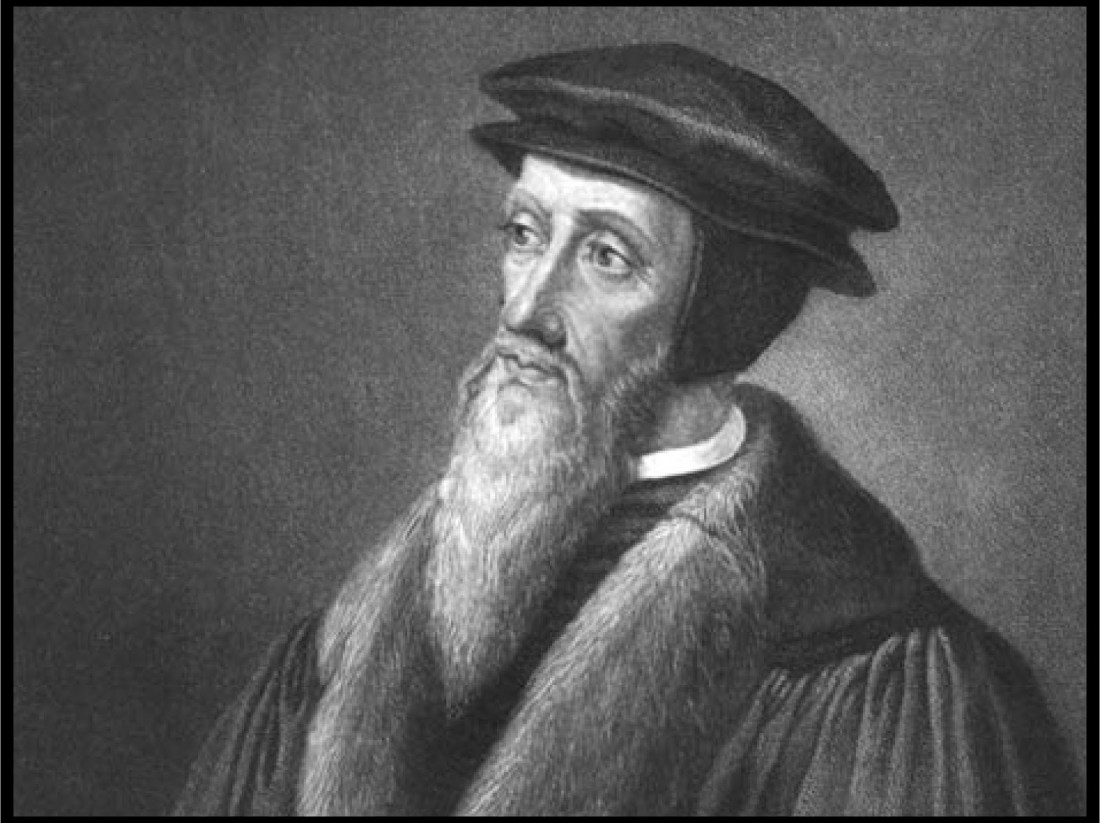
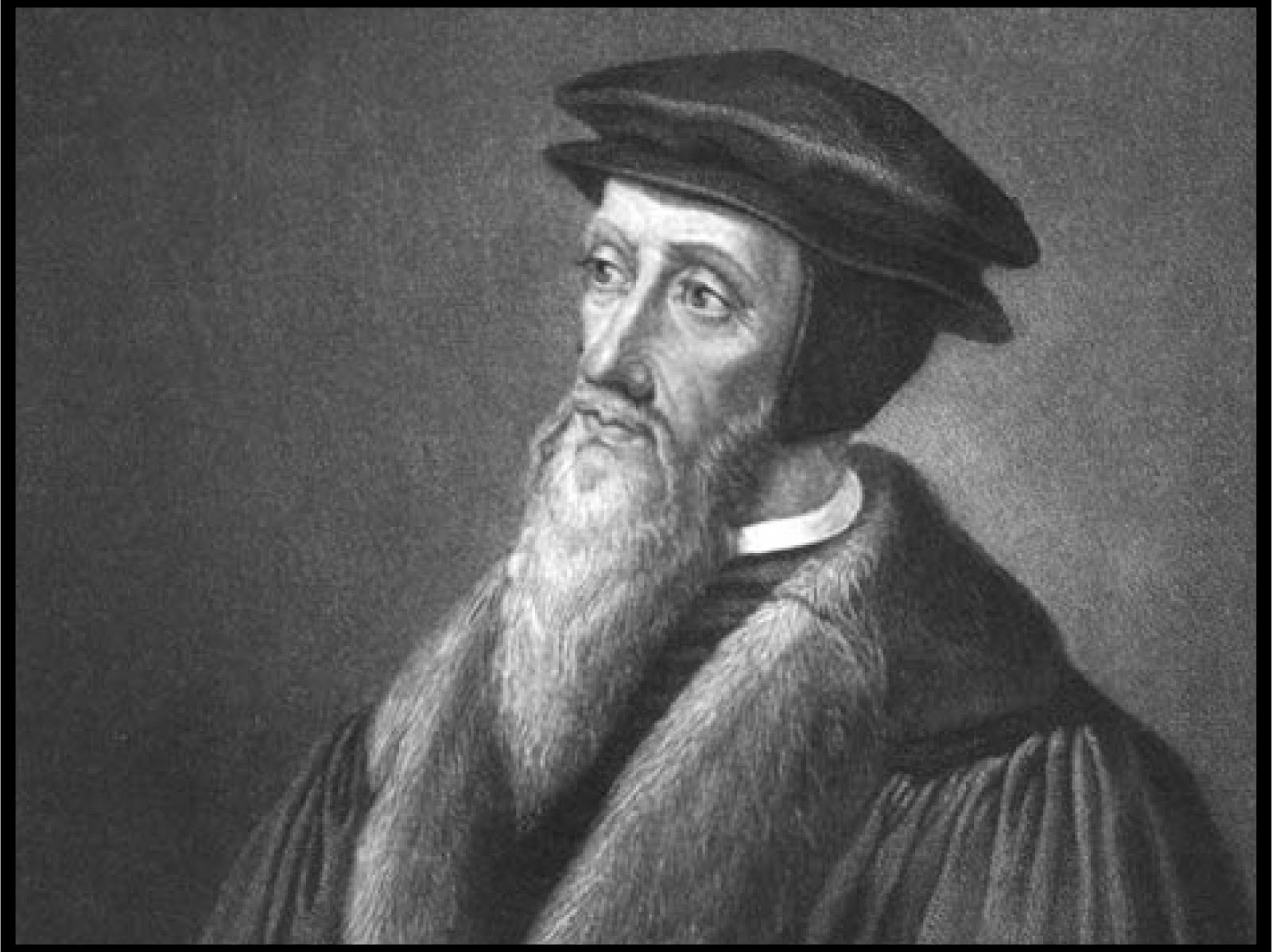
Lessons from John Calvin’s Method of Preaching

One major aspect of John Calvin’s ministry was his form of expository preaching of the books of the Bible verse by verse also called lexio continua. On Sundays, Mondays, Wednesdays and Fridays, Calvin climbed up the steps of the St. Pierre Cathedral’s pulpit and patiently led his congregation verse by verse through book after book of the Bible. He often preached two to four verses in a sermon; however, in some instances he would preach two to three consecutive sermons on one verse as was the case with 1 Timothy 2:5 and 2 Timothy 1:8 respectively. As he tackled each verse, he would explain its meaning and apply it to his congregation.

But what would motivate Calvin to involve himself in this huge but worthy and profitable task. I believe that Calvin’s view of the Bible as the word or voice of God (vox dei) had a great impact and influence on his adoption of lexio continua method of preaching. Calvin’s high regard for Scripture is evidently seen in his magnum opus, Institutes of the Christian Religion, in which he writes:

In order that true religion may shine upon us, we ought to hold that it must take its beginning from heavenly doctrine and that no one can get even the slightest taste of right and sound doctrine unless he be a pupil of Scripture.” (1.6.2)….“We affirm with utter certainty (just as if we were gazing upon the majesty of God himself) that (the Bible) has flowed to us from the very mouth of God by the ministry of men” (1.8.5).

This view had a profound impact on his preaching as he revealed in his sermon on Micah 3:7:

For what ought sermons and doctrines be, except expositions of what Scripture contains? Truly, if we add the slightest nuance, it only results in corruption. Our Lord has left us a perfect doctrine in the Law, the Prophets, and the Gospel. Thus, what ought we be preaching today? We ought not be adding anything new to the text, but ought to be providing a clearer exposition that would confirm our understanding of God’s teachings. That, I repeat, is the purpose of any sermon or lecture we hear, that we might each be better instructed with respect to God’s will. That way, whenever we hear anything, we have a basis for inquiring whether God has spoken or not. By the same token, all who are charged with preaching God’s Word know that it is wrong of them to add anything of their own, or anything they might event. They must be certain that what they preach is not of their own conjecture but derives from God, who guides them on the basis of his certain and infallible word.

John Calvin was strongly convinced that a preacher can faithfully proclaim the message of his Master only by letting him speak as he has already spoken in the Scriptures. Preaching on 1 Timothy 3:2, he said,

“(The preacher) should not show off so that everyone applauds him and says, ‘Oh, well-spoken! Oh! What a breadth of learning! Oh! What a breadth of mind! When a man has climbed up the pulpit…It is that God may speak to us by the mouth of man.”

The other significant element that greatly influenced John Calvin to preach verse by verse throughout the Bible was his view of the preacher as the ambassador of God. In his commentary on 2 Corinthians 5:20 in which Paul and other preachers of the gospel are described as Christ ambassadors, Calvin comments that a preacher is indeed an ambassador of Christ and he has been ordained by God to speak as God speaks to him in the Scriptures hence Christ could boldly say that whoever pays attention to the gospel preacher pays attention to Christ himself. Here it is important to highlight that Calvin was very much aware that preaching should not be equated with the Bible hence while preaching from Deuteronomy 1:43, he cautioned:

So the teaching which is put forward in the name of God ought to be as authoritative as if all the angels of heaven descended on us, as if God himself were manifesting his majesty before our eyes (but) it is true that when men speak we must weigh their words carefully. For if one were willing to receive everything that was put forward, there would be no distinction between liars and false prophets who seduce men’s souls and the true ministers of God.

Calvin was also influenced toward lexio continua preaching by his view of the hearer of the gospel as a fallen man. In fact, this view has implications both on the preacher and hearer of the gospel as Calvin states in his sermon on 1 Timothy 4:6-7:

Now, just as many preachers are themselves far too given to ambition and in order to find grace and favor seek only what will please, so also on the other side the people are the cause of making preachers swerve aside from the good way. And why? Because, men have ‘itching ears’ and want to be fed with pleasing stories and buffoonery or ‘old wives’ fables as St. Paul calls them here. Seeing that men have such desires –like pregnant women whose cravings are inordinate –ah well this is the cause of some preachers degenerating and disguising themselves and transforming God’s teaching, which is as bad as destroying it.

Calvin fully understood that due to the fallen nature of man both the preacher and the hearer might lean toward preaching and hearing messages that do not disturb them in their comfort zone. Since due to the fall, man is in constant rebellion against God, the fallen nature in the preacher and the hearer might pull them away from the faithful proclamation and hearing of God’s word. However, when lexio continua is the method of preaching in a congregation both the preacher and congregant are forced to fully submit to the whole counsel of God as it unfolds verse after verse and book after book of the Bible; thereby, fully proving that the Scripture as God’s Word is profitable for doctrine, for reproof, for correction, and for instruction in righteousness (2 Timothy 3:16).

Lexio continua preaching has a lot of benefits for the church today. First, it is one of the real ways in which full submission to God’s word both by the preacher and the congregation is demonstrated. The main challenge that the Church faces today is full submission to God’s Word. Due to the fallen nature of man, we tend to choose what we want to hear, and as the Church is bombarded with liberal and humanistic challenges, the temptation to choose what to obey and practice from the Scriptures also increases. However, where the word of God is preached in lexio continua form, both the preacher and the congregation are compelled to be subservient to God’s Word and to have their minds taken captive by it.

Secondly, lexio continua preaching frees the pastor from the temptation of preaching his mind instead of God’s word. Calvin observed that lexio continua preaching delivers the preacher from the temptation of esteeming or deciding at his pleasure what is profitable to be uttered and what is useless to be omitted. Lastly but not least, related to the above points, Calvin’s type of expository preaching affirms God’s sovereignty in preaching. As he rightly portrayed the preacher as the ambassador of Christ, the minister’s main goal then is similar to an earthly ambassador who is commissioned to advance and protect the interests and of his country. The ambassador demonstrates this commitment both in his words and actions. Similarly, the preacher has no any other agenda apart from seeking to affirm God’s sovereignty in the proclamation of the gospel. God’s sovereignty is affirmed when the preacher allows the Scripture to guide the agenda of preaching in the church or ministry.

The significance of letting Christ speak directly to his Church through the words of Scripture cannot be overemphasized. Ministers and preachers as the carriers of the voice of God should be challenged to consider the importance of lexio continua preaching in their churches or ministries. This form of preaching was essential for a health growth of the church in Geneva where Calvin preached and it also essential even to the present Church. John Leith has profound words for preachers today as he writes, “Calvin the preacher cannot be copied or repeated today in this new time and place, but…we can rightly hope and struggle to do as preachers of the Word in our particular time and place what Calvin did in his. For however much the culture and social matrix change, human existence remains essentially the same.”

John Calvin the Preacher


My Prayer and Thoughts as Malawi Goes to Polls

Finally, one of Malawi’s long awaited days this year is almost here. Tomorrow, on May 20, 2014 the people of the land of my birth go to elect the President, Members of Parliament (MPs), and Councillors for the next five years. Sadly, for first time since I reached the voting age, I will not be able to cast my vote.  Distance has a way of limiting us in a number of ways. But still my prayers and thoughts are with you my countrymen.

I pray that my Malawian brothers and sisters will not forget to remember that whatever happens during the elections was already ordained and written in the Almighty God’s eternal script for his world. History is not autonomous, but it is His (God’s) story. This should comfort us knowing that although  we may not be sure of what the future holds, we know for sure who holds the future. Christ is still on the throne.

I also pray for my fellow Christians that they will not take their eyes off  Christ as our perfect hope in this fallen world and place it on politicians. Malawi like any other nation in this fallen world has so many challenges. Knowing this, our politicians have  promised a lot in regard to making our country a better place to live in. But it might not be long before we find ourselves in the valley of frustration as the hopes that were raised are shattered into smithereens. “Promises and lies” is often the politicians’ best game everywhere.

This is not to say all politicians are not to be trusted. There are some who are godly and have good intentions. But how can we single them out knowing that the heart is so deceiving above all things (Jer. 17:5)? It’s not easy!  Yet it is of great comfort to know that the Lord knows all men very well. I pray that God will give Mother Malawi godly leaders. But, even if this happens, we should never never look up to politics as the solution to our fallen world. Ravi Zacharius put it better: “Let’s face it, politics is seldom the answer to any society because it just swings from one extreme to the other and it goes with the whim of whoever is in power.”

Realizing the folly of trusting politics to heal this sin-ridden world, Margaret Thatcher, one of the renowned politicians in our world,  used to say: “It is up to the people of faith (Christians) to change their culture, politicians can’t do it.” Brethren, may we continue to shine forth the light of Christ as the beacon of hope for our nation. Whoever becomes the president or MP or councillor is not good enough to bring the hope and satisfaction that vanished once sin entered the world and alienated mankind from God. Since then our hearts remain restless until they find rest in God as St. Augustine put it.

Finally, I know that even Christians just like as any other person voting have a particular expectation of results. But in case, the results do not come out  as we expected,  let’s remember that Christ still holds the whole world in his hand. He knows best. He alone directs the events and affairs of the world according to his good pleasure and will. Apostle Paul reminds us in Romans 11:33-36: Oh, the depth of the riches and wisdom and knowledge of God! How unsearchable are his judgments and how inscrutable his ways! For who has known the mind of the Lord, or who has given a gift to him that he might be repaid? For from him and through him and to him alone are all things. To him be glory forever. Amen.”

Our prayer should remain the same as we have always prayed in the form our national anthem since 1964:

O God bless our land of  Malawi

Keep it a land of peace…

Our own Malawi, this land so fair

Fertile and brave and free.

With its lakes, refreshing mountain air,

How greatly blest are we.

Hills and valleys, soil so rich and rare…

Freedom ever, let us all unite…

One purpose and one goal

Men and women serving selflessly,

In building Malawi.

The Malawi National Anthem


Ravi Zacharius, an address at Brigham Young University in Utah (Accessed on January 19, 2014, http://www.rzim.org/rzim-news/ravi-zacharias-at-byu-and-the-mormon-tabernacle/).