Walking on the Highway of Holiness: A Tribute to Rev. John W. Chinchen

I have just received the news of the passing of Rev. Dr. John W. Chinchen also fondly known by many of his students as Rev. Jack. Dr. Chinchen was the founder of African Bible Colleges (ABC) in Liberia, Malawi, and Uganda. He was also my professor of homiletics (preaching) when I studied at ABC Malawi over a decade ago. As I reflected and thanked the Lord for Jack’s life, three fond memories of him stood out in my mind. They all begin with the letter, H.

First is Holiness. Jack preached and encouraged his students to pursue holiness without which no one will see God (Heb. 12:14). His Exodus sermon series titled, “The Highway of Holiness” remains one of impactful sermons on my life. As ABC family mourns his passing, I am comforted to know that he is now walking on this highway and beholding the glory of the one who is Holy, Holy, Holy.

Second is Humility. Jack demonstrated true humility of a Christian leader in a number of ways. One example that remains vivid on my mind is watching him caring the lawns of ABC Malawi campus. During the day, and sometimes during the night, one would see him going around the campus repositioning sprinklers. This other day, one of ABC labourers told me that Jack put on gloves and helped him repair a broken sewer line. As the president of the college, he did not have to do it. But he gladly chose to do this menial work, probably with the intention to demonstrate to his students and the workers that godly leadership is never void of humility and service.

Third is Homiletics. Jack was a man who loved and preached the gospel with passion. I recall the Tuesday mornings during my time as a student at ABC when Jack stood on the pulpit of the Kirk of the Hills Chapel and took us through various books of the Bible: Exodus, Nehemiah, Ezra, Colossians and impressing upon our hearts the truths of the gospel. I will remain grateful for one time when he spent about an hour with me in his office critiquing and guiding me in writing and preparing my first sermon series from the book of Jonah.

Some years ago, I was invited to speak during the ABC chapel service. I preached from 2 Timothy 3:16-17. After the sermon, Jack came to me and said something like: “Son, I am sorry, I have hearing difficulties, and I could not hear every word of your sermon. However, I heard you mentioning the word “scripture” many times. Thank you. I love to hear my students preaching scripture. Keep on preaching scripture.”

Jack is now with the author of Scripture. He no longer needs to hear a preacher like me expound it. As he rejoices in the presence of the Word, I will continue to preach the scripture as he encouraged and charged me until the day I will meet him again in the glory of our Lord and Savior, Jesus Christ.


Pray for Malawi

Dear friends,

I would like to request you to urgently pray for Malawi. In the last couple of years, people living with albinism in Malawi have been attacked, murdered, and their body parts removed. It is believed that those perpetrating this despicable crimes believe that the body parts of people with albinism when used with other charms can bring fortune or make one rich (And we know that this is a dangerous superstition from the pit of hell). As I am writing now, this evil has worsened and many people living with albinism are scared for their lives. Just last week, a boy aged 14 was abducted.  A body close to where he was abducted was found with some parts removed.  The police are yet to identify the body.

While government, politicians,  and other stakeholders are working to address this evil, I believe, the greatest need of Malawi is the gospel. Please pray that the gospel of Christ will be preached in power of the Holy Spirit and souls will be converted. It is very disheartening that a nation that claims to be Christian can be marked by this cruelty. But in the midst of this darkness, I hope for the light that will shine and open the eyes of those blinded by the god of this world (2 Cor. 4:3-6).  As the Lord promised Solomon, I believe, we can stand also on the same promise, and as his people pray that God will heal Malawi, protect people with albinism, and more importantly, destroy this evil, and  revive his Church (2 Chron. 7:14). Thank you for praying. 


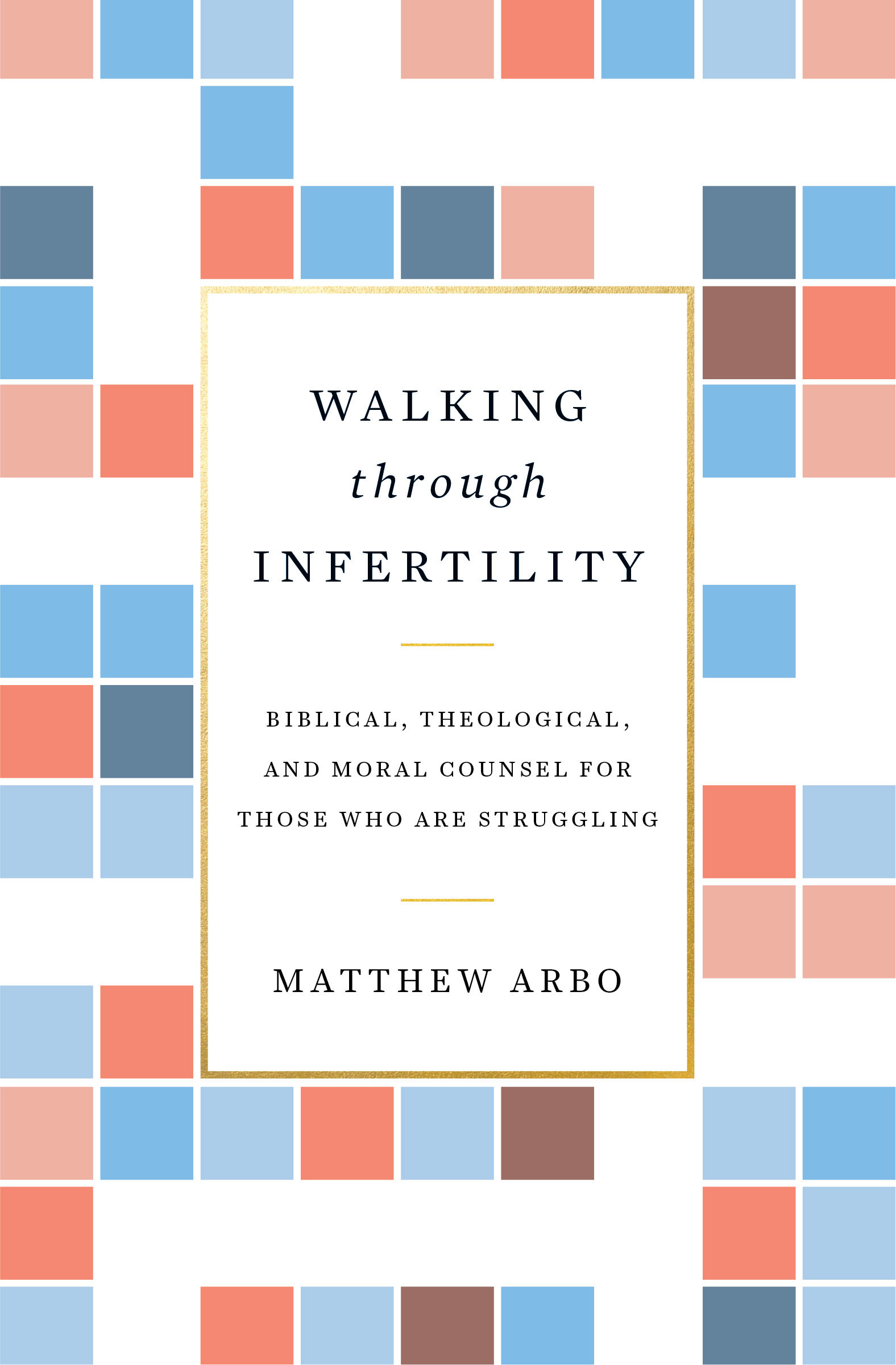
My Review of Walking Through Infertility by Matthew Arbo

I was drawn to read and review Walking Through Infertility: Biblical, Theological, and Moral Counsel For Those who are Struggling by Matthew Arbo because my wife and I have a number of friends who are experiencing infertility. Furthermore, for the short time that I have been in ministry, I have come to discover that this is not uncommon problem among God’s people.

The book is primarily written for couples who are not able to have their own biological children and secondarily for those who desire to minister to them. Its main purpose is “to address biblical, theological, and moral questions surrounding infertility. The aim is to instruct and inspire the church, especially, those couples with personal experience with infertility” (p. 21).

Walking Through Infertility is divided into four main chapters. The first chapter surveys the biblical stories of infertility and how God proved his faithfulness to his people. The second chapter focuses on following Christ despite the trial of not being able to have your own biological children. The third chapter centers on the church and how a childless couple can find help and comfort from fellow believers. The last chapter analyses various ethical and moral considerations regarding modern methods of helping infertile couples to conceive and give birth.

I would say that the book’s greatest strength lies in the last chapter. Arbo goes into detail to explain the modern reproductive technologies and the ethical dilemmas they pose to Christians. In as much as we should thank God for the advancements in modern medicine and medical innovations, we also need to be aware that not all of them are without moral quandaries. Arbo’s discussion of intrauterine insemination (IUI), intro vitro fertilization (IVF), and surrogacy is outstanding. I would greatly recommend any Christian who might have questions or considering these reproductive technologies to prayerfully read this section.

IUI involves a medical expert taking a man’s sperm and inserting it into a woman’s uterus during ovulation to increase chances of conception while IVF is very complex and involves a medical expert taking a man’s sperm and woman’s eggs and fertilizing them in a laboratory and later implanting the embryo in the woman’s uterus.  Surrogacy entails a couple contracting with a woman to carry their biological child to term and surrender it back to them at birth. As you might see these methods raises a number of ethical and theological concerns. Should or can a Christian use any of these methods with a clear conscience?

Arbo does not leave the couple struggling with infertility to answer this question on their own. Instead he biblically and pastorally challenges them “to consider whether the relation between conception and sex is sacred and the manner of procreation as designed by God is open to amendment?” Towards the very end of the book, he encourages a couple experiencing infertility to consult, do the hard work of listening, thinking and praying for God’s wisdom. “Speak with others you trust—family, friends, pastors—and do the hard work of listening and thinking and praying. Wise is the one who heeds a sound word of instruction. In Christ are the riches of wisdom, and if anyone lacks wisdom, ‘let him ask God, who gives generously to all without reproach, and it will be given him’ (James 1:5).”

This is why I say that the last chapter is the best part of the book. Not only because of its biblical and pastoral approach to these ethical issues but also because it explains very complex reproductive technologies in an easier to understand language for less scientifically sophisticated Christians like me.

Disclosure: Crossway has given me a courtesy copy of the book for this review.


Christmas Reflections: God’s Gracious Choice of Mary

“In the sixth month the angel Gabriel was sent from God to a city of Galilee named Nazareth, to a virgin betrothed to a man whose name was Joseph, of the house of David. And the virgin’s name was Mary.  And he came to her and said, “Greetings, O favored one, the Lord is with you!” But she was greatly troubled at the saying, and tried to discern what sort of greeting this might be.  And the angel said to her, “Do not be afraid, Mary, for you have found favor with God.  And behold, you will conceive in your womb and bear a son, and you shall call his name Jesus,”(Luke 1:26-31).

Why did God choose Mary to be the mother of Christ? What did God see in Mary that moved him to choose her to be God-bearer? The Roman Catholic Church (RCC) responds and says that by God’s grace Mary was born sinless that is why she was chosen by God. RCC calls this the doctrine of Immaculate Conception. However, basing on the evidence of Scripture we see that there was nothing so special with Mary. Mary did nothing to deserve the honor of bringing Christ into this world. It was purely God’s gracious choice. Consider the following:

First, Mary as a descendant of Adam was a sinner just like every one else born in this world (Romans 5:12). In fact just like Jesus’ great grandfather, David, Mary was also brought forth in iniquity and in sin did her mother conceive her (Psalm 51:5).

Second, Mary was from a poor background. In her song of praise also known as the Magnificat recorded for us in Luke 2:46-55, she confesses of her humble estate and says: “My soul magnifies the Lord, and my spirit rejoices in God my Savior, for he has looked on the humble estate of his servant” (46, 47). Later she adds, “For he who is might has done great things for me…he has brought down the mighty from their thrones and exalted those of humble estate (49, 52).

John Calvin comment on these verses observes, “This was not the loud cry of a pretended humility, but the plain and honest statement of that conviction which was engraven on her mind; for she was of no account in the eyes of the world, and her estimation of herself was nothing more.”

Third, Mary was from a very little known village of Nazareth.  She was neither from the capital of Israel nor any of its big cities. The insignificant village of Nazareth was not even mentioned in the Old Testament or other Jewish literature of that time. It is also believed that it was a popular saying in those days in Israel to ask the rhetoric question, “Can anything good come out of Nazareth?” (John 1:46). Yet it is to this obscure village, which nobody expected anything good to come out of that God went for the choice of the mother of his incarnate Son.

Mary’s story resembles the story of our salvation. God chose to save us through Christ not because he saw anything special in us to move him to act in our favor. Apostle Paul reminds us: “For consider your calling, brothers (and sisters): not many of you were wise according to worldly standards, not many were powerful, not many were of noble birth. But God chose what is foolish in the world to shame the wise; God chose what is weak in the world to shame the strong;  God chose what is low and despised in the world, even things that are not, to bring to nothing things that are, so that no human being might boast in the presence of God. And because of him you are in Christ Jesus, who became to us wisdom from God, righteousness and sanctification and redemption,” (1 Cor. 1:26-30).

This, friends, is the heart of Christmas. God “tabernacled” with us not because we were lovely, righteous or friendly. To the contrary, God came to dwell with us despite being lowly, sinful, and with rebellious hearts. He came to save us from our most pitiful and hopeless state and to enable us sit with him in heavenly places (Eph. 2:6). Praise the Lord for his gracious and sovereign choice!


The Agony of Prosperity Gospel: “It is Less About God and More About Feeling Good.”

Photo credit: Enrichment Journal

A recent research by the University of Toronto’s department of psychology  in the Faculty of Arts & Science has found out that exposure to prosperity gospel (PG) makes you more likely to show an exaggerated and unrealistic sense of optimism for life and take more financial risks.

In the press release about the findings of the research, the study’s lead author, Nick Hobson, Ph. D. makes this important observation, “Its (prosperity gospel’s) success as a growing religious movement might be less about feeling (sic) God, and more about feeling good.”

Now this is very interesting especially that it is coming from a non-Christian institution. Here Hobson has put his finger on it and it should not surprise us because that’s exactly what the Bible teaches.  PG is not the gospel. There is only one gospel, the gospel of Jesus Christ and him crucified. The PG is neither about nor for Christ but actually against Christ. This is why Apostle Paul anathematizes anyone who preaches it: “But even if we or an angel from heaven should preach to you a gospel contrary to the one we preached to you, let him be accursed. As we have said it before, so now I say again: If anyone is preaching to you a gospel contrary to the one you received, let him be accursed” (Gal. 1:8, 9).

Further as the research notes, PG is about manipulating people through their volatile emotions rather than pointing them to their greatest need of salvation in Christ. Apostle Peter already warned us against the destructive nature of PG.  Writing of devious and false teachers who include PG preachers the apostle cautioned: “But false prophets also arose among the people, just as there will be false teachers among you…And in their greed they will exploit you (“make merchandize of you,” KJV) with false words” (2 Peter 2:1-4). There is no better description of the PG and its preachers than what the apostle gives here. The PG never seeks the good of its hearers but as lie from the pit of hell seeks to destroy them.

The PG has been weighed on the secular scale and has been found wanting. No need to mention that it also fails miserably on the biblical scale. So to those who are still trapped in the yoke of PG, hear the words of the gospel of Christ. Christ’s greatest gift is not material wealth. It is not an excellent health. These he can give if he pleases. His greatest gift is salvation from the wrath of come. Christ is the bread of life that endures to eternity. Labour not for the riches of this world, which are here today and gone tomorrow. What shall it profit you if you gain the whole world but lose your own soul?  Come to Christ, rest in him, labour faithfully with your hands, and trust him to provide for all your needs (Matt. 6:25-34).


Why Does the LORD Sometimes Take “Long” to Answer our Prayers

Pastor Andrew Brunson

This is the question that came to my mind this afternoon as I was reflecting on the news of the release of an American pastor, Andrew Brunson, who was being held in prison and later under house arrest by the Turkish Authorities for the last two years. I should highlight on the onset that I have never met Bruson neither do I know him personally. The only connection I have with him is our common faith in Christ. But I got more interested in his case begin from the day he was arrested.

On that day I was undergoing licensure examinations on the floor of the Northeast Presbytery of the Associate Reformed Presbyterian Church (ARP) in Maryland. Soon after the examinations one of the pastors at the Presbytery meeting whose church had previously supported Bruson as a missionary shared with the meeting about his arrest and asked us to pray for him.

We prayed. I also continued to pray for him as often as I remembered.  So, this afternoon when I received an update from ARP magazine that Bruson has finally been acquitted by the Turkish court, a great joy of thankfulness filled my heart. I praised the Lord for answering prayers of thousands or even millions who were praying for the pastor. But it wasn’t long before my joy was consumed by this question: Why did it take this long before the Lord answered the prayers of his people. Why did the Lord wait for two years to answer the prayers of Bruson himself, his family, relatives, and others saints including the ARP Northeast Presbytery?

I don’t have the answer to this question? I don’t even know if anyone has the answer. But as I continued to ponder, Romans 8:28 came to mind: “And we know that in all things, God works for the good of those who love him, who are called according to his purpose.” It also dawned on me that I am not the first one to wonder. David as he was passing through trials and prayed also wondered “How long O Lord will you forget me forever? How long will you hide your face from me? (Psalm 13:1). David had prayed for a “long time” but the Lord seemed not to respond with the needed promptness.

I think the hymn writer was right:

By and by, when the morning comes,

When the saints of God are gathered home,

We’ll tell the story how we’ve overcome

For we’ll understand it better by and by.

Praise the Lord for the release of Brunson. Praise the Lord for many prayers that the saints throughout the world sent before the throne of grace. Praise be to God for answering our prayers. To Him alone be the glory, forever!

My Review of Spurgeon on the Christian Life by Michael Reeves*

It is my humble estimation that Charles Haddon Spurgeon is one of the most gifted preachers of the post Reformation era. His sermons still come alive when read today. It is little wonder then that many have labeled him the prince of preachers and deservedly so. But who was this man? Apart from his preaching what else can a Christian learn from his life and ministry? What did he teach and believe about the Christian life in this fallen world?

These are some of the key questions that Michael Reeves answers in his book Spurgeon on the Christian Life published by Crossway in 2018. Reeves himself captures the essence of his book in the introduction by observing, “This book is about Spurgeon’s theology of the Christian life…Spurgeon was unreservedly Christ-centered and Christ-shaped in his theology; and he was equally insistent on the vital necessity of the new birth. The Christian life is the new life in Christ, given by the Spirit and won by the blood of Christ shed on the cross” (p. 16).

In the first part of the book, Reeves focuses more on the life of Spurgeon. He shows how Spurgeon was a tender, affection, and generous man of deep affection for people. Spurgeon’s sense of humor could also hardly be concealed even when he was on the pulpit. In the second part, Reeves dwells more on Spurgeon’s love for Christ and his word and how this love shaped Spurgeon’s life and ministry. He also shows how John Calvin, the Puritans, and the Reformed theology significantly impacted Spurgeon’s preaching. The third and fourth parts of the book center on Spurgeon’s beliefs and teaching regarding new birth, baptism, sanctification, prayer, Christian’s suffering, and final glory.

Though not a full biography of Spurgeon I would highly recommend this book as an introduction to the life and ministry of Spurgeon, especially, for those who hardly know this man or have read little about him. Many primary sources have been cited in the book, which also act as excellent materials for further study or exploration. These primary sources also allow Spurgeon to speak for himself what he believed about the Christian life. The other strength of the book is that it is very engaging and is easier to read. Many sections of the third and fourth chapter are also good devotional materials.

As the title suggests, my initial expectation was to see more of what Spurgeon believed about many aspects of the Christian life.  However, you don’t get to that until you reach the third and fourth parts of the book. This, in my view, is one of the weak areas of the book. In addition to that my fellow Presbyterian and Reformed friends would find the section on Spurgeon’s beliefs about infant baptism, I prefer to call it covenantal baptism, to be the gloomiest part of the book (pp. 89-91). Reeves focuses more on what Spurgeon believed were the errors associated with paedobaptism without making a fair presentation of what actually the Reformed faith teaches about covenantal baptism.  May be that was beyond the objectives of the book; nonetheless, I wish Reeves would have at least briefly provided some biblical grounds why Presbyterians and Reformed believers baptize their children as well as highlight that covenantal baptism is not a baptismal regeneration as Spurgeon incorrectly argued.

All in all, Spurgeon on the Christian Life is a good book. It is well researched and provides a good starting point to get acquainted with the man who many fondly remember as the prince of preachers. Spurgeon on the Christian Lifewill definitely leave your mind informed and your hart warmed.

*Crossway has provided me with a complimentary copy of this book.


The Church and Politics in Malawi

In less than a year from now, Malawians will go to polls to elect their president, members of parliament, and local government leaders (councilors). As always, some of the questions that Christians have now include should Christians join politics and what role should the church play in regard to politics? In this post, I am wrestling with such questions and endeavoring to give answers that I believe are biblical.

We will do well to begin by reminding ourselves that Christ is the King over all the earth (Col. 3:16, 17). He is the one who removes kings and sets up kings (Dan. 2:21). As one Dutch Reformed theologian once observed, “There is not a square inch in the whole domain of our human existence over which Christ, who is Sovereign over all, does not cry, Mine!”

Therefore, Christians can and should join politics if the Lord calls them. They should not be afraid to accept the calling believing that politics is a dirty game as it is often said. For sure, politics like any other human institution can be full of sin at times, but Christianity is not Gnosticism, which believes that the matter or the world is evil. Christianity does not minimize the consequences of the fall on human race yet at the same time it is always hopeful of the power of the gospel and the knowledge that Christ is redeeming his creation including the fallen political systems of our world.

The Westminster Confession of Faith best captures the Bible’s teaching about a Christian’s involvement in politics: “It is lawful for Christians to accept and execute the office of a magistrate (government official or politician), when called thereunto: in the managing whereof, as they ought especially to maintain piety, justice, and peace, according to the wholesome laws of each commonwealth; so, for that end, they may lawfully, now under the new testament, wage war, upon just and necessary occasion” (Chapter 31.5). Please notice the emphasis here is that Christians who are called into politics are to maintain piety, justice and peace of their country.

But while Christians could be called to serve as politicians, the calling of the church is different. The church is never called into politics. She is called to pray for magistrates and give them godly counsel when needed to but she should never turn the pulpit into a political podium.  (There is a great nuance here since when Christians join politics it could also be said in one sense that the church is in politics. But I believe that you get what I am trying to put across. The separation of the church and state is never absolute because we will always have members of the church who are also members of the state).

Again, the Westminster Confession of Faith is helpful here: “Synods and councils are to handle, or conclude nothing, but that which is ecclesiastical: and are not to intermeddle with civil affairs which concern the commonwealth, unless by way of humble petition in cases extraordinary; or, by way of advice, for satisfaction of conscience, if they be thereunto required by the civil magistrate” (Chapter 31.5)

It is important to notice that the confession does not completely prohibit the church from petitioning or advising the government. When the civil magistrates have asked the church for advice, the church should do so gladly and dutifully. “The Church and State may co-operate in the advancement of objects common to both; but each of them must be careful to act within its own proper sphere- the one never intermeddling with the affairs which properly belong to the province of the other.”[1] Nonetheless,  the cooperation of the State and the Church must never mean blurring the line that clearly separates the two.

That said, the next question I anticipate is: doesn’t the church ought to have a prophetic voice in society? Certainly, the church has a prophetic voice in any society; but it does not mean that she as an institution should become directly involved in the politics because that is not why Christ established his church. Christ often demonstrated that his mission was to be differentiated from that of the state. For example, Jesus refused a request of a certain man who asked him to mediate between him and his brother regarding their inheritance and specified that he was not a judge of a civil court (Luke 12:13:14). Another example is when Jesus was before Pontius Pilate. Christ refused to associate the Church with the kingdoms of this world when he clearly told Pilate: “My kingdom is not of this world: if my kingdom were of this world, then would my servants fight, that I should not be delivered to the Jews: but now is my kingdom not from hence,” (John 18:36).

What if the government oppresses its citizenry?  Isn’t the church supposed to defend the poor and vulnerable and even be willing to pick up arms to fight against a wicked state? The Bible calls Christians to obey only the lawful commands of the magistrates. Therefore if the magistrates command what is unlawful, the church ought to stand up and declare as the early church that she will obey God rather than man (Acts 5:29). Nevertheless, it’s never the calling of the church to be in forefront picking up arms against the state.

The Reformers, more especially, John Calvin ably discusses how the Church should respond to “wicked and intolerable” governments. He notes that the Church which in this case means members of the visible church (whom Calvin also refers to as private citizens) should never directly pick up arms against the state but rather support other magistrates who after observing the wickedness of their government/leadership have mounted resistance. This teaching is sometimes called the Doctrine of Lesser Magistrates. Calvin writes,

For if there are now any magistrates of the people appointed to restrain the willfulness of kings…I am so far from forbidding them to withstand, in accordance with the duty, the fierce licentiousness of kings, that, if they wink at kings who violently fall upon and assault the lowly common folk, I declare that their dissimulation involves nefarious perfidy, because they dishonestly betray the freedom of the people, of which they know that they have been appointed protectors by God’s ordinance.[2]

The Church is not a lesser magistrate (an opposition party). The lesser magistrates, especially those who are Christians, have a responsibility to restrain the evil of unjust kings over their subjects. In cases where the greater magistrates (governing authorities) are oppressing their citizens, Christians should come behind the lesser magistrates and support, pray, and encourage them in their efforts to curb the evil or injustices from the greater magistrates. All this is to be done within the bounds of the just laws.

[1]Robert Shaw, The Reformed faith: exposition of the Westminster Confession of Faith(Fearn, Ross-shire, Scotland: Christian Focus Publications, 2008), 398.

[2]Calvin,Institutes of the Christian religion.IV.XX.31

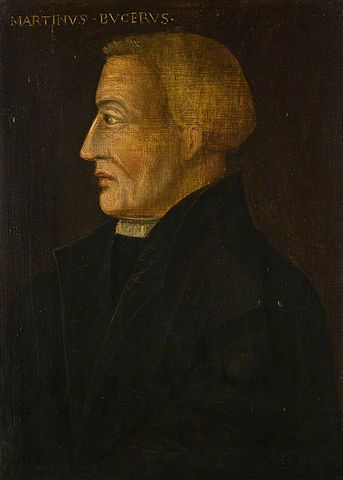
Martin Bucer: Faithfulness in Obscurity

Many readers of this post would know Martin Luther and John Calvin. These are the names that usually come to mind whenever we think of the Sixteenth Century Protestant Reformation. But how many are familiar with Martin Bucer? How many of us will be able to write at least a paragraph on this reformer? The point I am trying to drive home by these questions is that unlike Luther and Calvin, Bucer is one of obscure reformers of the Sixteenth century. Yet he was the man the Lord used to mentor the great theologian of the Reformation era, John Calvin.

Martin Bucer was born on November 11, 1491 in the town of Schlettstdat in France. Later, he became a Roman Catholic monk in Dominican order. In 1581, Bucer was in the city of Heidelberg, Germany when Martin Luther came to the city for a disputation. In the debate, Luther asserted God’s sovereign grace in salvation and that salvation is by faith alone. This marked the turning point for Bucer who attended the disputation. He fully embraced the doctrines of grace and began to preach the same. He later settled in Strasbourg and labored faithfully in teaching, preaching, and shepherding God’s people for years.

Somehow, John Calvin came to know Bucer and wanted to spend the rest of his life in Strasbourg writing and laboring alongside him. So in April 1536, Calvin left Paris for Strasbourg. But due to the war between King Franz I of France and Emperor Karl of Austria, he could not take a direct route. He decided to go through Geneva.

In Geneva, William Farel, another reformer, persuaded him to stay and co-labour with him. So Calvin settled in Geneva and began to biblically reforming the church but some resisted Calvin’s reformation efforts. Eventually the Genevan city council expelled Calvin from the city in 1538 and he headed to Strasbourg where he labored with Bucer and pastored a French refugees church for three years.

In the period of three years, the Lord used Bucer to mentor the younger Calvin. Calvin himself wrote this of Bucer: “(Bucer is the man of) profound scholarship, his bounteous knowledge about a wide range of subjects, his keen mind, his wide reading, and many other different virtues, remains unsurpassed today by anyone, can be compared with only a few, and excels the vast majority.”[1] Undoubtedly, Bucer had a great impact upon the great theologian and pastor yet Bucer remains little known to many today.

Again, the point I am trying to put across is that just like in the Bible where we have saints who were used mightily by God but are little known, we also have little known reformers who played a great role in the Reformation. Bucer is an encouragement to many who are laboring faithfully for the Lord yet the world knows little or even nothing about them. Your faithfulness is not nullified by your obscurity. The Lord sees it and he will surely reward it. Not all of us were predestined to be the “Calvins.” Some of us are the “Bucers,” but in everything we ought to be thankful and give glory to Christ for he is really the one who is at work through us all (1 Cor. 3:6-11).

[1] Keith Mathison, Ligoneir Ministries, http://www.ligonier.org/blog/martin-bucer-reformer-and-his-times/ accessed on November 30, 2017.

A Lament: Why I feel betrayed by my fellow Christians who support disparaging remarks of Africa and Africans

About a week ago, the President of United States of America, Donald Trump allegedly used vulgar language to disparage the country of Haiti and the continent of Africa. The president has since denied using vulgar language but admitted to have spoken tough on the issue of illegal immigration in the USA.

Ever since the news was reported in the media, there have been two main reactions. Some have condemned what the president said while others have supported what the president said. However, what has greatly disheartened me is to hear fellow Christians categorically supporting the degrading language that the president allegedly used to describe a continent that is a home to many of their brothers and sisters in Christ. When I read and heard some of the comments I felt like David in Psalm 41:9: “Even my close friend in whom I trusted…has lifted his heel against me.

Now, before I proceed to bemoan what I strongly feel as betrayal I need to highlight the following: first, I strongly believe that the USA just like any other country in the world has a right to decide who enters and stays within its boarders. This is absolutely right. It is only wrong if the USA chooses basing on skin color or the conditions of where one comes from. Secondly, I also strongly agree with the USA government that illegal immigration is wrong. When somebody enters the USA, they agree to stay in the country as long as they are permitted by their visa or other immigration documents. It is sinful and wrong to overstay.

That said, I feel let down by fellow Christians who have unconditionally supported what the president of USA said regarding the continent of Africa where I come from for the following reasons: first as I have already highlighted above, your fellow brothers and sisters live in this continent. It is just normal and human to feel hurt when one demeans your sibling. No matter how poor or unattractive your brother is, he is your brother. Even the secular world recognizes this and acknowledges that blood is thicker than water. The Bible even says it better that all Christians are one body of Christ and “If one member suffers, all suffer together; if one member is honored, all rejoice together” (1 Cor. 12:26).

Second, no one can deny that the USA is more wealthy and powerful than the countries of Africa. I have often confessed it to my brothers and sisters from the USA that the Lord has blessed their country with many material blessings. There are many opportunities of personal advancement and growth in America. Life is more comfortable and easier in many ways in the USA. This is the Lord’s doing and should not make American Christians accept the tendency to look down upon Africa. “What do you have that you did not receive? If then you received it, why do you boast as if you did not receive it?” (1 Cor. 4:7).

Third, consider the Christian testimony in Africa. An unconditional support of the president’s remarks has serious implications for evangelism more especially among Moslem communities in Africa. In many Moslem strongholds, people are told that what they see in the West, more especially, in America is what Christianity stands for. To many in these places, America is a Christian nation and everything that people do or say in America is what the Bible teaches. Now, guess what will the Muslim say. “Christianity believes that Africa is the most unpleasant place in the world.” Of course not all people will believe that, praise the Lord for his grace. But if one person finds the president’s remarks a stumbling broke to believe in Christ just because some Christians did not condemn and distance themselves from the remarks, we ought to be greatly concerned for that soul.

Again, let me reiterate that not all Christians have unconditionally supported the President’s remarks and I am thankful for that. A Sunday following the reporting of what the president said, one of my pastors came to me after the service and said, “How do you feel about what our president said?” I told him that I was hurt and I felt my eyes warming up with tears as I spoke to him. He then said to me, “I am sorry. I know…It’s hurtful. But I don’t think of you or your country that way, my brother.” He then put his arm around my shoulders and said, “You are my brother forever.” Oh, what a comfort it was to hear those words and know that there are still brothers and sisters who care for this brother from the so-called unpleasant continent.

“You are my brother forever,” that’s is very true. Here on earth, God has made us to live in different parts of the planet as Paul points out, “And he made from one man every nation of mankind to live on all the face of the earth, having determined allotted periods and the boundaries of their dwelling place, 27that they should seek God, and perhaps feel their way toward him and find him. Yet he is actually not far from each one of us,” (Acts 17:26-27). But a day is coming when all the boundaries will be abolished and as one family in Christ we will live together forever.