One reality that every Christian faces on this side of heaven is our various limitations. We desire to love the Lord more, live wholly for him, become more like him, serve him more, rejoice in him more, and the list is endless. But sadly we are unable because our sin and weaknesses limit us. However, in glory, we will be able to love the Lord with the incorruptible love, live wholly for him, and praise and serve him forever. I was reminded of this truth as I read Charles Huddon Spurgeon’s Morning and Eveningdevotions. In his devotional entry of the evening of January 18 taken from Hebrews 4:9, “So then, there remains a Sabbath rest for the people of God,” Spurgeon writes,
How different will be the state of the believer in heaven from what it is here! Here he is born to toil and suffer weariness, but in the land of the immortal, fatigue is never known. Anxious to serve his Master, he finds his strength unequal to his zeal: his constant cry is, “Help me to serve you, O my God.” If he be thoroughly active, he will have much labour; not too much for his will, but more than enough for his power, so that he will cry out, “I am not wearied of the labour, but I am wearied in it.” Ah! Christian, the hot day of weariness lasts not forever; the sun is nearing the horizon; it shall rise again with a brighter day than you have ever seen upon a land where they serve God day and night, and yet rest from their labours. Here, rest is but partial, there, it is perfect. Here, the Christian is always unsettled; he feels that he has not yet attained. There, all are at rest; they have attained the summit of the mountain; they have ascended to the bosom of their God. Higher they cannot go. Ah, toil-worn labourer, only think when you shall rest forever! Can you conceive it? It is a rest eternal; a rest that “remains.
We praise the Lord for the gift of another year. Thankful for his mercies for the past year and praying for more of his grace in the coming days.
On the new year’s eve, a friend shared with me this diary entry from Matthew Henry which I have turned it into my prayer for this year. I am sharing it here perhaps you would like to make it your prayer too.
Matthew Henry (1662-1714) was a Presbyterian Minister in England. He is well known for his commentary of the whole Bible which he began to work in 1704 completing it from Genesis to Acts by his death ten years later. Several of his fellow ministers compiled the remainder of the commentary (Romans to Revelation) primarily from Henry’s own notes and writings. Matthew Henry also journaled and in his journal entry of January 1, 1713 he wrote:
Firmly believing that my times are in God’s hand, I here submit myself and all my affairs for the ensuing year, to the wise and gracious disposal of God’s divine providence. Whether God appoints for me health or sickness, peace or trouble, comforts or crosses, life or death — may His holy will be done!
All my time, strength, and service, I devote to the honor of the Lord Jesus–and even my common actions. It is my earnest expectation, hope, and desire, my constant aim and endeavor–that Jesus Christ may be magnified in me. In everything I have to do – my entire dependence is upon Jesus Christ for strength. And whatever I do in word or deed, I desire to do all in His name, to make Him my Alpha and Omega.
I have all from Him – and I would use all for Him.
If this should prove a year of affliction, a sorrowful year to me – I will fetch all my supports and comforts from the Lord Jesus and stay myself upon Him, His everlasting consolations, and the good hope I have in Him through grace.
And if it should be my dying year–then my times are in the hand of the Lord Jesus. And with a humble reliance upon His mediation, I would venture into the eternal world looking for the blessed hope. Dying as well as living – Jesus Christ will, I trust, be gain and advantage to me.
Oh, that the grace of God may be sufficient for me, to keep me always a humble sense of my own unworthiness, weakness, folly, and infirmity – together with a humble dependence upon the Lord Jesus Christ for both righteousness and strength.
John Newton wrote “Amazing Grace” around Christmas time of 1772 while pastoring an Anglican Church in Olney, England. I had a privilege of visiting the church building a few years ago. Initially, Newton wrote the hymn under the title, “Faith’s Review and Expectation” but was later changed to “Amazing Grace.” The original hymn had six verses with the last two containing a great eschatological hope.
In the fifth verse, John Newton highlighted the truth that many of us Christians will experience one day. Our life is mortal (subject to death). A day is coming when our flesh will fail and our heart will not beat again. However, that will not be the end of us, for we will pass through the veil and experience a life of joy and peace.
Yes, when this flesh and heart shall fail And mortal life shall cease; I shall possess, within the veil, A life of joy and peace.
“The veil” is a reference to the holy of holies (the earthly dwelling place of God’s presence) in the Old Covenant temple. The veil or the curtain concealed the holy of holies. Only the high priest was allowed to go through the curtain once a year to make atonement for the sins of God’s people (Exodus 30:10; Hebrews 9:7). However, when Christ died on the cross, the curtain was torn into two from top to bottom (Matt. 27:50-51) signifying that he had offered a perfect sacrifice once for all for all his people. All his people could now access the presence of God through him. So yes, on that day when our flesh and heart shall fail, we will enter into the presence of God to an everlasting joy and peace, for to be absent from the body is to be present with the Lord (2 Cor. 5:8).
The sixth verse was based on 2 Peter 3:12 and Revelation 21:
The earth shall soon dissolve like snow, The sun forbear to shine; But God, who call’d me here below, Will be forever mine.
On the final day, the current earth and heaven will be dissolved and made anew (2 Peter 3:12), and we will dwell with the Lord in the new heaven and the new earth forever (Rev. 21:1). The new earth will not have the sun because the glory of God will be our light (Rev. 21:23), and God will be ours and we will be his forever (Rev. 21:3)
Years later, an American hymnwriter by the name of E.O. Excel added a verse to the hymn which goes:
When we’ve been there ten thousand years, Bright shining as the sun, We’ve no less days to sing God’s praise Than when we’d first begun.
The eschatological hope shines brighter in this verse also. After we have lived in the presence of God in the new heaven and new earth for ten thousand years it would not mean that our time with God is getting shorter. Actually, I believe it would feel just like a second because we will live with God eternally. Counting time in heaven will not count. What amazing grace! What amazing hope!
One of the fascinating things I have observed when singing old Christian hymns be it in my personal devotion, family worship, or corporate worship is the eschatological hope in most of them. Eschatological hope is a theological term that refers to the fulfilment of God’s promise to make all things new in the new heaven and new earth which includes no more sin, no more death, no more sorrow, no more pain, and no more tears but a sweet dwelling in the presence of God forever. It is amazing to notice that most of the old Christian hymns, especially, in their last verse are filled with such hope.
But sadly, this eschatological hope is often missing in the lives of many Christians today. If you allow me to get a bit personal, when was the last time you had a lengthy discussion with a fellow Christian on heaven or your glorification? Could it be that we have bought into the lie that “Christians can be so heavenly minded that they are of no earthly good.” However, the truth is that we are of no earthly good until we are heavenly minded. C.S. Lewis was right when he observed that history testifies that it is those Christians who thought most of the next life that did the most for the present life. When Christians cease to think of the other world, they often become so ineffective in this world.
Therefore, in the next months, Lord willing, I would like us to spur one another toward more reflection of the biblical truths of heaven as contained in the Christian hymns of the past. Obviously, I won’t be able to cover every hymn as there are many of them. My approach is to focus more on the well-known hymns. I pray that this will be a great encouragement for us to be more heavenly minded like those Christians gone before us as we also wait for our blessed hope the appearing of our great God and Savior, Jesus Christ (Titus 2:13). Apostle John writes about our Lord’s second coming in Revelation 22:20: “He who testifies to these things says, ‘Surely I am coming soon.’ Amen. Come, Lord Jesus Christ.” Christ’s coming is closer now than when these hymns were written.
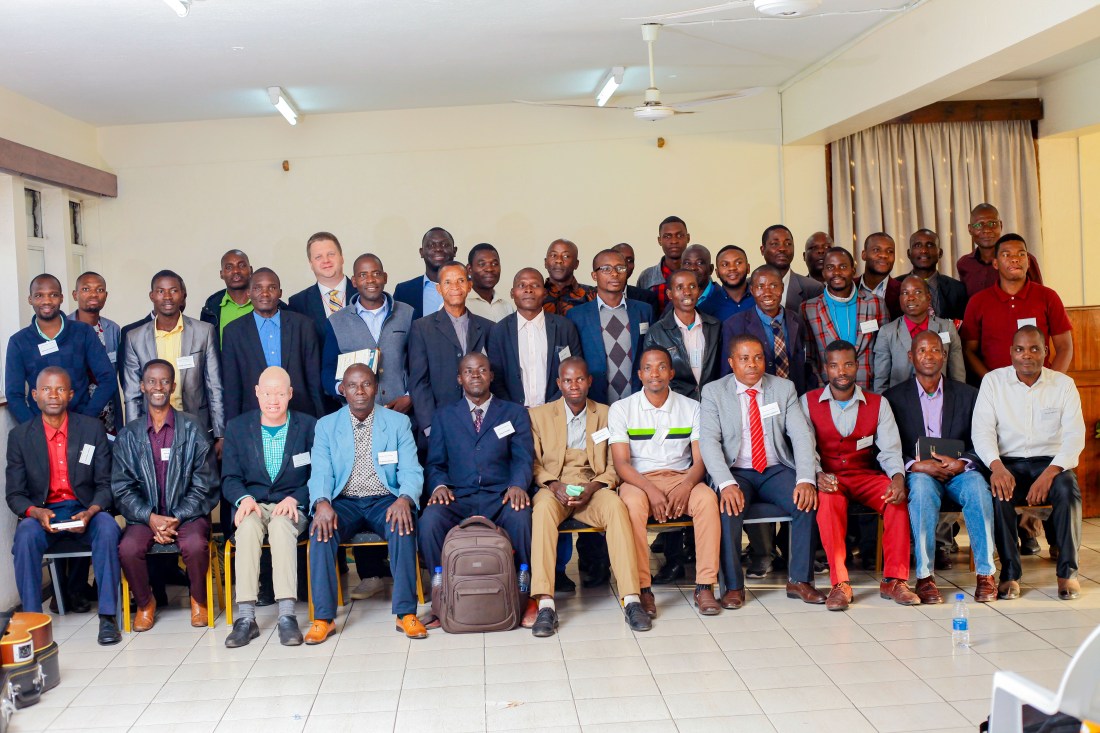
May 29-30, 2024, pastors from different denominations met at Christ Presbyterian Church in Blantyre, Malawi for the 2024 Reformed Pastor Conference. The theme for this year’s conference was, The Sufficiency of Christ. Pastor David Woollin from Grace Immanuel Reformed Baptist Church and Heritage Reformed Books in Grand Rapids, Michigan spoke on the three offices of Christ: prophet, priest, and king. He also spoke on faithfulness in ministry.
The Reformed Pastor Conference was started by Christ Presbyterian Church (CPC) in partnership with the Malawi Reformation Network (MRN). The name of the conference was inspired by an address taken from Acts 20:28 by a 17th Century Reformed and Puritan pastor, Richard Baxter, which was later turned into a book titled The Reformed Pastor. The first Reformed Pastor Conference was held on October 27, 2019 at African Bible College campus in Lilongwe, Malawi.
The four major objectives of the Reformed Pastor Conference are:
To encourage pastors to be ordinary means of grace pastors. The Westminster Shorter Catechism question and answer 88 reminds us: “The outward and ordinary means whereby Christ communicates to us the benefits of redemption are, his ordinances, especially, the Word, sacraments, and prayer; all which are made effectual to the elect for salvation.” The conference seeks to encourage ministers to continue believing in the power of God’s word and constantly preach it faithfully. We would like also to encourage pastors to continue cultivating a healthy prayer life as an indispensable part of their ministry.
To provide a platform where pastors can get a better understanding of the Reformed faith. The Reformed faith or being Reformed can sometimes be misunderstood or even caricatured. But through the conference we pray that pastors, especially, those that are not familiar with the Reformed faith or are considering to become Reformed in their faith and ministry (Reforming pastors) might get a good grasp of the faith.
To share Reformed literature and resources. One of the greatest challenges that the church in Malawi (and this can be said of Africa as a whole) faces is lack of sound biblical literature and resources. Reformed Pastor Conference seeks to bring pastors together once a year and share with them reformed literature and resources that are beneficial to their ministry.
To promote fellowship and networking among Reformed pastors in Malawi. Pastoral ministry can sometimes feel very lonely, more especially, when you do not have many like-minded pastors who can encourage you in your work. Since Reformed pastors are a minority in Malawi, the conference seeks to promote fellowship and networking among these ministers.
May you join us in praying for revival and reformation in our lives, churches, our nation of Malawi, and the whole world at large.
Last Tuesday, October 31, 2023 as we commemorated the 506 years of the Protestant Reformation my friend, Zee Chunga, and I launched our podcast, All Things Reformed. As I have been pastoring in this beautiful country of Malawi, one question that I have often received is, “What is the Reformed Faith?” This podcast is an endeavor to answer this question. Zee and I believe that as you listen to the episodes of this podcast you will be able to have your question answered.
All Things Reformed Podcast is for those who are Reformed as well as those who are exploring the Reformed faith. For the former we seek to help them get more grounded in their faith and equip them to effectively answer any question about our faith (1 Peter 3:15) while for the later we seek to help them get a better explanation of the Reformed faith. We desire to see more minds renewed by God’s truth and sound Christianity, more especially, the Reformed Christianity grow more in Malawi to the glory of God and the good of Christ’s Church.
I have known my co-host, Zgololake (Zee) Chunga for almost twenty years now. Zee loves the Lord and His Church. He holds a Bachelor of Arts in Biblical Studies and Communications from African Bible College, Malawi. He is currently working as development communication specialist. He is also a member of the church I pastor, Christ Presbyterian Church. I am thankful for Zee’s willingness to use his skills and gifts to produce the podcast. Please pray for him as he works on the weekly episodes.
You may listen or subscribe to the podcast here or wherever you get your podcasts. Let me also ask that after you have listened to the podcast, feel free to email us feedback at here. Let us know how we are doing and how best we can serve you well through the podcast. You may also consider to sponsor the podcast, please let us know. Above all, join us in praying that All Things Reformed Podcast will be used to disciple both young and old with sound doctrine.
It is not uncommon for me to meet a young man who would like to discuss more about pastoral ministry. Oftentimes the young man is contemplating or even convinced that the Lord is calling him to be a pastor. Now this always excites my heart because as per the Lord’s command we are to pray for more laborers in his harvest (Luke 10:2). The next thing that follows from such a conversation is the question: but how do I know for sure that the Lord is calling me to pastoral ministry? Here is my answer.
First, the man that the Lord is calling to pastoral ministry or any Christian ministry must also be the man that the Lord has called to himself first. In other words, the first thing is to be sure that you are a converted man. Be certain that you know Jesus Christ in a saving way. Sadly, church history is not void of men who went into pastorate while unsaved. But that is not supposed to be the case. Don’t be a Judas or a Demas who went into pastorate with hearts of stone. As you know it did not end well for them (Matt. 27: 3-10; Phil. 1:24 cf. 2 Tim. 4:10). It is important to seriously consider this caution from the old Puritan Richard Baxter, “Believe it, brethren, God never saved any man for being a preacher, nor because he was an able preacher; but because he was a justified, sanctified man, and consequently faithful in his Master’s work. Take heed, therefore, to yourselves first, that you be that which you persuade others to be, and believe that which you persuade them daily to believe, and have heartily entertained that Christ and Spirit which you offer unto others.” Here Baxter captures the heart of the matter well. I think one of the greatest tragedies in the world is a pastor who calls on others to know Christ the Savior and yet he himself doesn’t know him.
Second, prayerfully go through the qualifications of an elder or pastor in 1 Timothy 3:1-7 and Titus 1:5-9 and see if you meet them. In these two passages Paul begins by affirming that a desire to be a pastor is a noble desire. But the desire alone is not enough. It must be accompanied by a life and conduct that honor and glorify God. He then goes on to list requirements to be met by those desiring to serve in pastoral ministry. Sadly, we are living in the world that often values more what we are able to do than who we are. But in the eyes of God who we are before him is more important than what we can do for him. In ministry holiness is essential. An ungodly minister is an eye sore to the Church of Christ. So, examine your life and conduct in the light of these two passages. Now this doesn’t mean that you should be sinless to serve the Lord then no single Christian on this side of heaven would qualify. However, there should be a notable growth and continued desire and work to grow in these areas. Sanctification is progressive. A man who is not growing or is not interested to grow in these areas is not fit to be an under-shepherd of God’s flock.
Third, you must have a burning passion and God’s gift to preach and teach the gospel. Are you convinced that the only hope of this lost world is the gospel of Jesus Christ and you are not ashamed to preach it (Romans 1:16)? Do you feel like Apostle Paul that “Woe to me if I don’t preach the gospel (1 Cor. 9:16)?” If the answer to these questions is a resounding yes then it could be that the Lord is calling you to the pastorate. Coupled with the burning desire to preach the gospel should be a gift to enable you to preach or teach it. Of course, the gift will be sharpened with time and experience but at least you should have a gift to be able to stand in front of people and speak (preach or teach). You might never be gifted like John Calvin, George Whitefield, Charles Spurgeon, Joel Beeke, Sinclair Ferguson, or Conrad Mbewe just to mention a few gifted preachers (and many of us are not) but you should still have a gift to communicate the gospel clearly and persuasively. I strongly believe that those that the Lord calls he also equips for the calling (Jeremiah 1:6-10).
Fourth, get involved in your local church. In discerning whether one is called to ministry we consider both what is called internal and external call. The internal call is the sense that one has that the Lord is calling him to ministry. However, internal call alone is not enough. One also needs an external call which is a confirmation from other Christians that they too are convinced that the Lord is calling you be a pastor. For this to happen you need to be active in your local church. Volunteer to be a greeter, teach children’s Sunday school, offer yourself to help with youth ministry if your church has one, volunteer to lead Bible studies when the opportunity arises. If your pastor or elders offer you a preaching opportunity readily accept it with humility and gladness. As you serve your local church fellow believers will also be able to approve your desire and gifts for pastoral ministry. It is a great blessing when what you sense inside is also echoed by fellow believers who know you well.
Fifth, resources permitting get seminary or Bible college training from a sound and solid institution. Bible and theological training is necessary for ministry. Granted they are some people in the past and present who have served the Lord faithfully as pastors without going to seminary or Bible college. However, they are the exception rather than the rule. Jesus taught and trained his apostles for three years before he commissioned them to preach, plant, and pastor God’s people. Paul mentored Timothy and Titus before granting them pastoral responsibilities. In some circumstances it might not be possible to go to seminary or Bible college. In that context it is important that you bring yourself under the mentorship of a mature and godly pastor for a period of time. Learn and drink from the well of his life, work, and experience until you both feel that you are ready to begin pastoring on your own.
Sixth, the final confirmation of God’s call upon your life should come from the church. After successfully completing your seminary or Bible college training or mentorship under a sound and faithful minister and elders, a congregation of God’s people must call you to pastor them. It might be a church that is without a pastor, a group of believers who would like to plant a church, or a church that has a pastor or pastors but need one more pastor. This is also part of the external call. If you are planting a church, you don’t just make yourself a church planter. You must be sent by another church or ecclesiastical body. One thing that often breaks my heart is how some young people are ending up in ministry here in Malawi. A young man gets converted and in no time, he thinks that the Lord is calling him to pastoral ministry. He starts planting a church with no accountability and little or no training at all. This is no doubt a recipe for disaster. Often that young man ends up shipwrecking his faith and bringing the name of the Lord into disrepute. Every pastor needs a confirmation of the church that the Lord rather than himself has called him to shepherd and feed Christ’s flock. This confirmation of the church will also encourage you when you pass through difficult seasons of ministry. When you are tempted to throw in the towel, looking back at the confirmation of the church encourages you to press on knowing that your calling to ministry was not an illusion but that God approved it through the external call of his people.
In summary, the one who is called to pastoral ministry must first and foremost be called to the Savior, Jesus Christ and should feel the fire in his bones to preach and teach the gospel of Christ. This is the internal call. This desire should be confirmed first by his local church and eventually by a church that calls him to minister to them. That is the external call. Both calls are needed to discern if the Lord has called one to be a pastor.
PS: It is due to my desire to help young men discern if the Lord is calling them to pastoral ministry that our church, Christ Presbyterian Church established a pastoral internship program. If you believe the Lord is calling you to be a pastor let me encourage you to consider our program. To learn more check here
When approaching the discussion of the Sabbath we need to acknowledge the various debates it creates. There is a debate on whether the Sabbath has changed from Saturday in the Old Testament to Sunday also called the Lord’s Day in the New Testament. While I believe in the latter, I should grant that there are brothers and sisters in the Lord who believe in the former. But that’s not what this post is all about. There is also a debate on how Christians should observe the Sabbath. Now the Bible is very clear that the Sabbath is the day of rest and worship (Exodus 20:8-13; Acts 20:7). There should not be any debate about it. Yet good and godly Christians differ on what this rest entails. While some believe that rest should include refraining from recreational activities others believe that Christians can still engage in recreational activities on the Sabbath. Again, this post does not intend to go into that discussion.
This post is about delighting in the Sabbath. God speaking through Prophet Isaiah in Isaiah 58:13-14 says,
“If you turn back your foot from the Sabbath, from doing your pleasure on my holy day, and call the Sabbath a delight and the holy day of the Lord honorable; if you honor it, not going your own ways, or seeking your own pleasure, or talking idly; then you shall take delight in the Lord, and I will make you ride on the heights of the earth; I will feed you with the heritage of Jacob your father, for the mouth of the Lord has spoken.”
The context of this exhortation is that God’s covenant people are rendering half-hearted worship to God. For example, at the beginning of the chapter the Lord rebukes their fasting which instead of being a time that they humble and devote themselves fully to God they continue sinning against God and one another. It is hypocritical fasting. Then in verses 13-14, the Lord draws their attention to another aspect of worship namely the observance of the Sabbath. Similarly, God’s covenant people are observing the Sabbath with lukewarm devotion. Instead of resting and worshipping God, they are using the day for their own pleasure. Now some have understood “pleasure” in the verse to mean recreational activities while others think it means normal daily business. Whatever view you hold, one thing that is clear from the verse is that God’s will for the day is that his people should observe rest; hence, he calls them to repent of their religious formalism so that they may enjoy God’s covenant blessings.
The Lord goes further to challenge his people to delight in the Sabbath, “Call the Sabbath a delight and the holy day of the LORD honorable.” Matthew Henry commenting on the verse writes,
“We must not only count it a delight, but call it so. We must call it so to God, in thanksgiving for it. We must call it so to others, to invite them to come and share in the pleasure of it; and we must call it so to ourselves, that we may not entertain the least thought of wishing the sabbath gone that we may sell corn.”
The 19th Century Anglican Bishop, John Charles Ryle also agrees with Henry and notes,
“The Sabbath is God’s merciful appointment for the common benefit of all mankind. It was “made for man” (Mark 2:27)…It is not a yoke, but a blessing. It is not a burden, but a mercy…It is good for man’s body and mind…Above all, it is good for souls.”
So here are five ways that we as Christians can call the Sabbath a delight. First, we can call the Sabbath a delight by realizing that when we rest on the Sabbath, we mirror God our Father who rested on the seventh day despite not needing rest. Our Father does not get tired (Isaiah 40:28). He neither slumbers nor sleeps (Psalm 121:4), yet in Genesis 2:2-3 we read: “And on the seventh day God finished his work that he had done, and he rested on the seventh day from all his work that he had done. So, God blessed the seventh day and made it holy, because on it God rested from all his work that he had done.” One of the greatest desires that lie at the bottom of a child’s heart is to be like his father, especially, a good father. A child regards his father as the hero no matter what others think of him. Similarly, as God’s children our greatest longing should be to be like our Father. He rested on the seventh day so we should do likewise with great delight.
Second, we should call the Sabbath (first day of the week) a delight by realizing that it is a day in which God completed the work of our redemption in Christ. On this day, Christ delivered a killer punch on our greatest enemies. Death died, Satan was disarmed, and sin was conquered. At our church, Christ Presbyterian Church, before the worship service begins, I gather with some members to pray for the service and other needs of the congregation. We often beginning by reminding each other that this is not only a day of worship and rest but it is also a day of celebrating the greatest victory ever accomplished for man.
Third, we call the Sabbath a delight by realizing that on this day we do not only enjoy rest and worship our God but also rejoice in the assurance of God’s blessings in our endeavors for Christ. O. Palmer Robertson says it beautifully in his book, The Christ of the Covenants,
“(The New Covenant) believer does not first labor six days, looking hopefully towards rest. Instead, he begins the week by rejoicing in the rest already accomplished by the cosmic event of Christ’s resurrection. Then he enters joyfully into his six days of labor, confident of success through the victory which Christ has already won.”
Fourth, we call the Sabbath a delight by realizing that by keeping it we demonstrate our love for God. The fourth commandment (Exodus 20:8-11) requires us to observe the Sabbath. As the moral law the commandment is still binding on all Christians. So, when we rest and worship on the Sabbath, we demonstrate our love for God (John 14:15, 21; 1 John 5:3).
Last but not least, we call the Sabbath a delight by realizing that it is a foretaste of our eternal rest in glory. On this side of heaven, we endure various sorrows. However, the author of Hebrews in Hebrews 4:9 reminds us that “There remains a Sabbath rest for God’s people” in which all sorrow, pain, thorns, and thistles will be no more. It is that eternal state in the new heavens and earth where “God will wipe away every tear from (our) eyes, and death shall be no more, neither shall there be mourning, nor crying, nor pain anymore, for the former things have passed away” (Rev. 21:4).
The Sabbath should be a delight for all God’s people. It was made for us and for our good. In our bustling world in which the six days of work seem no longer enough, we should resist the urge to go along. There are many great blessings that come with delighting in the day as I have endeavored to show above. May we always look forward to Sabbath with great pleasure and never with the thought of it as being a killjoy.
Are not two sparrows sold for a penny? And not one of them will fall to the ground apart from your Father. But even the hairs of your head are all numbered. Fear not, therefore; you are of more value than many sparrows (Matthew 10:29-31).
One of the doctrines that comfort believers in their daily walk with Christ is the doctrine of God’s providence. The doctrine teaches that God is in control of all things both in heaven and on earth. Even when things are not going on well or they seem scary in our human eyes, God is working all things for the good of his children in Christ.
This is our comfort even now as the world is battling against COVID -19 which has hit our country very hard. We can remain calm and hopeful in these difficult times not because we are the proverbial ostrich that hides its head in the sand but because we know that our God is good and in control.
A story is told of a boy on board a ship. Violent storms raged against the ship but he remained calm. One of the passengers was amazed by his serenity and asked him if he was not scared of the storm. The boy replied, “My father is the captain.”
Dear Christian, our Father is the Captain of the whole world. He is not only the all-powerful captain but also good, most gracious, and most merciful Captain. Not a single hair from your head will fall to the ground apart from his will. If God pays attention to a tiny little hair which you hardly even notice when it falls to the ground what more with your life and that of your loved ones? The hymn writer put it well:
What tough times we are living in! This is how my mind has summarized today.
You see, I woke up early this morning only to realize that electricity has gone off. Determined not to give in to despair I went out to exercise. I was looking forward to a warm shower after the exercise only to discover that the taps were dry. No water! Still determined to be more positive I get ready for the day.
Later in the morning I meet one member of our church. His wife had been in labor for the past two days and just yesterday gave birth to a baby boy. Praise the Lord! But as I meet this brother, I learn that he has not yet met his son. Actually, that’s just half of the story. This brother was not able to be with his wife when she went into labor at the hospital. He was not even there when the wife was giving birth. Reason? COVID-19 restrictions at the hospital. The hospital would not let him go and see his wife as they are trying to protect the wife and other patients from the virus. Can you imagine the agony?
Soon after this meeting I proceed to deliver food items to another family in our church that is in self-quarantine after getting in contact with a COVID-19 patient a few days ago. I bring the food items at the gate and call the husband on my phone to let him know that I am there. But wait a minute! I can’t get close to him and his family. So, he just comes out, stands at a distance as if one of us is a leper of Biblical times, and briefly greets and thanks me for the items. I head to my car to get back to office. At this time my pastoral heart is bleeding. This can’t be!
Later I get home. My girls are always excited when they hear dad’s car driving in. They come running to hug daddy. But as I jump out of the car my brain sends out a quick reminder, “Remember you can’t hug them.” So sadly, I hear myself saying, “Sorry sweetie, I can’t hug you now I am just coming from outside and who knows what is sticking to my clothes and myself.”
By this time I can’t pretend and put up a brave face any more. These are tough times we are living in.
As I reflect on the events of the day, a song we used to sing in Bible college softly echoes in my mind:
Days are filled with sorrow and care Hearts are lonely and drear Burdens are lifted at Calvary Jesus is very near
Troubled soul, the Savior can see Every heartache and tear Burdens are lifted at Calvary Jesus is very near
These lyrics take me to two places: The Garden and the Cross. You see the main thing to remember in these difficult times is not really the virus. It is what happened in Garden of Eden about six thousand years ago and what occurred on the mountain of Golgotha about four thousand years later.
In the garden our parents disobeyed and rebelled against God by eating the fruit they were commanded not to. With that they plunged the whole human race into sin and misery. COVID-19 is just one of the consequences of that “cosmic treason” as R.C Sproul would have put it. The broken systems of our electricity and water providers are just one of the consequences of man’s fall from grace in the garden. That single act of disobedience “made all of us liable to all miseries of this life, to death itself, and to the pains of hell forever” (Westminster Shorter Catechism)
But praise the Lord that the garden is not the end of the story. Four thousand years later, God’s Son was hanged onto the cross to reverse “the damage” that our parents caused to humanity. God’s Son, Jesus Christ, nailed sin and death to the cross. As the last breath was about to leave his lungs he cried out: “It is finished!”
It is in these three words that our hope and comfort must lie. Yes COVID-19 might take our loved ones or even ourselves home. Yes COVID-19 will deny us some things we enjoy with our children like giving each other tender hugs. Yes COVID-19 has denied my friend the joy of seeing his first-born son come into the world. Yes COVID 19 has disturbed our normal relationship and routines but one thing we know for certain: “It is Finished!”
For us in Christ the momentary afflictions of this world are preparing us for an eternal weight of glory beyond all comparison (2 Cor. 4:17-18). One day sooner or later the Lord will wipe our tears and take away all our sorrows forever (Rev. 21:4). COVID-19 might kill the body but Christ has overcome it (John 16:33). After we have suffered a little while the God of all grace who has called us to his eternal glory in Christ, will himself restore, confirm, strengthen, and establish us (1 Peter 5:10). Therefore, let’s bring all our burdens onto the cross that the Savior might lift them away. Let’s cast all our cares unto Christ for he cares for us (1 Peter 5:7). Our burdens might be heavy but Christ’s arms are stronger and his grace is ever sufficient.






 Confex Makhalira