
Author: Confex Makhalira
Confex Makhalira is a a husband, father, pastor, missionary, and writer.
Understanding Law and Gospel
Lessons from John Calvin’s Method of Preaching
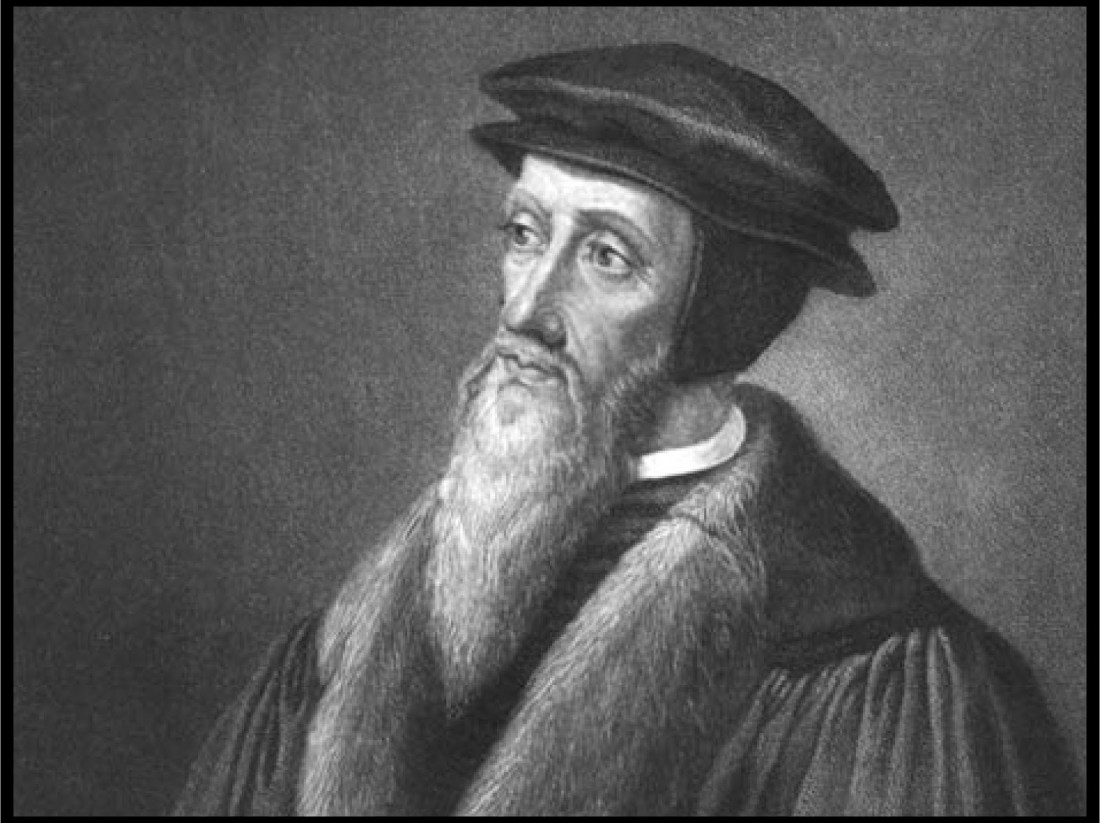
One major aspect of John Calvin’s ministry was his form of expository preaching of the books of the Bible verse by verse also called lexio continua. On Sundays, Mondays, Wednesdays and Fridays, Calvin climbed up the steps of the St. Pierre Cathedral’s pulpit and patiently led his congregation verse by verse through book after book of the Bible. He often preached two to four verses in a sermon; however, in some instances he would preach two to three consecutive sermons on one verse as was the case with 1 Timothy 2:5 and 2 Timothy 1:8 respectively. As he tackled each verse, he would explain its meaning and apply it to his congregation.
But what would motivate Calvin to involve himself in this huge but worthy and profitable task. I believe that Calvin’s view of the Bible as the word or voice of God (vox dei) had a great impact and influence on his adoption of lexio continua method of preaching. Calvin’s high regard for Scripture is evidently seen in his magnum opus, Institutes of the Christian Religion, in which he writes:
In order that true religion may shine upon us, we ought to hold that it must take its beginning from heavenly doctrine and that no one can get even the slightest taste of right and sound doctrine unless he be a pupil of Scripture.” (1.6.2)….“We affirm with utter certainty (just as if we were gazing upon the majesty of God himself) that (the Bible) has flowed to us from the very mouth of God by the ministry of men” (1.8.5).
This view had a profound impact on his preaching as he revealed in his sermon on Micah 3:7:
For what ought sermons and doctrines be, except expositions of what Scripture contains? Truly, if we add the slightest nuance, it only results in corruption. Our Lord has left us a perfect doctrine in the Law, the Prophets, and the Gospel. Thus, what ought we be preaching today? We ought not be adding anything new to the text, but ought to be providing a clearer exposition that would confirm our understanding of God’s teachings. That, I repeat, is the purpose of any sermon or lecture we hear, that we might each be better instructed with respect to God’s will. That way, whenever we hear anything, we have a basis for inquiring whether God has spoken or not. By the same token, all who are charged with preaching God’s Word know that it is wrong of them to add anything of their own, or anything they might event. They must be certain that what they preach is not of their own conjecture but derives from God, who guides them on the basis of his certain and infallible word.
John Calvin was strongly convinced that a preacher can faithfully proclaim the message of his Master only by letting him speak as he has already spoken in the Scriptures. Preaching on 1 Timothy 3:2, he said,
“(The preacher) should not show off so that everyone applauds him and says, ‘Oh, well-spoken! Oh! What a breadth of learning! Oh! What a breadth of mind! When a man has climbed up the pulpit…It is that God may speak to us by the mouth of man.”
The other significant element that greatly influenced John Calvin to preach verse by verse throughout the Bible was his view of the preacher as the ambassador of God. In his commentary on 2 Corinthians 5:20 in which Paul and other preachers of the gospel are described as Christ ambassadors, Calvin comments that a preacher is indeed an ambassador of Christ and he has been ordained by God to speak as God speaks to him in the Scriptures hence Christ could boldly say that whoever pays attention to the gospel preacher pays attention to Christ himself. Here it is important to highlight that Calvin was very much aware that preaching should not be equated with the Bible hence while preaching from Deuteronomy 1:43, he cautioned:
So the teaching which is put forward in the name of God ought to be as authoritative as if all the angels of heaven descended on us, as if God himself were manifesting his majesty before our eyes (but) it is true that when men speak we must weigh their words carefully. For if one were willing to receive everything that was put forward, there would be no distinction between liars and false prophets who seduce men’s souls and the true ministers of God.
Calvin was also influenced toward lexio continua preaching by his view of the hearer of the gospel as a fallen man. In fact, this view has implications both on the preacher and hearer of the gospel as Calvin states in his sermon on 1 Timothy 4:6-7:
Now, just as many preachers are themselves far too given to ambition and in order to find grace and favor seek only what will please, so also on the other side the people are the cause of making preachers swerve aside from the good way. And why? Because, men have ‘itching ears’ and want to be fed with pleasing stories and buffoonery or ‘old wives’ fables as St. Paul calls them here. Seeing that men have such desires –like pregnant women whose cravings are inordinate –ah well this is the cause of some preachers degenerating and disguising themselves and transforming God’s teaching, which is as bad as destroying it.
Calvin fully understood that due to the fallen nature of man both the preacher and the hearer might lean toward preaching and hearing messages that do not disturb them in their comfort zone. Since due to the fall, man is in constant rebellion against God, the fallen nature in the preacher and the hearer might pull them away from the faithful proclamation and hearing of God’s word. However, when lexio continua is the method of preaching in a congregation both the preacher and congregant are forced to fully submit to the whole counsel of God as it unfolds verse after verse and book after book of the Bible; thereby, fully proving that the Scripture as God’s Word is profitable for doctrine, for reproof, for correction, and for instruction in righteousness (2 Timothy 3:16).
Lexio continua preaching has a lot of benefits for the church today. First, it is one of the real ways in which full submission to God’s word both by the preacher and the congregation is demonstrated. The main challenge that the Church faces today is full submission to God’s Word. Due to the fallen nature of man, we tend to choose what we want to hear, and as the Church is bombarded with liberal and humanistic challenges, the temptation to choose what to obey and practice from the Scriptures also increases. However, where the word of God is preached in lexio continua form, both the preacher and the congregation are compelled to be subservient to God’s Word and to have their minds taken captive by it.
Secondly, lexio continua preaching frees the pastor from the temptation of preaching his mind instead of God’s word. Calvin observed that lexio continua preaching delivers the preacher from the temptation of esteeming or deciding at his pleasure what is profitable to be uttered and what is useless to be omitted. Lastly but not least, related to the above points, Calvin’s type of expository preaching affirms God’s sovereignty in preaching. As he rightly portrayed the preacher as the ambassador of Christ, the minister’s main goal then is similar to an earthly ambassador who is commissioned to advance and protect the interests and of his country. The ambassador demonstrates this commitment both in his words and actions. Similarly, the preacher has no any other agenda apart from seeking to affirm God’s sovereignty in the proclamation of the gospel. God’s sovereignty is affirmed when the preacher allows the Scripture to guide the agenda of preaching in the church or ministry.
The significance of letting Christ speak directly to his Church through the words of Scripture cannot be overemphasized. Ministers and preachers as the carriers of the voice of God should be challenged to consider the importance of lexio continua preaching in their churches or ministries. This form of preaching was essential for a health growth of the church in Geneva where Calvin preached and it also essential even to the present Church. John Leith has profound words for preachers today as he writes, “Calvin the preacher cannot be copied or repeated today in this new time and place, but…we can rightly hope and struggle to do as preachers of the Word in our particular time and place what Calvin did in his. For however much the culture and social matrix change, human existence remains essentially the same.”
My Prayer and Thoughts as Malawi Goes to Polls
Finally, one of Malawi’s long awaited days this year is almost here. Tomorrow, on May 20, 2014 the people of the land of my birth go to elect the President, Members of Parliament (MPs), and Councillors for the next five years. Sadly, for first time since I reached the voting age, I will not be able to cast my vote. Distance has a way of limiting us in a number of ways. But still my prayers and thoughts are with you my countrymen.
I pray that my Malawian brothers and sisters will not forget to remember that whatever happens during the elections was already ordained and written in the Almighty God’s eternal script for his world. History is not autonomous, but it is His (God’s) story. This should comfort us knowing that although we may not be sure of what the future holds, we know for sure who holds the future. Christ is still on the throne.
I also pray for my fellow Christians that they will not take their eyes off Christ as our perfect hope in this fallen world and place it on politicians. Malawi like any other nation in this fallen world has so many challenges. Knowing this, our politicians have promised a lot in regard to making our country a better place to live in. But it might not be long before we find ourselves in the valley of frustration as the hopes that were raised are shattered into smithereens. “Promises and lies” is often the politicians’ best game everywhere.
This is not to say all politicians are not to be trusted. There are some who are godly and have good intentions. But how can we single them out knowing that the heart is so deceiving above all things (Jer. 17:5)? It’s not easy! Yet it is of great comfort to know that the Lord knows all men very well. I pray that God will give Mother Malawi godly leaders. But, even if this happens, we should never never look up to politics as the solution to our fallen world. Ravi Zacharius put it better: “Let’s face it, politics is seldom the answer to any society because it just swings from one extreme to the other and it goes with the whim of whoever is in power.”
Realizing the folly of trusting politics to heal this sin-ridden world, Margaret Thatcher, one of the renowned politicians in our world, used to say: “It is up to the people of faith (Christians) to change their culture, politicians can’t do it.” Brethren, may we continue to shine forth the light of Christ as the beacon of hope for our nation. Whoever becomes the president or MP or councillor is not good enough to bring the hope and satisfaction that vanished once sin entered the world and alienated mankind from God. Since then our hearts remain restless until they find rest in God as St. Augustine put it.
Finally, I know that even Christians just like as any other person voting have a particular expectation of results. But in case, the results do not come out as we expected, let’s remember that Christ still holds the whole world in his hand. He knows best. He alone directs the events and affairs of the world according to his good pleasure and will. Apostle Paul reminds us in Romans 11:33-36: Oh, the depth of the riches and wisdom and knowledge of God! How unsearchable are his judgments and how inscrutable his ways! For who has known the mind of the Lord, or who has given a gift to him that he might be repaid? For from him and through him and to him alone are all things. To him be glory forever. Amen.”
Our prayer should remain the same as we have always prayed in the form our national anthem since 1964:
O God bless our land of Malawi
Keep it a land of peace…
Our own Malawi, this land so fair
Fertile and brave and free.
With its lakes, refreshing mountain air,
How greatly blest are we.
Hills and valleys, soil so rich and rare…
Freedom ever, let us all unite…
One purpose and one goal
Men and women serving selflessly,
In building Malawi.
The Malawi National Anthem
Ravi Zacharius, an address at Brigham Young University in Utah (Accessed on January 19, 2014, http://www.rzim.org/rzim-news/ravi-zacharias-at-byu-and-the-mormon-tabernacle/).
We Travel an Appointed Way
“To the child of God, there is no such thing as accident. He travels an appointed way. The path he treads was chosen for him when as yet he was not, when as yet he had existence only in the mind of God.
Accidents may indeed appear to befall him and misfortune stalk his way; but these evils will be so in appearance only and will seem evils only because we cannot read the secret script of God’s hidden providence and so cannot discover the ends at which He aims.
When true faith enters, chance and mischance go out for good. They have no jurisdiction over them that are born of the Spirit, for such as these are sons of the new creation and special charges of the Most High God.
While sojourning here below, these children of the eternal covenant may pay token tribute to nature; sickness, old age and death may levy upon them, and to the undiscerning eye, they may seem to be as other men. Here, as in all its other judgements upon Christianity, the world is completely fooled by appearance, for it cannot see that these believing ones are “hid with Christ in God.”
The man of true faith may live in the absolute assurance that his steps are ordered by the Lord. For him, misfortune is outside the bounds of possibility. He cannot be torn from this earth one hour ahead of the time which God has appointed, and he cannot be detained on earth one moment after God is done with him here. He is not a waif of the wide world, a foundling of time and space, but a saint of the Lord and the darling of His particular care.
All this is not mere dreaming, not a comforting creed woven as a garment to warm the shivering hearts of lonely, frightened soul in a dark and unfriendly world. Rather it is of the essence of truth, a fair summation of the teaching of the Bible on the subject and should be received reverently and joyously along with everything else which is taught in the Scriptures of truth.” A.W. Tozer Taken from We Travel an Appointed Way.
Christ Knows Best
Christ Knows Best at What Time to do Anything for His People
John 11:16: “When he had heard therefore that he was sick, he abode two days still in the same place where he was.”
“We read that when He had heard that Lazarus “was sick, he abode two days still in the same place where he was.” In fact, He purposely delayed his journeys, and did not come to Bethany till Lazarus had been four days in the grave. No doubt He knew well what was going on: but He never moved till the time came which He saw was best. For the sake of the Church and world, for the good of friends and enemies, He kept away.
The children of God must constantly school their minds to learn the great lesson now before us. Nothing so helps us to bear patiently the trials of life as an abiding conviction of the perfect wisdom by which everything around us is managed. Let us try to believe not only that all that happens to us is well done, but that it is done in the best manner, by the right instrument and at the right time. We are naturally impatient in the day of trial. We are apt to say, like Moses, when beloved ones are sick, “Heal her now, O God, I beseech thee” (Num. 12:13). We forget that Christ is too wise a Physician to make any mistakes. It is the duty of faith to say, “My times are in your hand. Do with me as you will, how you will, what you will, and when you will. Not my will, but Thine be done.” The highest degree of faith is to be able to wait, sit still and not complain.
Let us turn from the passage with a settled determination to trust Christ entirely with all the concerns of this world, both public and private. Let us believe that He by whom all things were made at first is He who is managing all with perfect wisdom. The affairs of kingdoms, families and private individuals, are all alike overruled by Him. He chooses all the portions of His people. When we are sick, it is because He knows it to be for our good: when He delays coming to help us it is for the same wise reason. The hand that was nailed to the cross is too wise and loving to smite without needs-be, or to keep us waiting for relief without a cause.” –Taken From Day By Day With J.C. Ryle Edited by Eric Russel.
Reflections on my 2014 Birthday
“A good man leaves an inheritance to his children’s children, And the wealth of the sinner is stored up for the righteous” (Proverbs 13:22).
“Time flies,” so they say. It seems like yesterday when I wrote about my birthday reflections for 2013. I would like to thank God for granting me another year in my pilgrimage in this world. The just ending year has been great as God has once again proven himself that he remains faithful even though, sadly, I don’t.
As I thought about my birthday this year, the name of my late grandpa, Gannet Damson Makhalira, kept surfacing in my mind. He died a day after my birthday, almost two decades ago and he is on the list of people that the Lord has greatly used to shape my life. Two things he impressed on my mind and heart still linger even today: Love Christ and work hard. I mean, he did not just tell me but demonstrated it as well.
I recall while still very young, he bought me my first ever booklet, The Westminster Shorter Catechism. He read it out to me and encouraged me to memorize the questions and answers. “What’s the Chief end of Man?” He would ask expecting an answer.
“Man’s chief end is to glorify God and enjoy him forever,” I would respond.
“Excellent! Intelligent boy,” he would encourage me. Then he would turn to the Bible to show me the passages in which this truth is contained. He was a man of the Word.
But he was not only a man of the Word but also a “man of work.” His day began early in the morning on Mondays through Saturdays. After getting out of bed, he went to inspect the workers on his farm, Tonse Farm. No, he didn’t only inspect them but he would join them himself and work until around 7am. Then he would come home to have his breakfast with me during the school holidays. Thereafter, he took me to the farm to “work” alongside him.
“Nganga (grandson) this is how we do it,” he would demonstrate how to plant cassava stems.
“With what you are teaching your grandson, he will definitely be a great man” his workers often told him.
He just smiled and never commented. Grandpa often told me as he noticed his health failing him that he would love to see me taking over his farm when the Lord would call him home. I agreed but I was too young to understanding what I was committing myself into and it never materialized. Besides, the Lord had a different plan hence now I am not a farmer on Tonse Farm but a worker in Christ’s vineyard by His grace alone. Some similarities though.
One would think my grandpa had little time or room for other things in life. But not so with him. At least twice, a week he went to attend church meetings and prayers. He was an elder and session clerk of his local Presbyterian congregation. He loved God. I can’t really recall the actual college, but he was enrolled in a Bible correspondence course with an international Bible college. Every evening, he would pray with me before retiring to bed. What a godly man that God put in the early days of my life on this earth.
Oh, this might be digression but he also showed me how to shoot his hunting gun when I was twelve years young. He also indicated that when the Lord would call him home, I should own the gun. But again, I was too young to legally own it so this too never worked out. “The old soldier” as some called him, grandpa fought in World War II under the King’s African Rifles (KAR) now called Malawi Defence Force. After the war, he retired from the army and trained as an agriculturalist.
Sadly, as I grew up, I departed from the godly path grandpa had shown me into Rastafarianism. As he entered into glory in 1996, he left a disappointed man at what I had turned out to be. However, God had heard and listened to all those prayers he made on my behalf. Four years after his death, the Lord reached out to this lost child and by grace saved him. I know that as grandpa looked down at what happened that day on December 24, 2000, joy and amazement at God’s gracious work was written all over his face. Oh what amazing grace, the lost child was now found. Today, as I celebrate my birthday, I thank Christ for such a great grandpa. I rejoice at the thought that one day we will reunite and celebrate more than I do on a birthday like this one.
The Authority of Scripture
“We must take heed to our doctrine about the inspiration and authority of the Holy Scriptures. Let us boldly maintain, in the face of all gainsayers, that the whole of the Bible is given by inspiration of the Holy Ghost,—that all is inspired completely, not one part more than another,—and that there is an entire gulf between the Word of God and any other book in the world.—We need not be afraid of difficulties in the way of the doctrine of plenary inspiration. There may be many things about it far too high for us to comprehend: it is a miracle, and all miracles are necessarily mysterious. But if we are not to believe anything until we can entirely explain it, there are very few things indeed that we shall believe.—We need not be afraid of all the assaults that criticism brings to bear upon the Bible.
“From the days of the apostles the Word of the Lord has been incessantly “tried,” and has never failed to come forth as gold, uninjured, and unsullied.We need not be afraid of the discoveries of science. Astronomers may sweep the heavens with telescopes, and geologists may dig down into the heart of the earth, and never shake the authority of the Bible: “The voice of God, and the work of God’s hands never will be found to contradict one another.”—We need not be afraid of the researches of travellers. They will never discover anything that contradicts God’s Bible. I believe that if a Layard ¹ were to go over all the earth and dig up a hundred buried Ninevehs, there would not be found a single inscription which would contradict a single fact in the Word of God.
“Furthermore, we must boldly maintain that this Word of God is the only rule of faith and of practice,—that whatsoever is not written in it cannot be required of any man as needful to salvation,—and that however plausibly new doctrines may be defended, if they be not in the Word of God they cannot be worth our attention. It matters nothing who says a thing, whether he be bishop, archdeacon, dean, or presbyter. It matters nothing that the thing is well said, eloquently, attractively, forcibly, and in such a way as to turn the laugh against you. We are not to believe it except it be proved to us by Holy Scripture.
“Last, but not least, we must use the Bible as if we believed it was given by inspiration. We must use it with reverence, and read it with all the tenderness with which we would read the words of an absent father. We must not expect to find in a book inspired by the Spirit of God no mysteries. We must rather remember that in nature there are many things we cannot understand; and that as it is in the book of nature, so it will always be in the book of Revelation. We should draw near to the Word of God in that spirit of piety recommended by Lord Bacon many years ago. “Remember,” he says, speaking of the book of nature, “that man is not the master of that book, but the interpreter of that book.” And as we deal with the book of nature, so we must deal with the Book of God. We must draw near to it, not to teach, but to learn,—not like the master of it but like a humble scholar, seeking to understand it” – J.C. Ryle
Taken from: Knots Untied: Being Plain Statements on Disputed Points in Religion from the Standpoint of an Evangelical Churchman
Reblogged from: Reformed Bibliophile ( http://www.erictyoung.com )
Abortion


For the fetus, though enclosed in the womb of its mother, is already a human being, and it is a monstrous crime to rob it of the life which it has not yet begun to enjoy. If it seems more horrible to kill a man in his own house than in a field, because a man’s house is his place of most secure refuge, it ought surely to be deemed more atrocious to destroy a fetus in the womb before it has come to light.
– John Calvin
Exodus 21:22, Commentaries on the Four Last Books of Moses, Calvin’s Commentaries (Edinburgh; repr. Grand Rapids, MI: Baker, 1999), pp. 41, 42.
An Appeal to my Pentecostal Brethren
“I have many relations and very good friends who are Pentecostal and I thank God for them all. This post is dedicated to them.”
At the end of each and every year, WordPress experts or helper- monkeys as they prefer to call themselves release statistical report regarding each and every blog they host and Scripture Alone is not an exception. In the report of 2013, WordPress records that the most read article on the blog was “Do Prophets Still Exist?” followed by “Jesus Christ: The True Greatest Prophet.” The third most viewed post was “Of Anointed Water, Stickers, Handkerchiefs, etc.”
Am I surprised by these stats? Not at all! The above topics are real issues that the Church is facing today. People who claim to get direct revelations from God or prophets continue to rise almost every day. The hunger for miracles and wonders has led to mass production of “anointed staffs” which steadily are taking the place of Christ in the hearts of many.
Now, why am I raising all this? I would like to appeal to my Pentecostal brethren to speak up against these unbiblical developments. Why? Because so many false prophets today claim to be Pentecostal in their beliefs yet what they do sometimes even leave other Pentecostals, I believe, mouth agape. For instance, who among my brethren using the Scriptures could confidently say that God will put money in your bank account or in your pair of trousers’ pockets or your pulse while you are just idling? Would a true Pentecostal, so to speak, agree that the Holy Spirit will direct a pastor to feed his congregants grass as if they are goats? In case you missed it, check this link, http://www.africanspotlight.com/2014/01/08/south-african-pastor-makes-members-eat-grass-steps-photos-video/
My point again is that please my friends speak up against these things unless you don’t see anything wrong with such pathetic and blaspheming developments. I make this appeal because if you don’t raise your voice the old adage will prove true that silence means consent. By the grace of God, I write and will continue to write against these errors and heresies but I am not Pentecostal and some think I do so merely to score points over you brethren.
However, if truth be told, I write and denounce errors and heresies because I am concerned with God’s truth and the glory of Christ regardless of who is involved. John Calvin once observed: “Even a dog barks when it’s master is attacked, I would be a coward if I saw that God’s truth is being attacked and yet would remain silent.” I bark when God’s glory and truth is maligned because I can’t help it to see or hear the name of Christ my Master and Savior being brought into disrepute.
So, friends raise your voices against errors and heresies that are coming out coated with your name for Christ’s sake and his Church. Grace and peace.
 Confex Makhalira